
The vegetable garden notebook / Crops
Watering tomatoes: deciding based on soil and plant stage
To water a tomato plant, start by examining the soil where its roots are developing. A young planting, a plant laden with fruit, and a pot exposed to wind each require different approaches.
Adapt this guidance to your garden’s climate and conditions.
Should you water tomatoes today?
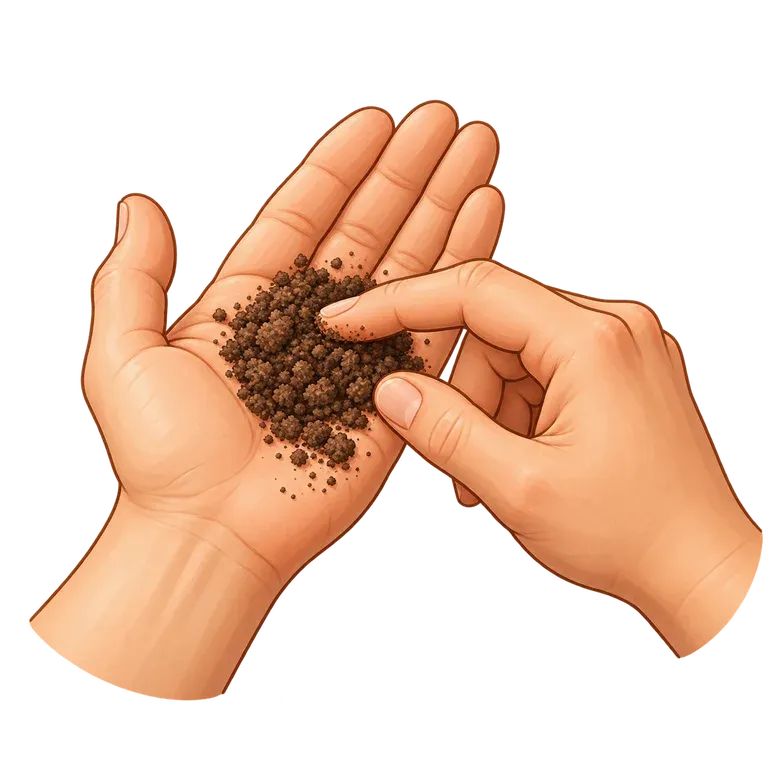
Move the mulch aside and check the moisture beneath the surface, next to the base of the plant, without disturbing the roots. For a tomato planted in open ground, a small trowel can be used to examine how deep the soil remains moist: the University of Minnesota recommends this check. The surface colour alone is not sufficient.
- The soil is drying out in the root zone: watering is needed to restore consistent moisture.
- The soil remains moist in this area: postpone watering and monitor its condition.
- The soil is waterlogged: do not add water; check drainage.
These decisions follow the RHS principle: water according to soil condition, down to the root zone. In poorly drained soil, excess water can deprive roots of oxygen, notes Maryland.
Adjust monitoring to root development and fruit
At planting, moisten the root ball before placing it in the soil, then water after planting the seedling, as advised by Minnesota. Subsequently, monitor moisture around the young plant: the RHS recommends consistent moisture for young vegetables and sufficient watering during tomato establishment. Do not immediately apply the intervals used for a well-developed plant.
Once the plant is established, avoid repeated light splashes that only wet the surface. Minnesota indicates that overly superficial watering can encourage shallow rooting and increase susceptibility to drought. Check water penetration after watering, without aiming for the same depth across all plants.
At flowering and during fruit development, maintain this monitoring: the RHS highlights the importance of a steady water supply at these stages. This means avoiding significant moisture fluctuations, not watering already damp soil. The RHS tomato fact sheet links these fluctuations to risks of fruit cracking and blossom-end rot, known in French as ‘cul noir’.
In pots, check each tomato separately
Sun and wind dry out containers quickly, according to Iowa. Therefore, check pots more frequently when these conditions intensify. A light shower may only wet the surface of the growing medium, warns the RHS: it does not eliminate the need to check beneath.
In a standard pot with drainage holes, apply water slowly to moisten the growing medium to the bottom. Iowa recommends this thorough moistening and the removal of excess water. The RHS advises stopping just before, or as soon as, water appears at the drainage holes: there is no need to prolong the flow. Empty the saucer of any excess after a few hours to prevent saturation.
Do not wait until the entire root ball is dry: Iowa associates complete drying with a risk of flower and fruit drop. For a self-watering pot, follow its instructions instead of automatically applying the methods for a standard pot.
How to apply water at the base?
Direct the watering can or hose towards the soil around the base of the plant. Avoid spraying the leaves: Minnesota notes that wet foliage promotes disease and that splashes can spread pathogens from the soil. The vegetable garden watering guide details flow rate, infiltration, and the best time of day.
Mulch helps retain moisture. The RHS recommends it around tomatoes in open ground, leaving a clear space at the base of the stem. Continue to check the soil beneath to decide when to water next.
How many litres and how often?
A fixed daily amount does not reflect the needs of all tomatoes. The RHS distinguishes growth stage and soil type; Iowa adds the constraints of containers and their exposure. Adjust watering based on these conditions and the observed moisture after rain or the last watering.
Simply note the context, the amount applied, and the soil condition at the next check. These observations allow you to refine your local practice without turning a hot week into a schedule for the entire season.
Do wilted leaves mean watering is needed?
No. Maryland describes temporary wilting in high heat or dry wind, even when the soil has sufficient water. If the soil is moist, observe the plant again when the temperature drops before increasing watering. If wilting persists or other damage appears, investigate the cause: leaf posture alone is not enough for a diagnosis.
For other cultivation practices, see the tomato growing fact sheet.
Key points for this crop
Practical guidance
- Trigger
- Check moisture below the surface rather than following a schedule
- Fruiting
- Maintain consistent moisture without saturating the soil
- In pots
- Monitor more closely in hot and windy weather
- Method
- Apply water to the soil around the base of the plant
Sources and references
- How to grow tomatoesRoyal Horticultural Society (RHS), in English Accessed on 16 October 2026.
- Watering vegetables and fruitRoyal Horticultural Society (RHS), in English Accessed on 16 October 2026.
- Growing tomatoes in home gardensUniversity of Minnesota Extension, in English Accessed on 16 October 2026.
- Growing Tomatoes in ContainersIowa State University Extension and Outreach, Aaron Steil, in English Accessed on 16 October 2026.
- How to water containersRoyal Horticultural Society (RHS), in English Accessed on 16 October 2026.
- Wilting of Vegetable PlantsUniversity of Maryland Extension, in English Accessed on 16 October 2026.