
The vegetable garden notebook / Crops
Overwatered tomato: check the soil before acting
A tomato with limp leaves is not necessarily thirsty. First examine the soil and water drainage: saturated soil can also cause wilting, and other causes remain possible.
Adapt this guidance to your garden’s climate and conditions.
How to check if your tomato is receiving too much water?
Do not add more water based solely on drooping leaves. The University of Maryland explains that poorly drained soil deprives roots of oxygen: the plant may then wilt and yellow despite the presence of water. Drought can produce similar symptoms.
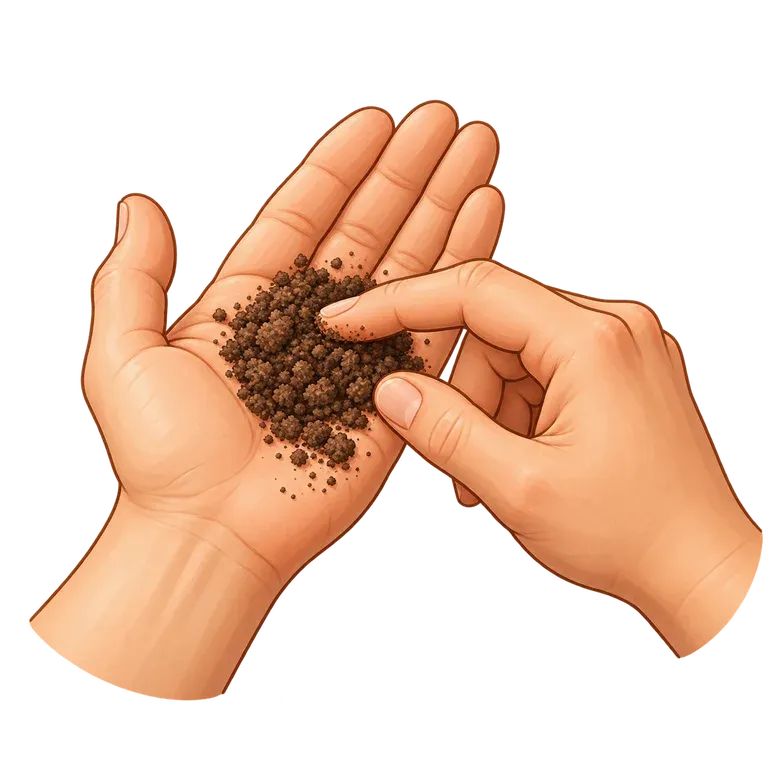
Move the mulch aside locally if it obscures the soil, then examine the moisture below the surface in a clear area near the plant without damaging its roots. Jardiner Autrement recommends this check before any watering. Also note recent rainfall and watering: soil that is wet immediately after watering does not have the same significance as soil that remains waterlogged.
| Observation | Prudent decision |
|---|---|
| Soil dry below the surface | Lack of water is a possibility. Water according to the observed need, then check that the water has moistened the soil in depth. |
| Waterlogged soil, stagnant water or pot standing in water in its saucer | Delay watering and investigate what is preventing water drainage. |
| Moist soil without saturation, wilting mainly during heat | Check again when the heat subsides. The plant may recover, but this does not rule out disease. |
This assessment combines checks for moisture, the effects of heat and the limits described for vascular diseases of tomatoes. A photograph of the foliage alone is therefore insufficient to distinguish between these causes.
In pots: check where water can drain
For a tomato in a standard pot, check for drainage holes at the bottom and ensure they are clear from the outside. Iowa State University requires a perforated container and a substrate that drains excess water while retaining moisture.
If the pot is sitting in a saucer or cache-pot full of water, empty it. The RHS advises emptying saucers a few hours after watering to prevent saturation; when saturation is already observed, do not prolong this soaking. These steps apply to ordinary pots: for a self-watering container, check its mechanism and instructions before making any changes.
In open ground: allow excess water to drain away
If the soil is saturated, suspend watering as long as this condition persists and also check the operation of any drip irrigation system. The priority is to understand the cause of stagnation, not to set a fixed pause on the calendar.
Avoid trampling or working waterlogged soil: the RHS warns that this worsens compaction. For future plantings, a better-drained location or a raised bed may be preferable; Maryland recommends avoiding poorly drained soils for vegetables. This does not mean systematically relocating an already established plant.
When to resume watering?
There is no set number of days applicable to all pots and soils. Check the moisture level again before each decision. As soon as the need returns, water slowly at the base; in pots, the RHS advises stopping before or as soon as water begins to drain from the holes.
Do not attempt to dry out the root ball completely to ‘correct’ the excess. Iowa State advises against this drying out for potted tomatoes. The goal is to restore appropriate moisture with functional drainage. The tomato watering guide covers monitoring according to the growth stage and container; the general watering guide details checks before and after watering.
What if the plant continues to wilt?
Prolonged saturation can damage roots, according to the RHS. Iowa State also describes Fusarium and Verticillium wilts, which may begin with daytime wilting followed by evening recovery, then worsen.
To broaden your checks, revisit the tomato symptom guide.
If wilting progresses despite corrected moisture and drainage, have the entire plant and its growing conditions examined before undertaking any treatment. Prepare photos of the whole plant, leaves and base, along with your observations of soil, rainfall and watering. These details help document the problem; they do not turn a symptom into a definitive diagnosis.
Key points for this crop
Practical guidance
- First check
- Moisture below the surface
- Possible excess
- Stagnant water and persistently saturated soil
- In pots
- Check drainage holes and saucers
- Resuming watering
- Depends on the soil, with no set number of days
Sources and references
- Wilting of Vegetable PlantsUniversity of Maryland Extension, in English Accessed on 16 October 2026.
- Water-efficient irrigationJardiner Autrement — Société nationale d’horticulture de France Accessed on 16 October 2026.
- Waterlogging and floodingRoyal Horticultural Society (RHS), in English Accessed on 16 October 2026.
- How to water containersRoyal Horticultural Society (RHS), in English Accessed on 16 October 2026.
- Growing Tomatoes in ContainersIowa State University Extension and Outreach — Aaron Steil, in English Accessed on 16 October 2026.
- Why are my tomato plants wilting?Iowa State University Extension and Outreach, in English Accessed on 16 October 2026.