
The vegetable garden notebook / Crops
Split Tomatoes: Understanding Cracks and Limiting Damage
A single crack does not require discarding the tomato, but spoiled fruit must be discarded. First sort the harvest, then investigate water variations that may have caused the splitting.
Adapt this guidance to your garden’s climate and conditions.
Why Do My Tomatoes Split?
During rapid growth, the skin may not keep pace with the increasing internal volume of the fruit. INRAE describes this non-parasitic disorder following abrupt changes in weather. Heavy rain or irregular watering can contribute to cracks, according to the University of Delaware.
The explanation “too much water” is therefore incomplete: focus on what has changed. Note a dry period, heavy rainfall, a watering event, or the removal of many leaves. A single crack does not indicate that all tomatoes on the plant are diseased.
Identifying Cracks Before Taking Action
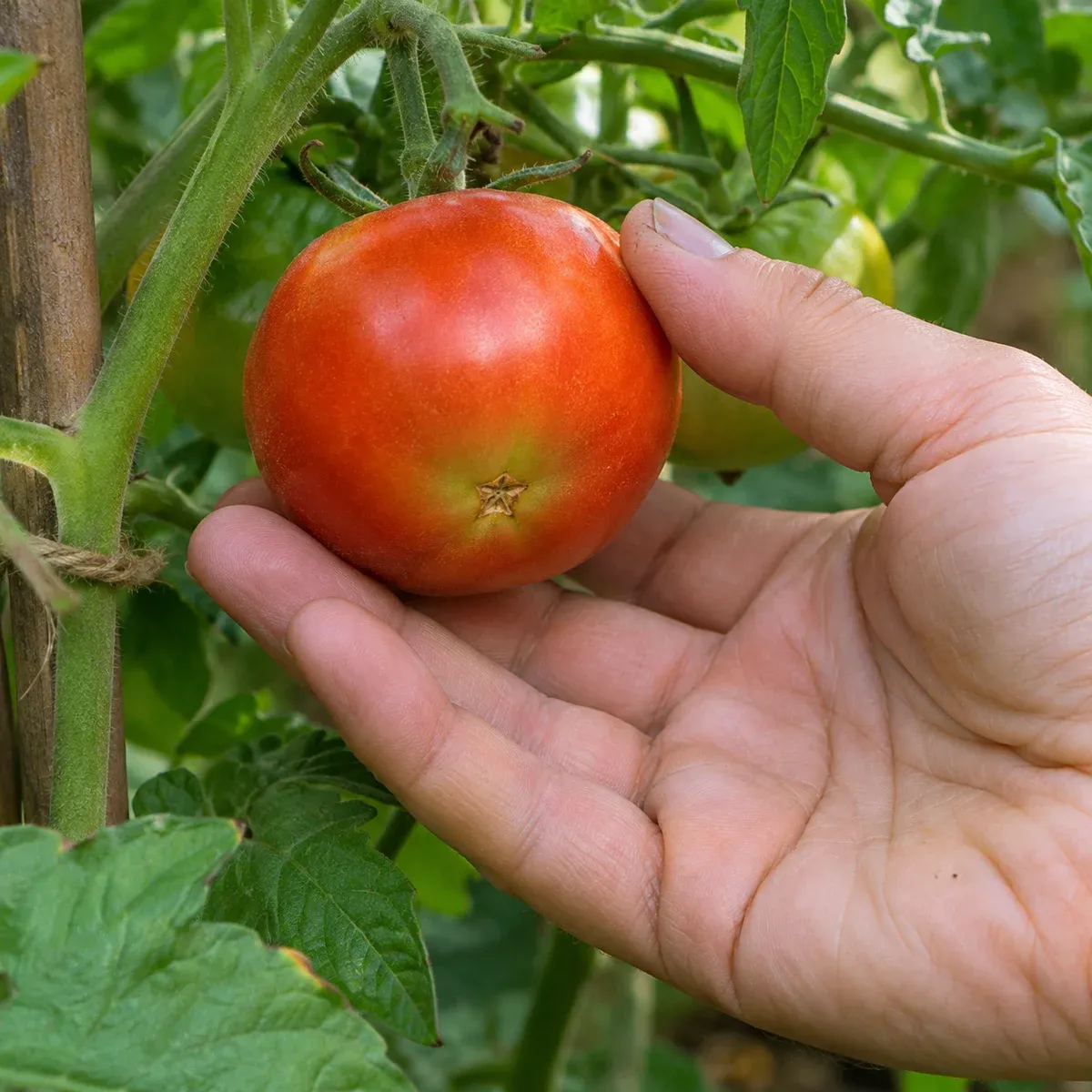
Radial cracks start near the stem and run down the fruit, while concentric cracks form rings around the shoulder. The University of Delaware describes these two types, which may occur together. Photograph the fruit and specify whether the crack is open or old.
A sunken black area at the end opposite the stem corresponds to a different observation: consult the blossom end rot guide. For evolving spots or lesions, use the tomato problems guide; the location of the damage helps direct the investigation.
What Should I Do in the Vegetable Garden Today?
- Check soil moisture before watering. The goal is to avoid the sudden irrigation changes described by INRAE, without saturating already damp soil. The watering guide explains how to check soil moisture.
- Monitor each container. The RHS notes that water supply varies particularly in pots and grow bags. Check the substrate, even if the neighbouring garden appears damp.
- Maintain leaf cover around the fruit. The University of Delaware advises against excessive pruning, which exposes them to heat. Removing all leaves to “dry the tomatoes” can worsen this exposure.
- Inspect fruit and harvest without unnecessary delay. The RHS states that prompt harvesting can reduce losses. Deep cracks encourage rot, notes the University of Delaware: monitor affected fruit separately rather than leaving them on the plant.
Heavy rain remains a real limitation to prevention. The RHS does not offer a way to eliminate damage caused by soil flooding; adding water after such an event does not help regulate moisture.
Can You Eat a Split Tomato?
A recent superficial crack on an otherwise healthy fruit differs from a crack that has deteriorated. For fresh consumption, Ask Extension in Oregon advises washing the fruit and removing the damaged area; after treatment, the harvest conditions on the label must still be respected.
Discard any fruit with a sour smell or oozing, signs highlighted by the Colorado team, and do not attempt to salvage rotten fruit. A photograph cannot establish that a fruit is safe to eat. Harvest and inspect split fruit rather than letting them deteriorate on the plant; keep them separate for checking before use.
This advice applies to fruit whose only defect is the crack, not a tomato showing signs of disease. It does not establish that the tomato is suitable for bottling or canning: for this purpose, follow the harvest selection and preservation methods guide.
Should I Change Variety?
If the issue recurs, compare varieties grown under similar conditions. The University of Delaware recommends seeking crack-resistant varieties; large fruit is often susceptible, but some cherry tomatoes are too.
Keep the variety name, cultivation type, and rainfall events with your observations. These notes help choose the next trial, without attributing all differences to the variety after a single storm.
Can Treatment Close Split Tomatoes?
Sources primarily describe prevention through water management, leaf cover, and varietal choice. The non-parasitic nature of growth cracks, as described by INRAE, does not justify fungicidal treatment based solely on the presence of cracks. Associated rot requires a separate assessment.
Key points for this crop
Practical guidance
- Observation
- Cracks around the stem or lengthwise
- Possible Cause
- Rapid variation in water supply
- Monitoring
- Consistent moisture, without saturation
Sources and references
- Growth cracks in fruitsINRAE, Ephytia Accessed on 18 October 2026.
- Tomato splitting and crackingRoyal Horticultural Society (RHS), in English Accessed on 18 October 2026.
- Fruit Cracking in TomatoUniversity of Delaware Cooperative Extension, Emmalea Ernest, August 2026, in English Accessed on 18 October 2026.
- Food safety — answer no. 885275Ask Extension, Colorado diagnostic team, in English Accessed on 8 November 2026.
- Split tomatoes safety — answer no. 847350Ask Extension, Oregon, in English Accessed on 8 November 2026.