
The vegetable garden notebook / Crops
Tomato flowers dropping: what to check?
When flowers drop without forming tomatoes, observe several trusses and growing conditions. Heat, cold, lack of vibration and pot dryness can all play a part; adding fertiliser at random does not help distinguish between them.
Adapt this guidance to your garden’s climate and conditions.
Flowers but no tomatoes: where to start?
Check whether the fruit swells after flowering or whether the whole flower drops without setting fruit. Photograph a truss, then monitor its progress: a single visit does not allow you to assess the entire flowering period. Also note whether the problem affects one plant, all plants under cover, or only the most exposed pots.
Tomatoes have both male and female organs in the same flower. The Maryland source explains that pollen must still be released by movement, such as wind or insect visits. Self-pollination does not mean every flower will set fruit regardless of conditions.
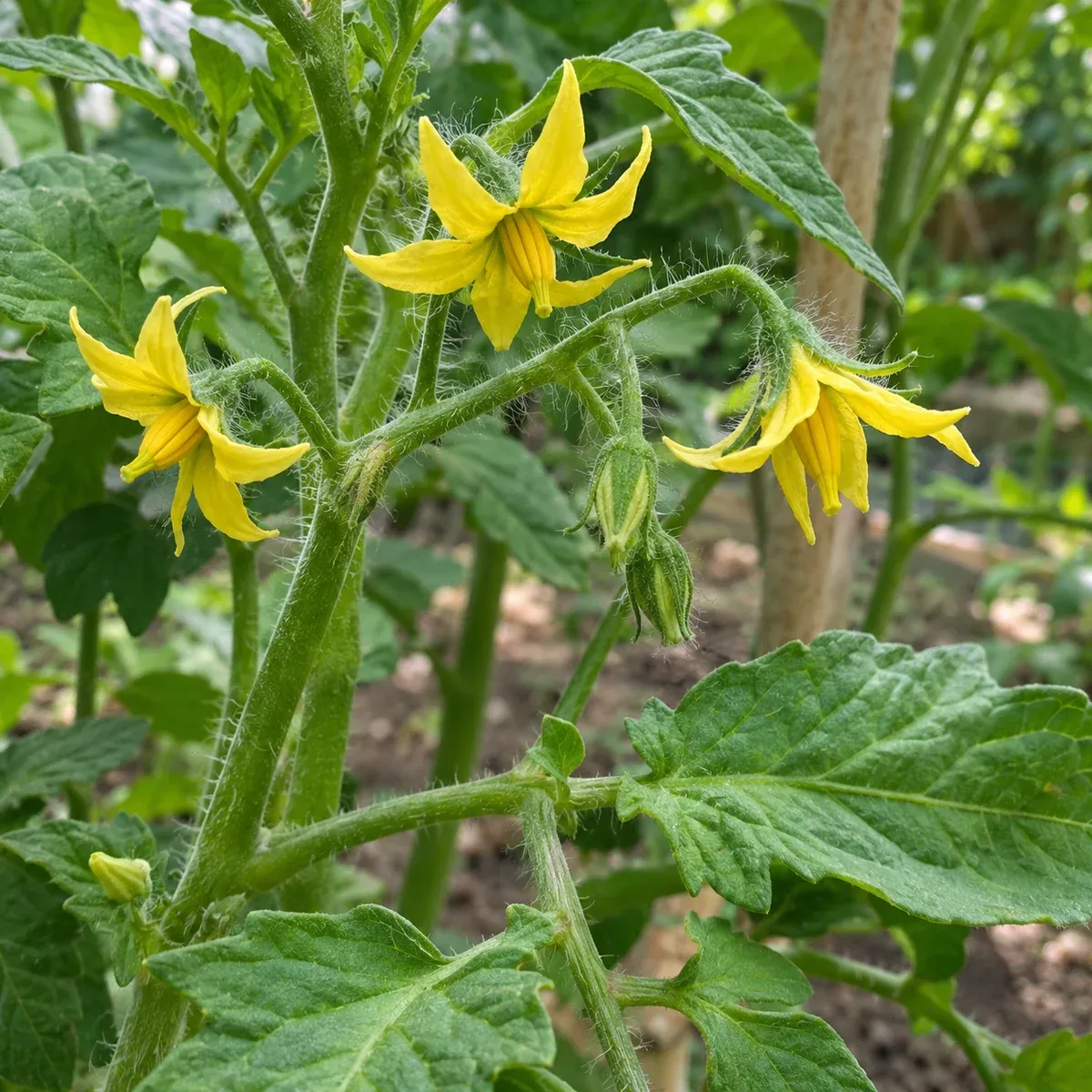
Has temperature disrupted fruit set?
Fruit set is the early stage of fruit formation after flowering. In observations of tomatoes in high tunnels, the Maryland source links pollination difficulties to days and nights that are too hot, as well as nights that are too cool. These American findings do not establish an identical threshold for every variety and each greenhouse in France.
Record the temperature near the plants, including night-time minima if possible. External weather conditions alone do not describe the interior of a greenhouse. Note the sequence of days and nights alongside the affected trusses to look for a pattern, without drawing conclusions from a single reading.
What to adjust after taking readings?
- Overheating under cover: Open doors and vents during sunny days, then check the temperature near the plants again. If this is insufficient, consider adjustable shading, limited to what is necessary: too much shade reduces light useful for tomatoes. The RHS recommends a min-max thermometer to monitor this. RHS, greenhouse
- Still-cold nights: Track their progression and monitor subsequent trusses. The Maryland source shows that cold can disrupt pollen; tapping flowers more does not correct this temperature issue. Observe the formation of new fruit after temperatures become favourable again. Maryland
- Dried-out pot: Proceed to the water check below before concluding that pollinators are lacking.
Distinguish the two roles of ventilation: removing heat and allowing insects in. Tapping is only intended to move pollen. These actions do not restore flowers that have already dropped; assess their effect by monitoring new flowers and fruits that begin to swell.
In greenhouses, helping pollen to move
The RHS advises regularly opening vents to allow access for pollinating insects. It also suggests very gently tapping or shaking open flowers to facilitate pollen transfer within the flower. Perform this action carefully, without pulling off flowers or tugging on their stalks.
This assistance targets pollination. It does not guarantee fruit set if the temperature remains unfavourable, as the Maryland source notes. Flower drop alone is therefore no basis for promising a harvest after a single intervention.
In pots, check water before adding more
The substrate can dry out quickly in sun and wind. The Iowa source associates complete dryness with flower and fruit drop; it also highlights that excess water deprives roots of oxygen.
Check beneath the surface and ensure water can drain through the container’s holes. If the substrate is drying out, moisten it thoroughly, allowing excess to drain. If it remains waterlogged, continue checking drainage before adding more water. The tomato watering guide details the steps for different containers.
Should fertiliser be added to keep flowers on the plant?
Start with these checks: timing of flower drop, temperature, whether plants are under cover or outdoors, and substrate condition. A lack of fruit does not alone indicate a fertiliser deficiency. To decide on an application, revisit the fertilisation guide with a list of products already used and their instructions.
Then monitor new trusses and record any changes made. If the plant also shows spots, decline, or damaged stems, broaden your observation with the tomato problems guide. Not all flower loss is due to pollination failure.
Key points for this crop
Practical guidance
- Stage
- Flowering and early fruit set
- Under cover
- Check heat and pollinator access
- In pots
- Avoid complete drying of the substrate
Sources and references
- Problems with Pollination in High Tunnel TomatoesUniversity of Maryland Extension, Gerald Brust, in English Accessed on 18 October 2026.
- How to grow tomatoesRoyal Horticultural Society (RHS), in English Accessed on 18 October 2026.
- Growing Tomatoes in ContainersIowa State University Extension and Outreach, Aaron Steil, in English Accessed on 18 October 2026.
- Greenhouse: ventilation and shadingRoyal Horticultural Society, in English Accessed on 8 November 2026.