
The vegetable garden notebook / Crops
Black spots on tomatoes: what to check based on their position?
A black spot is not a diagnosis. Start by pinpointing the lesion’s exact location: at the tip of the fruit, near its stem attachment, on a leaf or on the stem. Its initial appearance and other affected parts then help guide further observation.
Adapt this guidance to your garden’s climate and conditions.
Locate the spot before naming it
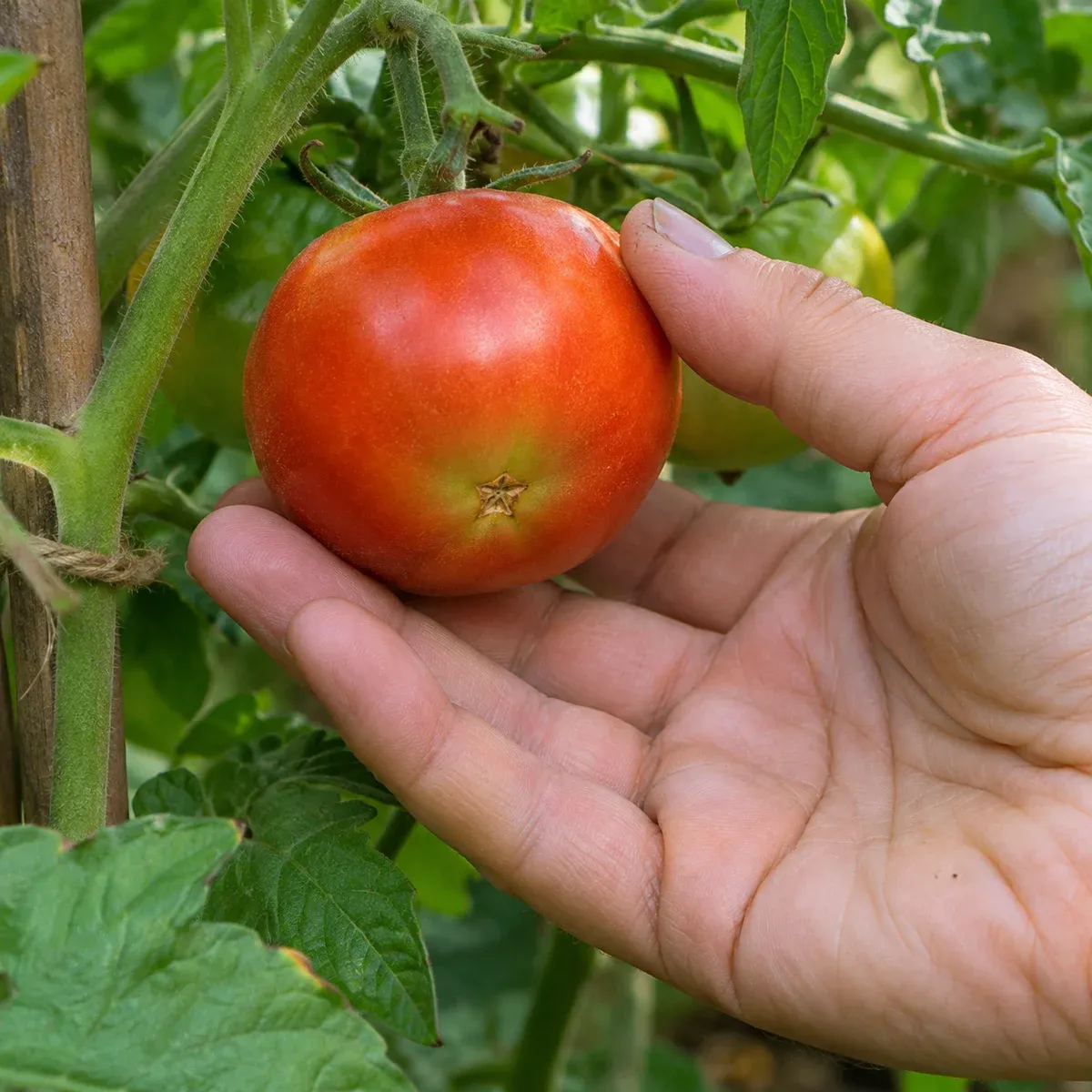
The fruit may bear lesions of parasitic or physiological origin. INRAE recommends comparing their location and appearance to avoid confusion. Identify the peduncle, which connects the fruit to the plant, then the opposite end, where the flower was located.
Note whether the tomato is green or ripe, if the area is sunken, dry or moist in appearance, and if it was already dark initially. Also photograph the entire plant: a close-up of a single spot may hide potential damage to leaves and stems.
On the fruit: which area is affected?
| Observation | Possible cause | Next check |
|---|---|---|
| Lesion opposite the peduncle, turning dark, sunken and rather dry. | Blossom-end rot, called cul noir in French. | Check that the lesion starts at the blossom end, then examine watering conditions. INRAE. |
| Black area near the peduncle, with raised concentric rings. | Early blight. | Look for ringed spots on older leaves near the ground. Minnesota. |
| Round, sunken spots with a darkening centre on ripe fruit. | Anthracnose. | Note the stage at which they become visible; their presence does not require visible spots on leaves or stems. Minnesota. |
| On still-green fruit, coppery marbling, sometimes bumpy, with other parts affected. | Late blight among possibilities. | Look for oily-looking lesions on leaves and brown to black areas on stems. INRAE. |
Blossom-end rot is a physiological disorder, linked to the fruit’s calcium supply. A deficiency in absorption or transport may occur: the spot alone does not prove that the soil lacks calcium. The blossom-end rot guide details checks before adjusting watering or fertilisation. INRAE.
These positions do not constitute a complete key. For example, rot caused by Alternaria alternata may form a sunken area with a black, downy centre elsewhere on the fruit, whether green or ripe. It is not limited to the lesion near the peduncle described for early blight in the table. Minnesota.
On leaves and stems: which signs should you consider together?
Dark spots with concentric circles and a yellow border, first on older lower leaves, are consistent with early blight. Dry brown areas with rings may also appear on stems. These signs, described by Minnesota, should be examined together.
Small leaf spots do not always allow diseases to be distinguished early on. Some bacterial infections cause similar marks on leaves but different spots on fruit, such as small raised black dots for bacterial speck. Therefore, also photograph any fruit present. Minnesota.
If a dark stem lesion is accompanied by oily spots merging on leaves, consult the late blight guide. INRAE describes irregular lesions that may encircle the stem. Note their height: damage at the base of the plant or on the side of the fruit in contact with the soil also calls for other checks, particularly for buckeye rot, distinct from late blight.
Was the area black from the start?
An initial lesion may later be colonised by micro-organisms. Minnesota describes these secondary rots after blossom-end rot, but also after sunscald: the latter begins as a pale, yellow to white patch on the exposed side of the fruit.
If possible, find an earlier photo or note the order in which signs appeared. Mould on an old lesion is not enough to identify its initial cause. Also avoid stripping the plant: excessive leaf loss may expose fruit to sunscald. Minnesota.
What to do while checking?
Water at the base, keeping leaves dry, and wait until foliage is dry before handling it. These precautions limit the spread of some foliar diseases but do not cure existing lesions. Minnesota.
Compare the same areas each time you check: look for spots spreading, newly affected fruit, symptoms spreading to stems and the plant wilting. If signs become mixed or progress, seek a precise diagnosis before specific intervention. Prepare overview and close-up views, the date of appearance, recent weather and last watering. The tomato disease guide helps place these observations in the context of the plant’s overall condition.
Key points for this crop
Practical guidance
- First reference point
- Affected organ and exact position of the lesion
- On the fruit
- Distinguish the blossom end from the peduncle attachment
- Monitoring
- Compare the initial appearance and new symptoms
Sources and references
- VigiJardin — Tomato late blight: risks of confusionINRAE, Ephytia Accessed on 16 October 2026.
- Tomato — Blossom-end rot on fruitINRAE, Ephytia, D. Blancard Accessed on 16 October 2026.
- VigiJardin — Tomato late blight: symptoms and damageINRAE, Ephytia Accessed on 16 October 2026.
- Early blight in tomato and potatoUniversity of Minnesota Extension, in English Accessed on 16 October 2026.
- Tomato — Fruit — Soft and rotted fruitUniversity of Minnesota Extension, in English Accessed on 16 October 2026.
- Tomato disordersUniversity of Minnesota Extension, in English Accessed on 16 October 2026.
- Tomato leaf spot diseasesUniversity of Minnesota Extension, in English Accessed on 16 October 2026.