
The vegetable garden notebook / Crops
Fertilising tomatoes: deciding when to feed plants in the ground and in pots
Before adding fertiliser to tomatoes, assess what their soil or potting compost already contains. The choice of application depends on the cultivation method, previous inputs, and the plant’s development.
Adapt this guidance to your garden’s climate and conditions.
Assessing Before Choosing a Fertiliser
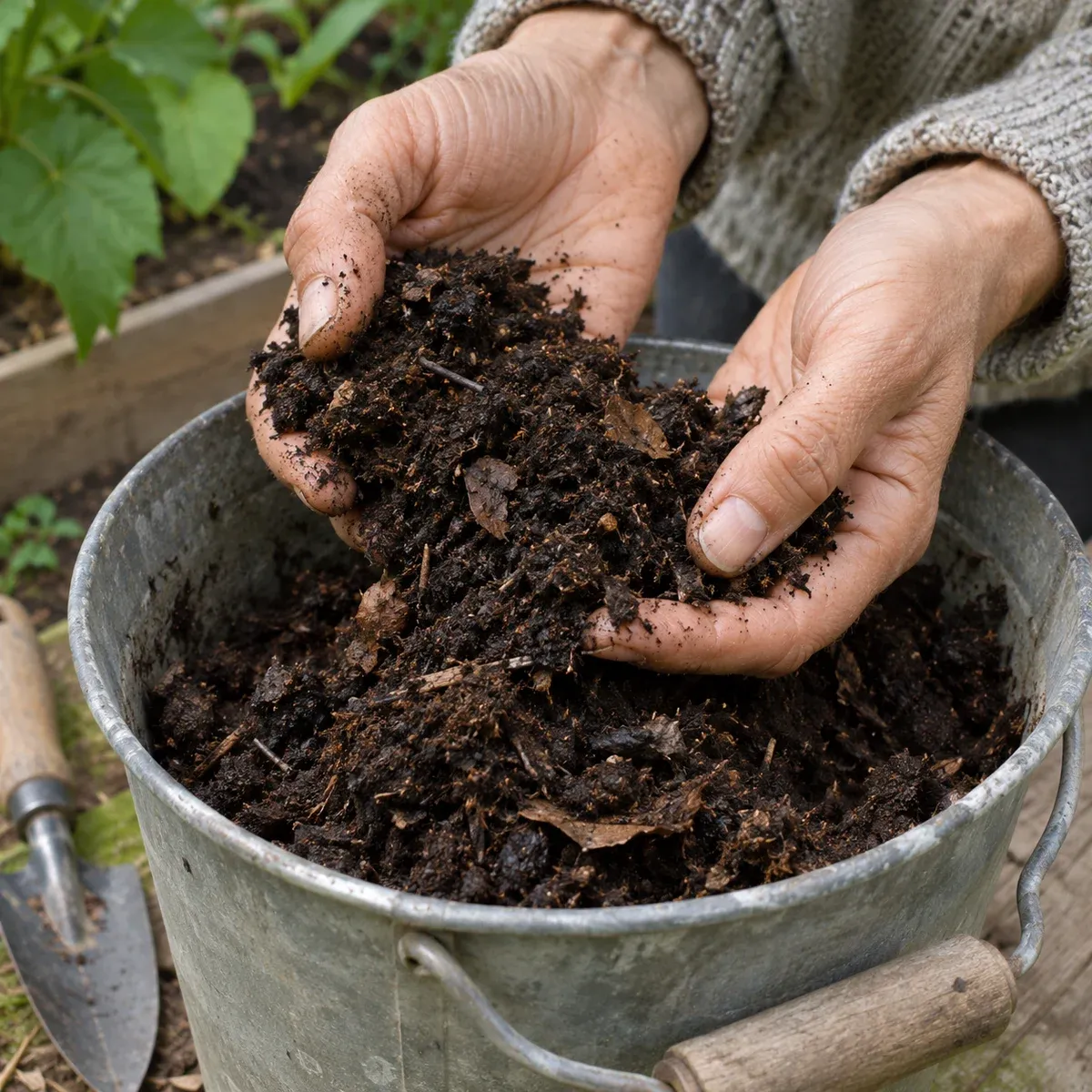
Gather available information: whether the plants are in garden soil or which potting compost product is used, garden compost or composted manure applied, fertiliser already used, date, and quantity. For pots, keep the potting compost bag and instructions. This small inventory prevents treating each new application as if nothing preceded it.
For open ground, a soil analysis with interpretation for vegetable gardens helps in decision-making. It provides information on pH and nutrient levels; follow the laboratory’s instructions for taking a representative sample from the plot. The University of Maryland notes that a standard analysis does not necessarily measure nitrogen: its availability fluctuates, and recommendations also consider the crop. An analysis result is not simply a dosage to replicate year after year.
The University of Minnesota advises using the soil test results to decide on phosphorus and potassium applications. It also indicates that organic inputs may render additional supplementation unnecessary. Amended soil does not automatically require an extra “special tomato” fertiliser.
Distinguishing Open Ground from Pots
In open ground that has already been enriched, it may be reasonable to add no further fertiliser: the RHS explicitly allows for this. Check reserves and previous inputs before adopting a regular programme.
In pots, watering can leach nutrients out of the container. The need depends on volume, plant, watering, and product. Maryland reminds us, however, that potting compost already containing fertiliser nourishes the plant during an initial period. Read its instructions before adding further fertilisation; no single duration applies to all mixes.
When the first fruits begin to swell, the RHS suggests, for tomatoes in containers, a potassium-rich organic liquid fertiliser. This serves as a reference for reviewing ongoing fertilisation, considering the potting compost and product instructions. This stage does not justify doubling an already planned application or imposing the same programme on a tomato in open ground.
The tomato cultivation guide places this decision among other plant care practices.
Choosing and Applying Without Overdosing
The letters N, P, and K denote nitrogen, phosphorus, and potassium. A complete fertiliser contains all three, but this does not prove your soil lacks all three. Maryland recommends avoiding adding phosphorus and potassium when the analysis shows them already abundant.
For the selected product, note the intended use, dosage, any dilution, frequency, and application method. Measure according to its instructions: “more” does not mean “better”. Organic fertilisers can also be overapplied. Do not pile granules against the stem or leave them on the leaves. University of Maryland
For liquid fertiliser, the RHS requires already moist soil or substrate and adherence to the manufacturer’s recommendations. Do not fertilise a dried-out root ball in an attempt to revive it: first check its hydration status. Our watering guide explains how to assess soil moisture.
Excessive Foliage or Pale Leaves: What to Check?
Excess nitrogen can produce a very leafy plant and delay fruiting, according to Minnesota. If you have already fertilised heavily, do not add more fertiliser to compensate for a lack of harvest.
Conversely, pale leaves or slow growth do not necessarily indicate a deficiency. Maryland describes similar symptoms with insufficient light, compacted soil, or other stresses. Examine the entire plant and its growing conditions before choosing a correction. If the problem persists without a clear cause, seek a precise diagnosis.
Does Blossom End Rot Require Calcium?
Not automatically. Blossom end rot corresponds to a localised calcium deficiency in the fruit, which can occur even when the soil contains calcium. The RHS explains the role of water circulation and irregular supply, particularly in pots. Check moisture and what has already been applied before concluding that calcium is needed. Systematic supplementation does not replace this search for the cause.
Finally, keep a record of what you actually apply and the changes you observe. This monitoring allows decisions to be based on facts, rather than adding more products with every change in leaf colour.
Key points for this crop
Practical guidance
- Before application
- Review the soil or potting compost and previous inputs
- In open ground
- Let soil analysis guide corrections
- In pots
- Account for fertilisation already present in the potting compost
- Dosage and frequency
- Follow the product instructions, without blindly combining applications
Sources and references
- Growing tomatoes in home gardensUniversity of Minnesota Extension, in English Accessed on 16 October 2026.
- Soil Testing and Soil Testing LabsUniversity of Maryland Extension, in English Accessed on 16 October 2026.
- How to Grow TomatoesRoyal Horticultural Society (RHS), in English Accessed on 16 October 2026.
- Maintaining Container Grown VegetablesUniversity of Maryland Extension, in English Accessed on 16 October 2026.
- Fertilizing Vegetable GardensUniversity of Maryland Extension, in English Accessed on 16 October 2026.
- Blossom end rotRoyal Horticultural Society (RHS), in English Accessed on 16 October 2026.