
The vegetable garden notebook / Techniques
Watering the Vegetable Garden: When to Water and How to Apply It
Before filling the watering can, inspect the soil and the crop. A dry surface, a shower, or a wilted leaf alone are not enough to decide whether to water.
Adapt this guidance to your garden’s climate and conditions.
Practical steps
- Check
Assess moisture beneath the surface, at root level.
- Adapt
Consider the crop, its growth stage, soil type, container, and weather conditions.
- Water
Apply water to the soil slowly, allowing it to infiltrate without running off.
- Monitor
Check that the soil beneath the surface is moist and note what you did.
Check the Soil Before Watering
Pull back any mulch, then examine the soil beneath the surface layer. You can dig a small hole in a free space next to the crop to observe and feel the soil without uprooting the plant. A dry crust may conceal soil that is still moist. Jardiner Autrement recommends this check before watering and a further inspection at depth after application.
For an established plant, the goal is to moisten the root zone, not just darken the surface. The depth to examine depends on the crop and its growth stage; the RHS advises against merely wetting the top layer regularly.
If the soil is still moist at this depth, postpone watering and continue monitoring. If it is drying out, adjust your watering to the plant’s needs. If it is waterlogged, adding more water is not the solution: prolonged saturation can deprive roots of air, as noted by Jardiner Autrement.
Adapt Watering to Growth Stage and Location
A single round of watering does not mean the same quantity for every row. The RHS distinguishes the needs of seeds, young plants, and established crops:
- Seeds and young plants: Maintain consistent moisture in the area where they are starting. For seeds, use a gentle application with a watering can rose; the RHS recommends keeping the surface moist after sowing. See the precautions in the sowing guide.
- Established vegetables: Consider what is forming. Tomatoes, for example, require a steady supply during flowering and fruiting; lettuces need consistent moisture throughout growth. This does not mean watering soil that is already moist.
- Sandy or clay soil: Applications may be smaller and more frequent in free-draining sandy soil. Clay soil may allow for longer intervals between waterings, according to Jardiner Autrement. The actual condition of the soil remains decisive: do not attempt to saturate soil that is already retaining water.
To tailor watering to specific crops, consult the guides for tomato watering, courgette, or sweet pepper, each detailing plant monitoring and container-specific considerations.
Crops also have varying needs up to harvest: the garlic guide explains stopping watering when bulbs are large and well-formed. A fixed schedule for the entire vegetable garden would overlook these differences.
In Containers, Check Each Pot
Pots dry out faster than open ground. The RHS suggests feeling the substrate’s moisture at about one-third of the pot’s depth from the top before deciding. Monitor more closely during hot, windy periods; light rain may only wet the surface.
When watering is necessary, pour slowly and allow the substrate to absorb the water. Stop before or as soon as water appears at the drainage holes. Do not leave the pot standing in a saucer of water for extended periods: the same guide recommends emptying excess water after a few hours. These steps apply to standard perforated pots; a self-watering container requires following its specific instructions.
Let Water Soak into the Soil Around the Plant
Before intervening, check the restrictions applicable to your area on VigiEau, the service presented by the Ministry of Ecological Transition.
For a crop whose soil needs water:
- Direct the application to the soil around the plant. The RHS recommends avoiding wetting the foliage to limit fungal diseases.
- Adjust to a gentle flow. A jet that is too forceful can exceed the soil’s infiltration capacity and cause erosion, explains Iowa State University.
- If water runs off, pause the application. Allow it to penetrate, then resume more gently if the root zone still lacks moisture.
- Check the result beneath the surface. A quick soil inspection shows how far the water has penetrated. Iowa recommends this check, including with soaker hoses or drip irrigation.
The required duration depends on your soil type and flow rate. Record the actual amount applied if known, without treating it as a universal dose for the next watering.
Morning or Evening: Keep Foliage as Dry as Possible
For necessary watering, prioritise early morning. The RHS recommends this to minimise evaporation and make water available during the day. It also allows for evening watering but notes that foliage remaining damp overnight can encourage disease. In both cases, aim for the soil.
The timing does not replace checking the need: watering every morning when the soil is still moist remains unnecessary. Also adjust the schedule to comply with local restrictions.
Mulch Helps but Does Not Replace Monitoring
A soil cover reduces evaporation. Apply it to soil that is already moist. The RHS notes, however, that water must pass through this layer to reach the roots: wet mulch does not prove the soil beneath is also moist.
Pull back some material to check beneath it before and after watering. Adjust your applications based on what you observe.
Is a Wilted Plant Always Thirsty?
No. The University of Maryland explains that temporary wilting can occur in high heat or drying winds, even if the soil contains water. It also describes plants wilting or yellowing when roots lack oxygen in poorly drained soil.
Check the soil before acting. If it is sufficiently moist, observe the plant again when the temperature drops. If wilting persists or is accompanied by other damage, investigate the cause instead of increasing watering. Yellowing or leaf posture alone are not diagnostic.
In your notes, separate observations from actions: “soil moist under mulch”, “foliage wilted at midday”, and “no water applied”. You can then compare these observations to the plant’s subsequent development.
How to Save Water, Even During a Heatwave
Start by avoiding unnecessary applications: check soil beneath the surface, direct water to the roots, and prevent runoff or leaks. Group crops with similar needs to monitor them together. Choosing site-adapted plants and mulching complement these practices. Jardiner Autrement
The RHS also advises collecting rainwater. A reserve should be prepared before dry periods.
During a heatwave, pay particular attention to seeds, young plants, and containers. Check the substrate before watering, prioritise morning applications, and deliver water slowly to the soil. Do not automatically double the amount: a plant may wilt in heat while the soil remains moist. RHS, Maryland
See the heat protection measures and drip irrigation adjustments to further refine monitoring.
Preparing a Reserve or Choosing Another Watering Method
The rainwater for the vegetable garden guide details collection, storage, water quality, and applicable regulations. Choosing how to store water is a separate decision from choosing how to apply it.
To explore buried clay pot irrigation, the ollas guide explains installation, how the water spreads and checks to make before you go away. When comparing ollas with drip irrigation or a watering can, start with your crops and how often someone can check on them.
The steps in pictures
Check beneath the surface before watering
Before watering, check the soil beneath the surface.
Move the mulch aside
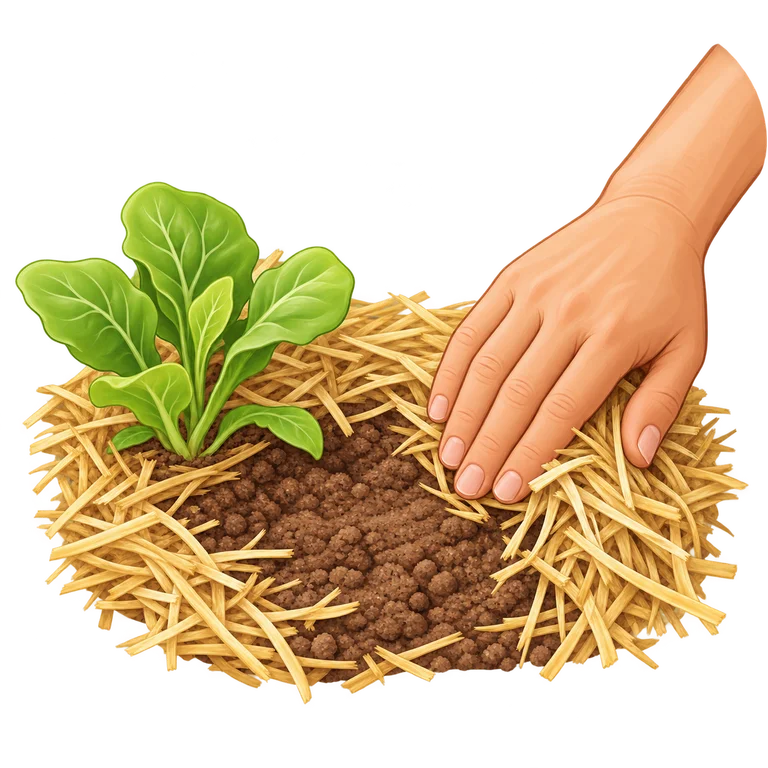
If the soil is mulched, clear a space next to the crop, without digging up the plant.
Examine the soil
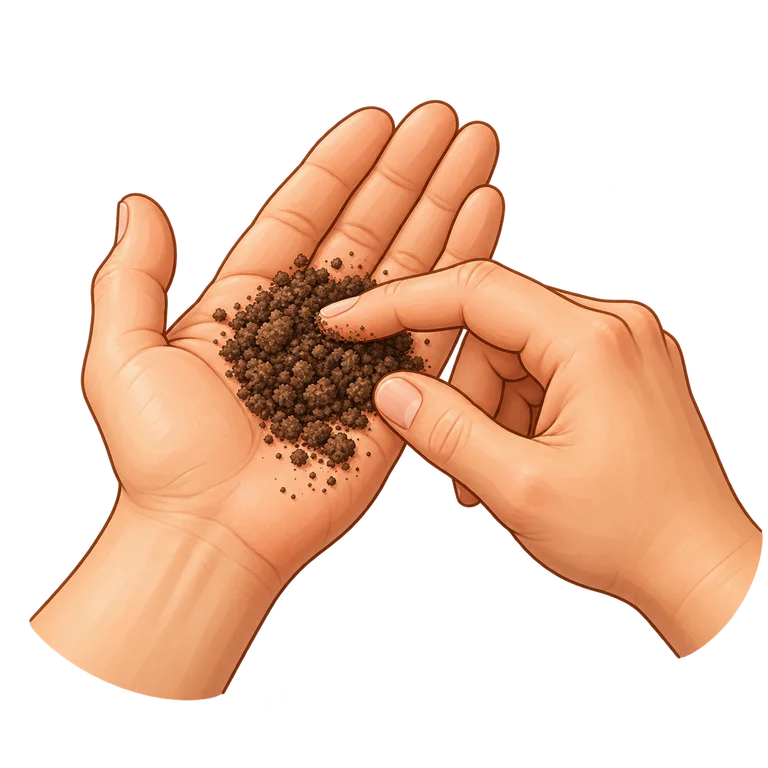
In this cleared space, look at and feel a little soil taken from below the surface layer.
What to do after this check?
- Still moist
- Wait and keep monitoring.
- Drying out
- Adjust watering to the crop and the conditions.
- Waterlogged
- Do not add water.
If watering is needed, apply water slowly to the soil, allow it to soak in, then check again.
Illustrations of the steps. A dry surface alone is not enough to decide whether to water: the depth to check and the need for water depend on the crop and its growth stage.
Move the mulch aside and check the soil next to the crop, without uprooting the plant. A dry surface may conceal soil that is still moist. If watering is needed, apply water slowly to the soil, then check that it has soaked in below the surface.
Examine the soil in the root zone, according to the crop’s stage of growth. If water runs off, pause watering and allow it to infiltrate.
Based on Jardiner Autrement, soil checking · RHS, root zone · Iowa State, infiltration and runoff.
Sources and references
- Water-efficient wateringJardiner Autrement, Société Nationale d’Horticulture de France Accessed on 15 October 2026.
- Watering vegetables and fruitRoyal Horticultural Society (RHS), in English Accessed on 15 October 2026.
- WateringRoyal Horticultural Society (RHS), in English Accessed on 15 October 2026.
- How to water containersRoyal Horticultural Society (RHS), in English Accessed on 15 October 2026.
- Wilting of Vegetable PlantsUniversity of Maryland Extension, in English Accessed on 15 October 2026.
- Watering the Home Vegetable GardenIowa State University Extension and Outreach, Aaron Steil, in English Accessed on 15 October 2026.
- Mulches and mulchingRoyal Horticultural Society (RHS), in English Accessed on 15 October 2026.
- Launch of the VigiEau platform to provide information on drought restrictionsMinistère de la Transition écologique Accessed on 15 October 2026.