
The vegetable garden notebook / Crops
Watering sweet peppers: maintaining consistent moisture
To water a sweet pepper plant, first check the soil moisture. The goal is to maintain a consistent reserve around the roots without saturation. The plant’s stage, container, and weather determine the next watering, not a fixed number of litres per day.
Adapt this guidance to your garden’s climate and conditions.
When should you water sweet peppers?
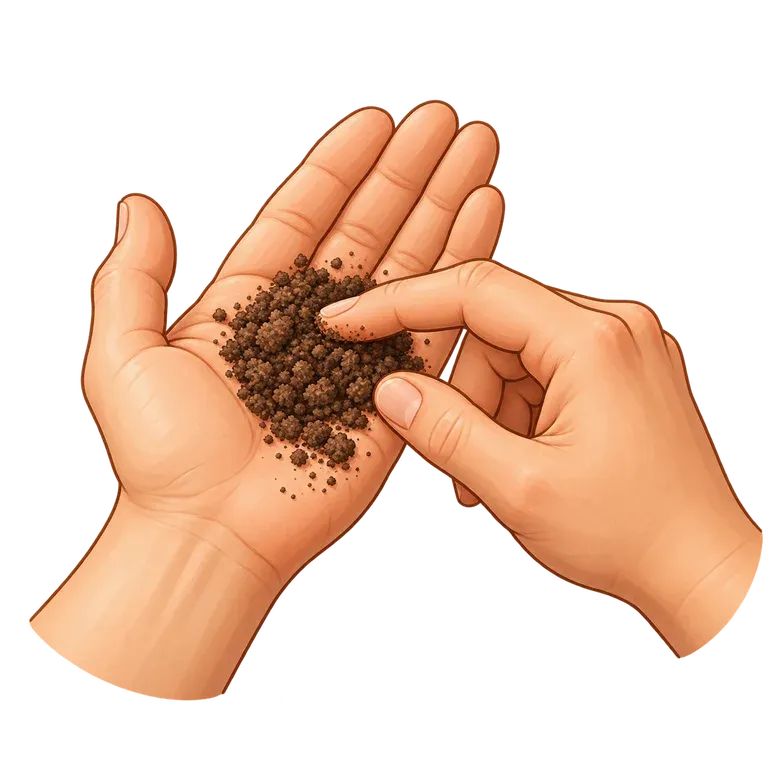
Move the mulch aside and examine the soil beneath the surface, near the plant without damaging its roots. The RHS watering guide recommends checking the root zone: the top may be dry while the soil remains moist lower down.
- The soil is drying out: water to moisten the root zone.
- It remains moist: postpone watering and check its condition again later.
- It is waterlogged: suspend watering and verify water drainage.
Excess water can encourage root and stem base rot, the RHS notes. Our general watering guide details this observation method.
From planting to fruit formation
At planting, the University of Minnesota advises watering the plant before removing it from its container, then again after planting. During establishment, maintain consistent moisture: young vegetables need a consistent supply of moisture, according to the RHS.
Continue this monitoring during flowering and fruit development. University of Minnesota Extension states that poor water availability weakens flowers and young fruit. The RHS sweet pepper factsheet notes that flower buds may drop if the plant becomes too dry. These observations justify regular watering, without defining an identical dose for all plants.
In the ground: moistening the roots and conserving water
Direct water to the soil. University of Minnesota Extension advises against overhead watering and light watering that only wets the surface. Check after watering that the water has penetrated: sandy soil may require more frequent watering.
Mulch helps limit moisture loss, as recommended by the RHS for sweet peppers. Apply it to soil already moistened by rain or watering, following their watering guide, then continue checks beneath the cover. The mulching guide presents materials and their application.
In pots: monitoring even after brief rain
The potting compost in a container dries out faster than garden soil. According to the RHS, heat and wind accelerate moisture loss, and brief showers may only wet the top few centimetres. Therefore, check moisture deeper down in the potting compost before deciding to water.
In a standard pot with drainage holes, pour water slowly onto the potting compost, allowing it to penetrate. Stop just before, or as soon as, the first drops appear at the drainage holes; empty the saucer after a few hours. These steps from the RHS apply to conventional containers. A self-watering planter should be managed according to its instructions.
The RHS sweet pepper factsheet mentions that daily watering may be necessary in hot, dry weather in containers. This is a situation to verify, not a mandatory frequency for the entire season.
Dropped flowers or damaged fruit: do not attribute everything to water
If flowers drop, check moisture levels, but also the temperature under cover. The RHS indicates that temperatures above 30 °C can reduce fruit set; they recommend ventilation and shading. Adding water to already moist soil does not replace temperature management.
A dark patch on a fruit alone is not sufficient to conclude a lack of calcium in the soil. The RHS explains that blossom end rot corresponds to a lack of calcium in the fruit, often linked to its transport with water; the soil generally contains enough calcium. Check growing conditions and have a persistent problem identified before choosing a corrective treatment.
For varieties, planting, and harvest guidelines, see the sweet pepper growing guide.
Key points for this crop
Practical guidance
- Before watering
- Check moisture beneath the surface
- Flowering and fruiting
- Avoid letting the soil dry out
- In pots
- Monitor more closely in hot and windy weather
- Excess water
- Ensure drainage, without standing water
Sources and references
- How to grow sweet peppersRoyal Horticultural Society (RHS), in English Accessed on 16 October 2026.
- Growing peppers in home gardensUniversity of Minnesota Extension, in English Accessed on 16 October 2026.
- Watering vegetables and fruitRoyal Horticultural Society (RHS), in English Accessed on 16 October 2026.
- How to water containersRoyal Horticultural Society (RHS), in English Accessed on 16 October 2026.
- Blossom end rotRoyal Horticultural Society (RHS), in English Accessed on 16 October 2026.