
The vegetable garden notebook / Techniques
Mulching in the Vegetable Garden: Choosing the Material and the Right Time
Effective mulching begins with observing the soil and crops. Before covering the entire vegetable garden, identify the rows to be sown, areas still cold, and the materials you have available.
Adapt this guidance to your garden’s climate and conditions.
Practical steps
- Observe
Check soil moisture and identify seedlings to protect.
- Choose
Select a healthy material suited to the work you have planned.
- Install
Apply to the surface and keep the base of plants clear.
- Monitor
Check the soil beneath the mulch and the condition of young leaves.
What Is Mulching Used for in the Vegetable Garden?
Mulching involves covering the soil surface. It can reduce evaporation and suppress weeds by limiting light reaching the soil. Organic materials gradually decompose, contributing to soil organic matter. These effects depend on the material and its application, as specified by the RHS.
Start with an easily observable bed. Your goal may be to retain moisture around established plants, cover an area between crops, or use available leaves. This helps in selecting a cover that can be moved when needed.
When Should You Mulch Soil That Is Moist or Still Cold?
Moist soil is suitable for mulching, but waterlogged soil requires patience. The RHS advises postponing application when the soil is very wet or frozen. Therefore, do not interpret “mulch on moist soil” as a rule to water systematically before each application.
In early spring, removing mulch from the vegetable garden helps the soil warm up. Jardiner Autrement also recommends not mulching frozen soil. Assess the actual condition of the plot: covering in autumn and preparing a row for early sowing address different needs. The November calendar helps you plan autumn tasks.
Which Material Should You Choose?
First, take inventory of what is available, then retain only materials whose origin and condition you know.
| Material | Use and Precaution |
|---|---|
| Soft leaves and dried grass clippings | They decompose faster than woody materials and are suitable for short-cycle crops. ADEME. To inventory your resources, consult the guide to free mulch. |
| Cereal straw | It provides a compromise in the vegetable garden; make sure you can move it aside when you need to work on the bed. Jardins de France. |
| Wood chips, bark and tough leaves | Their slow decomposition makes them more suitable for perennial plantings than frequently disturbed rows. ADEME. The wood chip guide details this case. |
| Garden compost | It is among the possible materials for covering soil. This does not mean purchasing new potting compost for this purpose. RHS. |
Gravel does not replace the organic contribution of decomposing materials, according to the RHS. The mineral mulching guide helps compare this choice with organic covers. For a first trial on a vegetable bed, choose a material that is easy to spread and remove.
How Thick Should the Mulch Be?
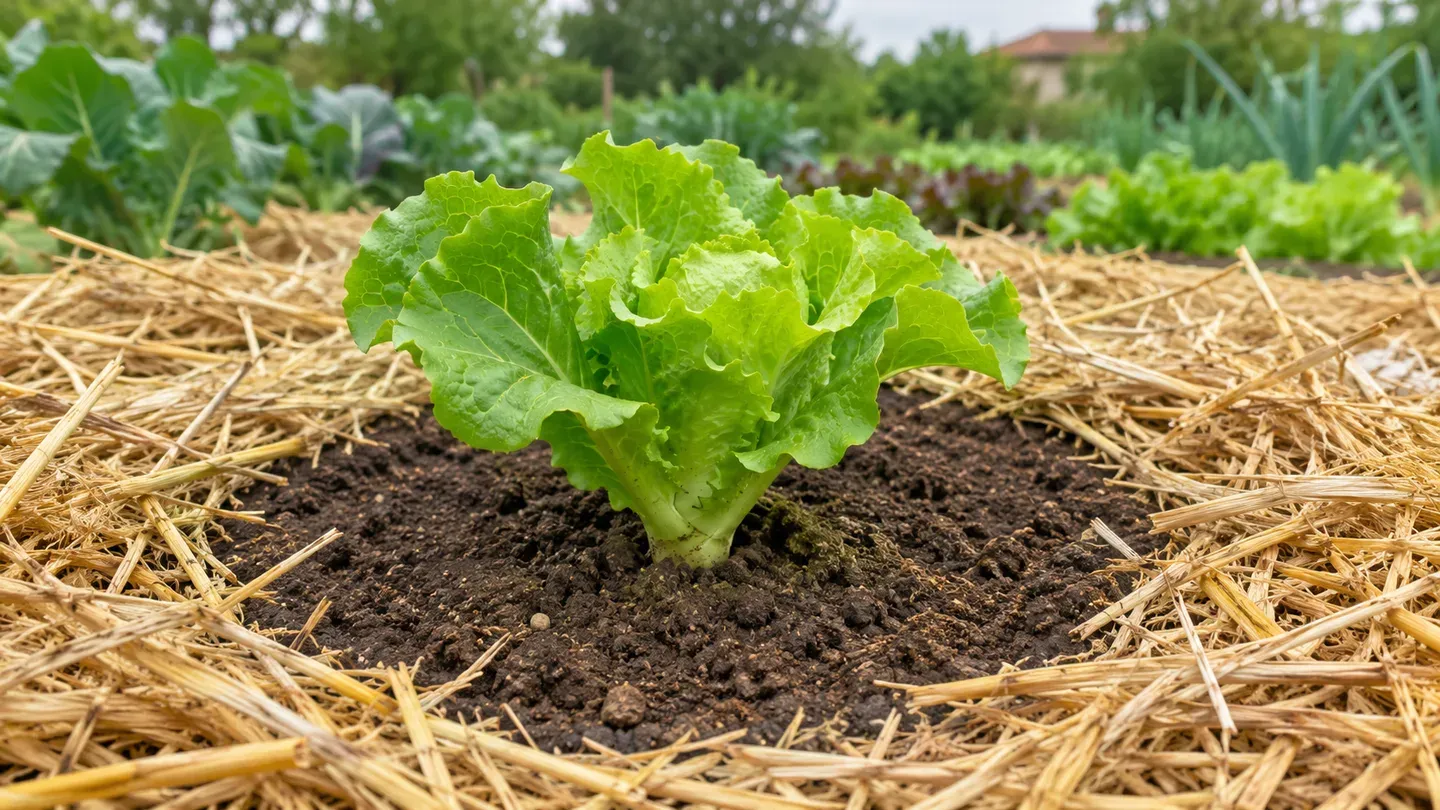
There is no universal thickness for all mulches. Jardins de France provides a benchmark of 8 to 10 cm for cereal straw, accounting for compaction. This benchmark does not apply to fresh grass clippings: the source prefers successive applications that dry rather than a thick layer that ferments.
Start with a single material and note the initial thickness. You can observe what remains after compaction before adding a new layer.
Install Without Burying or Covering Young Shoots
Proceed in this order:
- Weed the area, particularly perennials such as bindweed and couch grass, including their underground parts.
- Identify plants and rows to be sown before spreading the material.
- Apply the mulch to the surface, without mixing it into the soil.
- Keep the root collar and emerging shoots clear. The root collar is the junction between the stem and roots.
These precautions follow the recommendations of Jardiner Autrement. For direct sowing, move the cover aside: it may hinder seedling emergence. Wait until seeds have fully germinated before returning to mulch around young plants, without covering them.
Slugs and Diseased Debris: Points to Monitor
A pile of fresh, moist, and poorly aerated plant material can attract slugs. The ADEME advises allowing water-rich materials to dry before use. Young crops require particular attention: the vegetable garden section of Jardins de France highlights the risk of damage under mulch during sowing periods. Examine leaves and occasionally lift the cover near a damaged plant.
Exclude seed-bearing weeds and diseased debris from the chosen material. The ADEME particularly emphasises the risk of reusing such debris in the same location or near related plants. Without identifying the disease, choose another resource.
Continue Observing the Soil Beneath the Cover
Mulching does not eliminate the need to monitor watering. According to the RHS, water must penetrate the cover to reach the roots, even if evaporation is subsequently reduced. Move some material aside to observe the soil before deciding to water.
In your notebook, record simple facts: material used, date, initial thickness, whether the soil remains moist, or new leaves showing signs of grazing. These observations will be more useful for adjusting your next trial than a fixed watering schedule.
Which Mulch Should You Choose During a Heatwave?
An organic cover suited to rows, such as straw or prepared leaves as described above, limits evaporation and temperature fluctuations. Apply it to already moist soil and ensure watering penetrates it. The RHS notes that dark materials can warm the soil in sunlight: do not choose dark slate to cool a sensitive row.
Adjust the mulch thickness to the material and crop. Keep small shoots and the root collar clear.
How Can You Limit Slug Damage?
First, identify the culprits, particularly in the evening during mild, humid weather. The RHS suggests targeted collection near young plants and relocation to a less vulnerable area of the garden; some slugs may return. For species that can be transplanted, sturdier plants are less vulnerable than very young seedlings.
Protect fragile crops without aiming to eliminate all these animals: many contribute to decomposition and feed other species. Eggshells or copper strips do not provide a reliable barrier in the garden trial described by the RHS. Mulch, therefore, does not serve as a slug control treatment. RHS
Sources and references
- How to mulchADEME Accessed on 15 October 2026.
- The Effects of Mulching in the GardenJardiner Autrement, SNHF Accessed on 15 October 2026.
- Mulching Flower Beds in the GardenJardins de France, SNHF; D. Veschambre and Fabien Robert, Astredhor Accessed on 15 October 2026.
- Mulches and MulchingRoyal Horticultural Society (RHS), in English Accessed on 15 October 2026.
- How to Mulch with Organic MatterRoyal Horticultural Society (RHS), in English Accessed on 15 October 2026.
- Slugs and SnailsRoyal Horticultural Society, in English Accessed on 17 October 2026.