
The vegetable garden notebook / Vegetable garden calendar
The Vegetable Garden in November: What to Plant and What to Prepare?
In November, the right programme starts with a tour of the garden. Damp soil, a forecast frost or an available shelter will influence your options more than the date alone.
Adapt this guidance to your garden’s climate and conditions.
This guide uses French examples and seasonal references. Adjust them to your garden’s climate and local conditions.
Three priorities this month
- Plant judiciously
Choose an autumn garlic variety and workable soil.
- Protect bare areas
Cover bare soil with suitable mulch, avoiding frozen ground.
- Prepare for the next season
Assess current crops and sort seed packets.
Start with the Soil and the Weather
Check the forecast for your municipality, then observe the garden. Is the soil easy to work or does it stick to tools? Which crops are still present? Which part remains in shade for long periods? Note these elements before drawing up your task list.
This calendar presents possibilities, not a series of mandatory actions. If the soil in a plot cannot be worked today, the work can simply wait. Conversely, a sheltered spot in a mild region may allow for a few additional plantings.
What to Plant or Sow in November?
| Crop | Possibility in November | Condition to Check |
|---|---|---|
| Autumn garlic | Plant cloves | Suitable variety and well-drained soil, frost-free. |
| Broad bean | Sow in regions with mild winters | In the Midi and South-West, adapt to the site; elsewhere, favour early spring. |
| Pea | Consider sowing in the mildest climates | Choose a variety suited to autumn sowing and follow its instructions. |
The SNHF broad bean fact sheet clearly distinguishes between warm regions and others. Terre vivante also notes that these autumn sowings depend on a mild winter. The name of a region alone is not enough: a cold valley, altitude or unfavourable exposure may alter your choice.
For garlic, find the techniques and spacing in our garlic planting guide, based on the SNHF and complementary horticultural references.
Protecting Cleared Beds
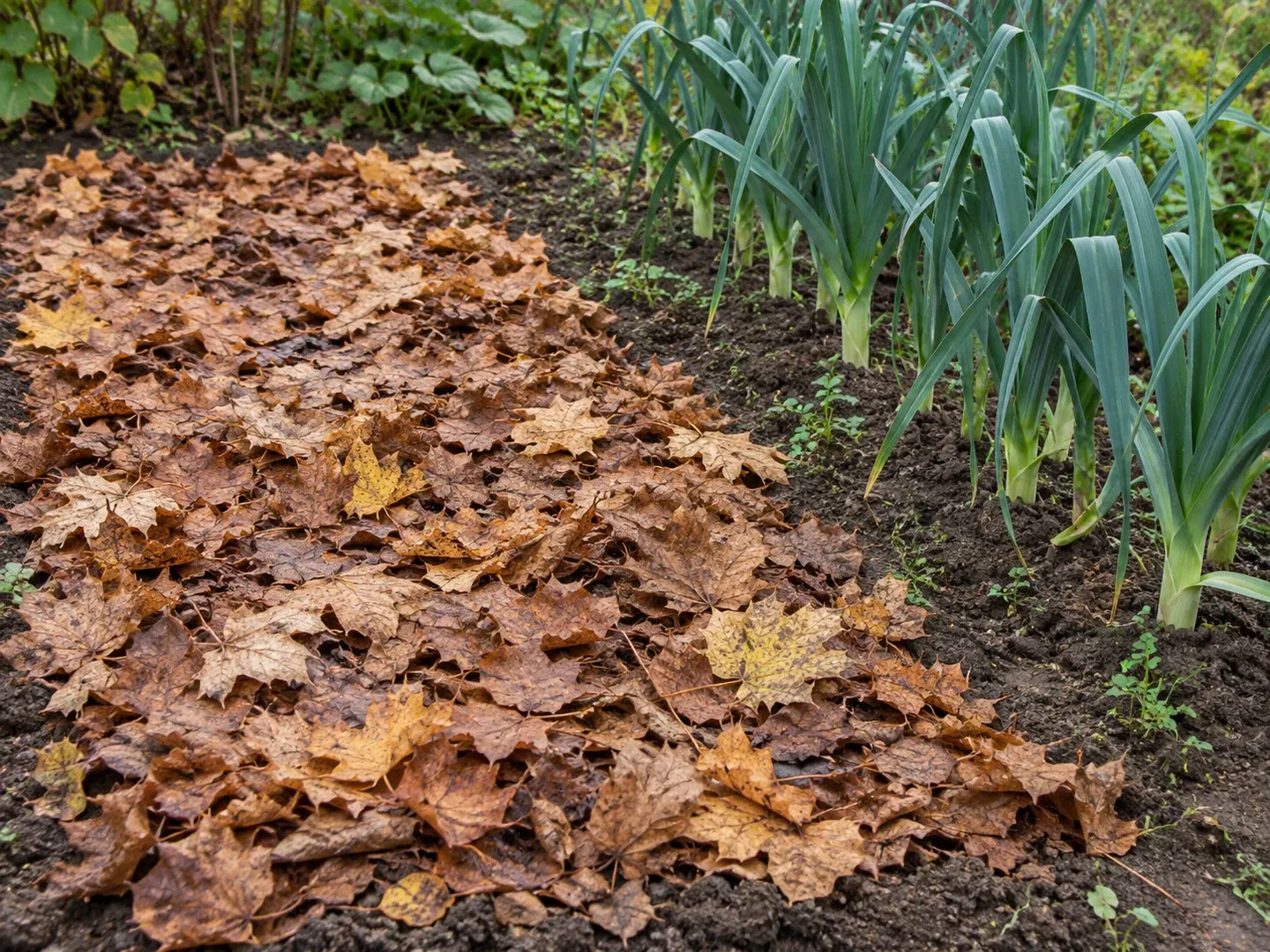
On areas without crops, mulching helps cover the soil over winter. Remove weeds before applying it. Keep materials on the surface and avoid burying them: Jardiner Autrement explains why the decomposition of certain mulches can temporarily immobilise soil nitrogen.
Fallen leaves or other suitable plant matter can serve as cover. Use healthy plant debris: Jardiner Autrement advises against diseased plants, which may spread diseases. Do not apply mulch to frozen ground. When sowing, move it away from the sowing line to allow seedlings to emerge.
A manageable starting point: Start with a single cleared bed. Note the material used and observe its condition in spring. You can then adapt the method to the rest of the garden.
Harvesting What Is Already in Place
A winter vegetable garden is often prepared several months in advance. Leeks, cabbages or other crops already in place may provide harvests, depending on their variety and condition. This does not mean it is still time to sow them in November for the same results this winter. This is a key distinction in the Terre vivante guide.
Before a cold spell, separate three decisions:
- Harvest what is ready: For Brussels sprouts already developed, start with the largest lower sprouts, as indicated by the SNHF. For corn salad, harvest the developed rosettes at their base as needed. November alone is not a maturity criterion. Brussels sprouts · Corn salad
- Leave in place what can wait: Brussels sprouts tolerate cold well according to the SNHF; it is therefore not necessary to uproot all healthy plants as soon as frost is forecast. Keep access for subsequent harvests and monitor the actual condition of the sprouts. SNHF
- Protect according to the crop: The SNHF recommends fleece for corn salad in intense cold, with a winter variety such as ‘Verte de Cambrai’ or ‘Coquille de Louviers’. This action does not guarantee absolute resistance or continuous growth. Check moisture and leaves under the protection; overly damp soil encourages problems during establishment. SNHF
For leek shanks, refer to the criteria and techniques in the leek fact sheet. Protecting crops and mulching a cleared bed address two different needs: do not cover the rosettes you plan to harvest with mulch.
Preparing Spring Sowings
Useful work can also be done indoors. Sort seed packets, note their variety and instructions, then sketch available plots. For each desired crop, record any missing information: space required, sowing method, recommended period and possible location.
Our guide to successful sowings helps you organise this start. You do not need to sow immediately to make progress: deciding where future plants will go prevents preparing more pots than the garden can accommodate.
Monthly Questions
What to Do If the Ground Is Waterlogged?
Postpone soil work. Use this time to note where water accumulates, clean your tools and prepare your plan. A dated photo after rain provides a good reference for choosing the next planting areas.
Is It Too Late for a Winter Vegetable Garden?
For many crops to be harvested this winter, preparation should have started earlier. In November, start with what is already in place and the few possibilities compatible with your climate. Preparing for the next season is already a gardening task in its own right.
Sources and references
- Cultivated GarlicFrench National Horticultural Society (SNHF) Accessed on 15 October 2026.
- Broad BeanSNHF, fact sheet by Jean-Marc Muller Accessed on 15 October 2026.
- Good Reasons to Grow Vegetables in WinterTerre vivante Accessed on 15 October 2026.
- The Effects of Mulching in the GardenJardiner Autrement, a programme run by the SNHF Accessed on 15 October 2026.
- Corn SaladFrench National Horticultural Society Accessed on 8 November 2026.
- Brussels SproutFrench National Horticultural Society Accessed on 8 November 2026.