
The vegetable garden notebook / Vegetable garden calendar
The Vegetable Garden in December: Protect, Observe and Prepare
In December, start with what is already in the garden. Monitoring protection, identifying an overly damp area or preparing the next crops can be more useful than a new sowing.
Adapt this guidance to your garden’s climate and conditions.
This guide uses French examples and seasonal references. Adjust them to your garden’s climate and local conditions.
Three priorities this month
- Check the soil before starting work
Postpone work on waterlogged soil and applying mulch on frozen ground.
- Monitor protected crops
Choose protection based on the crop and check the ventilation of cloches.
- Prepare the next plantings
Verify variety, timing and plot conditions before any planting.
Choosing Priorities for the Visit
To organise your visit, work through these three decisions in order:
- Assess the plot before any work.
- Check crops and their protective covers.
- Examine planting or sowing possibilities, considering the conditions for each variety.
Observe the Plot After Rain
From the paths, identify areas where water remains and those where the soil is workable. Note the date and photograph damp zones: these observations will help you choose future locations.
If the ground is waterlogged, postpone working the soil and avoid walking on the beds. The RHS recommends waiting until waterlogged soil becomes workable again to avoid worsening compaction. It distinguishes between temporary accumulation after rain and prolonged saturation, which deprives roots of oxygen.
Frost is another reason to delay certain tasks. Do not apply mulch to frozen ground, in accordance with the precautions from Jardiner Autrement. To prepare a planting area, also wait for the ground to thaw: the RHS advises against working the soil when it is frozen or very wet. A date indicated on a calendar does not require action on that day.
Monitor Existing Crops
Leeks, corn salad or cabbages may still occupy the vegetable garden. Their winter harvests generally rely on earlier planting; you cannot start these crops from scratch in December and expect an immediate harvest. Terre vivante also notes that frost resistance depends on the variety, moisture, wind and how the cold arrives.
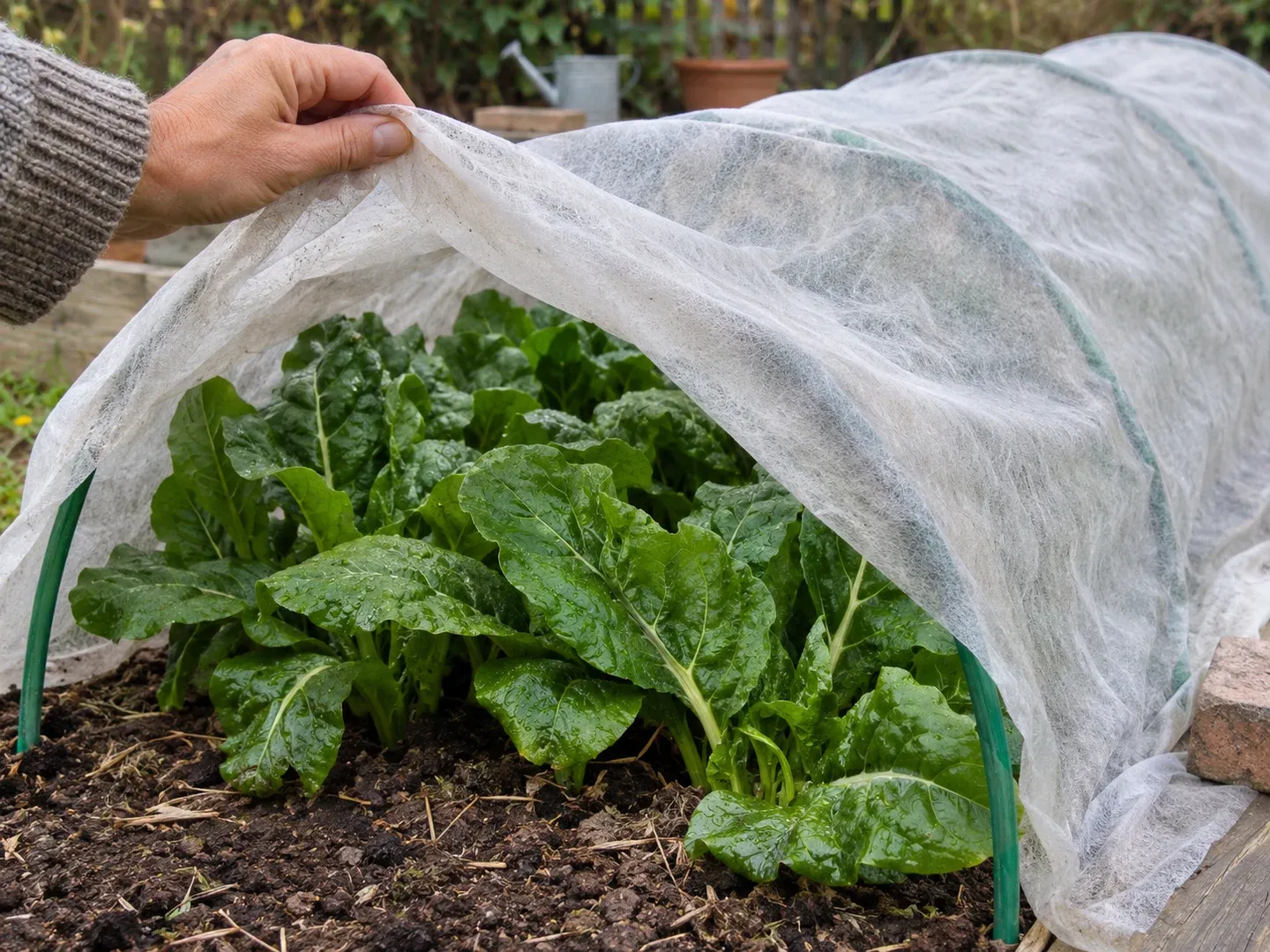
Before a cold snap, note the species and varieties present, then check their protection needs. Fleece provides limited protection, varying with its thickness. The RHS specifies that without solar input, the temperature under fleece can quickly approach that of the outside air.
Under a cloche or small tunnel, keep easy access to plants and ventilation openings. Check fixings after wind, observe the foliage and monitor moisture. Ventilate to limit excess humidity, considering the forecasted cold. The RHS guide on cloches emphasises anchoring and ventilation: an overly humid atmosphere encourages certain diseases. A cover installed in November still requires attention in December.
What to Plant or Sow in December?
Garlic, if the Variety and Site Are Suitable
The SNHF places the planting of white and purple autumn garlic between early October and mid-December. This guideline does not apply indiscriminately to all garlic. Verify the timing for your variety and choose a location that does not retain water in winter.
If these conditions are met, our garlic planting guide details the steps. If the ground remains waterlogged or frozen, postpone the task and re-examine the variety’s schedule before planting later.
Do Not Automatically Carry Last Month’s Sowing Advice Forward
For broad beans and peas, Terre vivante places sowing in November in the mildest climates and in February-March elsewhere, when the weather allows. This reference alone does not justify widespread sowing in December.
If you consider a trial this month, look for guidance matching the species, variety and your local climate. Without confirmation, prepare for the next opportunity. The possibilities in the November calendar are not a list of overdue tasks to catch up on.
Check the Covering of Empty Beds
On a bed without crops, mulch limits the impact of rain on the soil surface. If installing it, use healthy plant materials, weed beforehand and keep them on the surface. Wait if the ground is frozen and avoid application in strong wind. These precautions come from Jardiner Autrement.
Around existing plants, keep the base of stems clear. Do not systematically add an extra layer: first observe the material in place and the condition of the crops.
Prepare for the Next Steps from Home
December can be used to make your next choices more concrete. Sketch the beds, indicate the crops still occupying them and add drainage observations made after rain.
Then sort your seed packets without turning this inventory into a sowing session. For each desired crop, note the variety, the indicated period, available space and the starting method. The sowing guide helps organise this preparation.
A useful note for the following year: “12 December, water still visible at the bottom of the bed after rain; planting postponed.” A date, a location and a decision will allow you to compare seasons more easily than a general impression of a wet winter.
Sources and references
- Waterlogging and floodingRoyal Horticultural Society (RHS), in English Accessed on 15 October 2026.
- Good reasons to grow winter vegetablesTerre vivante, excerpt from Blaise Leclerc Accessed on 15 October 2026.
- Fleece and crop coversRoyal Horticultural Society (RHS), in English Accessed on 15 October 2026.
- ClochesRoyal Horticultural Society (RHS), in English Accessed on 15 October 2026.
- Cultivated garlicFrench National Horticultural Society (SNHF) Accessed on 15 October 2026.
- The effects of mulching in the gardenJardiner Autrement, a programme run by the SNHF Accessed on 15 October 2026.
- How to make a raised bedRoyal Horticultural Society (RHS), in English Accessed on 15 October 2026.