
The vegetable garden notebook / Crops
Sowing Sweet Peppers: Warmth, Light, and Transplanting
Sowing sweet peppers requires a warm spot to start, followed by sufficient light and space to keep the seedlings for several weeks. Prepare this growing period before opening the seed packet, based on the conditions expected in your garden.
Adapt this guidance to your garden’s climate and conditions.
When to Sow Sweet Peppers?
Start from the period when you can plant in your garden or under cover. The University of Minnesota recommends starting indoors approximately eight weeks before planting. Use this timeframe to organise the growing period, then choose the planting-out date based on the warmth available in your garden.
The University of Maryland warns that sowing too early can result in leggy seedlings with cramped roots. Before sowing, reserve a well-lit area for the future individual pots, not just the small starter tray. Also, plan for the possibility of keeping them protected if cold weather delays planting.
Note the variety, sowing date, and intended destination. The Ice Saints do not replace observing local temperatures.
Preparing Containers and Sowing
Use pots or a tray with drainage holes, filled with fresh seed compost, as advised by the RHS. Individual cells allow seedlings to be moved later with minimal root disturbance.
- Moisten the potting compost before filling the containers; it should remain damp but not waterlogged, according to University of Maryland Extension.
- Sow, leaving space between seeds in a tray, or choose one seed per cell or small pot, a method described by Maryland for sweet peppers.
- Cover with approximately 6 mm of potting compost, a rounded conversion of the quarter-inch recommended by University of Minnesota Extension.
- Label the sown containers and place them in a warm spot. Check moisture levels regularly: Minnesota notes that a heat mat speeds up substrate drying.
The sowing guide covers preparation and care common to crops started under protection.
Distinguishing Germination from Growth After Emergence
The RHS recommends 18 to 21 °C for germination, then 16 to 18 °C in bright light after emergence. These are indoor growing guidelines and do not describe outdoor planting conditions.
If using a transparent cover, remove it as soon as seedlings appear, according to University of Maryland Extension. Keep the potting compost moist but not saturated: excess water displaces oxygen needed by the roots.
The same university highlights that a window often provides insufficient light. Stems that stretch and lean towards it indicate a need to improve lighting; increasing warmth does not replace this light. Horticultural lighting can help if natural light is inadequate.
Transplanting and Planning Pot Space
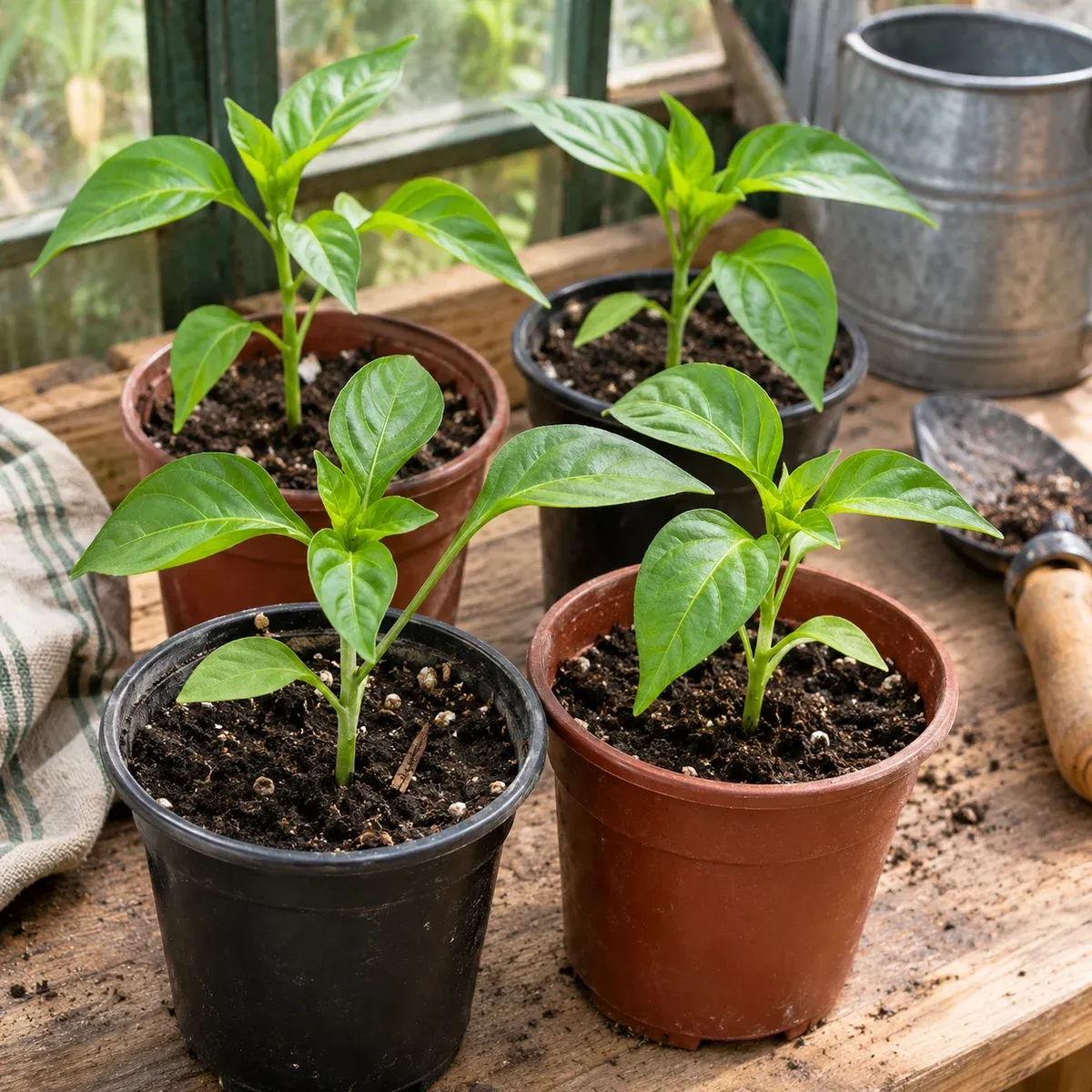
The RHS advises transferring each seedling into an individual pot of 7.5 to 9 cm when it has two true leaves. This transplanting applies to young seedlings still grouped or grown in small containers; it is not yet their final placement in the garden.
If planting must wait, monitor root development. The RHS defines repotting as moving to a slightly larger pot when roots fill the previous one. Leaving roots cramped for too long slows growth. Ensure enough space for this container change without crowding all pots in front of a single small window.
Gradual Hardening Off Without Frost Exposure
Seedlings grown indoors must adapt to wind, outdoor light, and temperature fluctuations. The RHS provides a general guideline of two to three weeks, varying with their growing conditions.
Start with daytime outdoor exposure, sheltered from wind and strong sun, then bring pots indoors at night. Gradually increase exposure as weather permits. A return of cold weather justifies slowing this transition.
Hardening off does not make sweet peppers frost-resistant. Completing this step does not automatically allow planting.
Planting Out When Conditions Are Suitable
For outdoor planting, the RHS waits for nights consistently above 12 °C, in a warm, sheltered spot. The risk of frost must also have passed. A mild day or a pre-set calendar is not enough: check upcoming night temperatures as well.
At planting, keep roots as intact as possible and maintain the soil level from the pot, then water, following University of Minnesota Extension. The sweet pepper growing guide continues with advice on location, care, and harvest.
Key points for this crop
Practical guidance
- Organisation
- Plan for several weeks of protected growing
- Depth
- Approximately 6 mm of potting compost
- After emergence
- Bright light and moisture without saturation
- Hardening off
- Gradual, without developing frost resistance
Sources and references
- How to grow sweet peppersRoyal Horticultural Society (RHS), in English Accessed on 16 October 2026.
- Growing peppers in home gardensUniversity of Minnesota Extension, in English Accessed on 16 October 2026.
- Starting Vegetable Seeds IndoorsUniversity of Maryland Extension, in English Accessed on 16 October 2026.
- Sowing vegetable seedsRoyal Horticultural Society (RHS), in English Accessed on 16 October 2026.
- Hardening off tender plantsRoyal Horticultural Society (RHS), in English Accessed on 16 October 2026.