
The vegetable garden notebook / Climate
Ice Saints: Should You Wait to Plant in the Vegetable Garden?
The Ice Saints are a calendar reference, not a guarantee that frosts have ended. Before planting tender vegetables, compare local weather forecasts with the crop’s requirements and the preparation of your seedlings.
Adapt this guidance to your garden’s climate and conditions.
This guide uses French examples and seasonal references. Adjust them to your garden’s climate and local conditions.
- Traditional reference
- 11, 12 and 13 May do not mark the last frost in your garden.
- Nights and plot
- Check forecasts and consider areas where cold accumulates.
- Crop and soil
- Verify the specific conditions for the vegetable and acclimatise seedlings raised under cover.
11, 12 and 13 May: Three Dates, Not a Forecast
Tradition associates the Ice Saints with Saint Mamert on 11 May, Saint Pancras on 12 May, and Saint Servatius on 13 May. These dates recur each year, but they do not predict the weather. Météo-France notes that frosts in lowland areas remain possible after this period.
Its study of 130 weather stations, located at a maximum altitude of 400 metres, found frost after 13 May at one or more stations during 49 of the 73 years studied, from 1951 to 2023. The research covers the period from 14 May to 30 June. This result does not mean that your garden will experience frost two years out of three after the Ice Saints.
Before Planting, Check Night-Time Temperatures and Location
Check local forecasts before planting your seedlings out, and keep checking those forecasts afterwards. Pay attention to the minimum temperatures announced: a mild day is not sufficient. The RHS highlights that tender vegetables can also suffer from cold nights without frost.
Consider your plot. A low-lying area where cold accumulates requires more caution than a sheltered spot. The RHS recommends adapting planting to the microclimate; its regional British dates do not provide a calendar for France.
If frost is forecast, postpone planting sensitive seedlings and keep them protected from frost. For seedlings already planted, prepare suitable protection, such as horticultural fleece, before temperatures drop. The RHS advises this protection in the event of a cold snap; it does not replace the choice of favourable planting conditions. Fleece provides limited protection against frost and does not guarantee seedling survival during a significant cold spell.
Tomato and Courgette: Also Consider the Crop and Soil
For tomatoes, the SNHF recommends waiting until frosts are no longer a risk. It describes this crop as highly sensitive to cold. The date of seedling purchase or the arrival of 14 May is therefore not sufficient to decide when to plant them out.
For courgettes, the SNHF imposes the same condition before planting seedlings. Also check the soil: the RHS advises that it should have warmed up before outdoor sowing or planting. Cold soil justifies waiting, even after the traditional dates.
There is no single action to take after the Ice Saints. Choose the crop, specify whether you are sowing or planting a seedling, and then verify its requirements. The vegetable garden calendar for May helps organise these decisions.
Use the Waiting Period to Acclimatise Seedlings
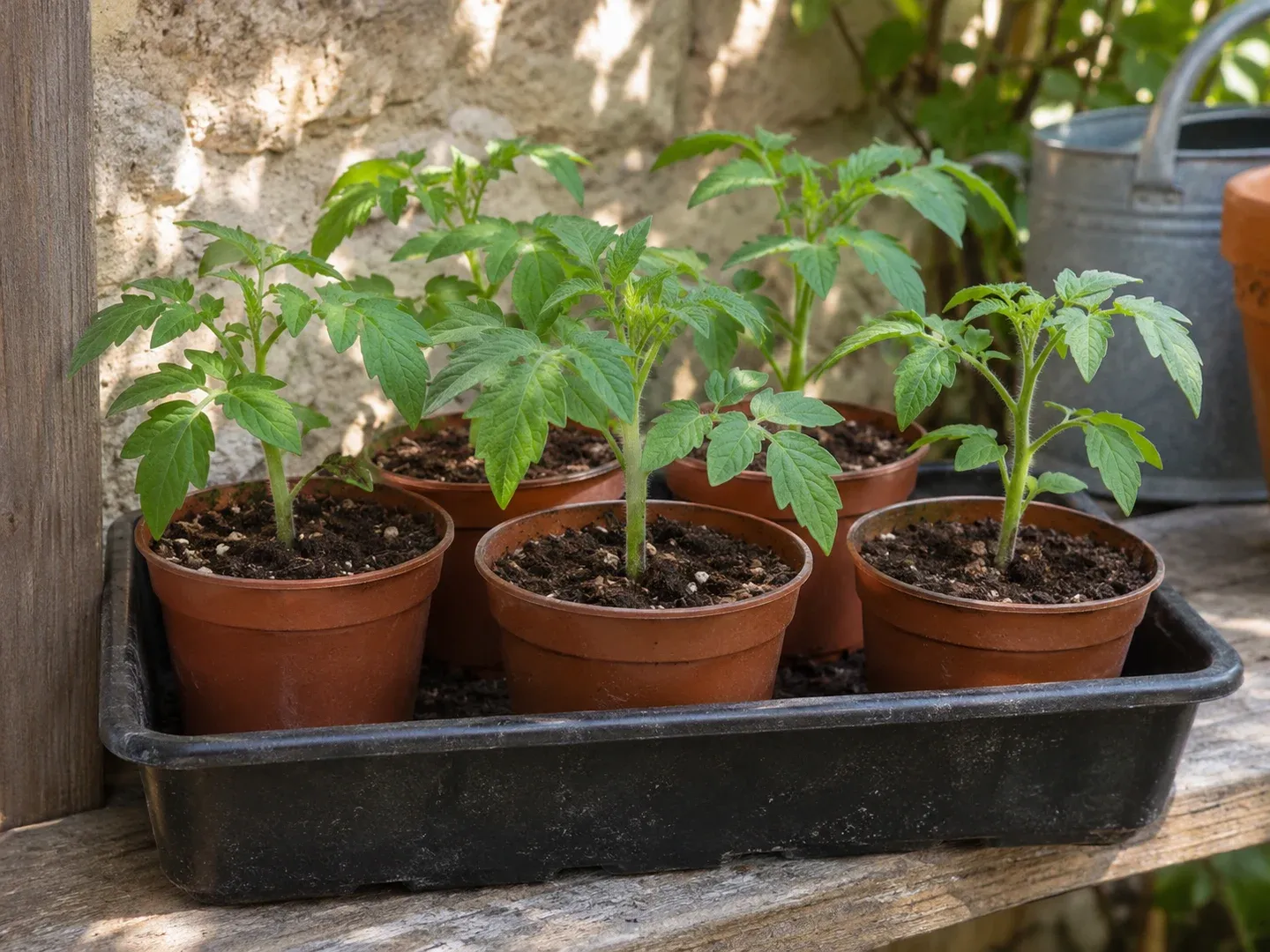
Seedlings raised indoors or in a greenhouse require a gradual transition. According to the RHS, this acclimatisation generally takes two to three weeks, with the duration adjusted based on growing conditions and the plant.
Begin by putting the plants outdoors during the day in a sheltered spot, with protection from intense sunlight, then bring the seedlings back indoors at night. Gradually extend exposure as the weather permits. The seedling acclimatisation guide explains how to manage this time outdoors and what to check before planting. Acclimatisation does not make a tomato or courgette resistant to frost. If cold weather returns, adjust the time the plants spend outdoors rather than completing this programme on a fixed date.
Sources and references
- From cool weather to the Ice Saints: Is it still relevant?Météo-France Accessed on 16 October 2026.
- When to plant out tender plants – avoiding late frostsRoyal Horticultural Society (RHS), in English Accessed on 16 October 2026.
- TomatoFrench National Horticultural Society (SNHF), fact sheet by Jean-Marc Muller Accessed on 16 October 2026.
- CourgetteSNHF, fact sheet by Jean-Marc Muller Accessed on 16 October 2026.
- How to grow courgettesRoyal Horticultural Society (RHS), in English Accessed on 16 October 2026.
- Hardening off tender plantsRoyal Horticultural Society (RHS), in English Accessed on 16 October 2026.