
The vegetable garden notebook / Vegetable garden calendar
The vegetable garden in May: when to plant summer crops?
In May, the priority is to plant crops when the garden can accommodate them, then monitor their establishment. A few well-prepared plants and a small green bean sowing may be enough to start.
Adapt this guidance to your garden’s climate and conditions.
This guide uses French examples and seasonal references. Adjust them to your garden’s climate and local conditions.
Three priorities this month
- Check conditions before planting
Take into account the local frost risk and the acclimatisation of tomato or courgette plants.
- Start beans in warmed soil
Wait for suitable conditions and reserve space for additional small sowings of dwarf varieties.
- Check on established crops
Monitor seedling emergence, moisture and supports instead of merely increasing plantings.
The date alone does not give the green light
Météo-France records frosts after the Ice Saints, including in lowland areas. Before moving tender plants outdoors for good, check the forecasts for your area. If a return of cold weather threatens their establishment, postpone it.
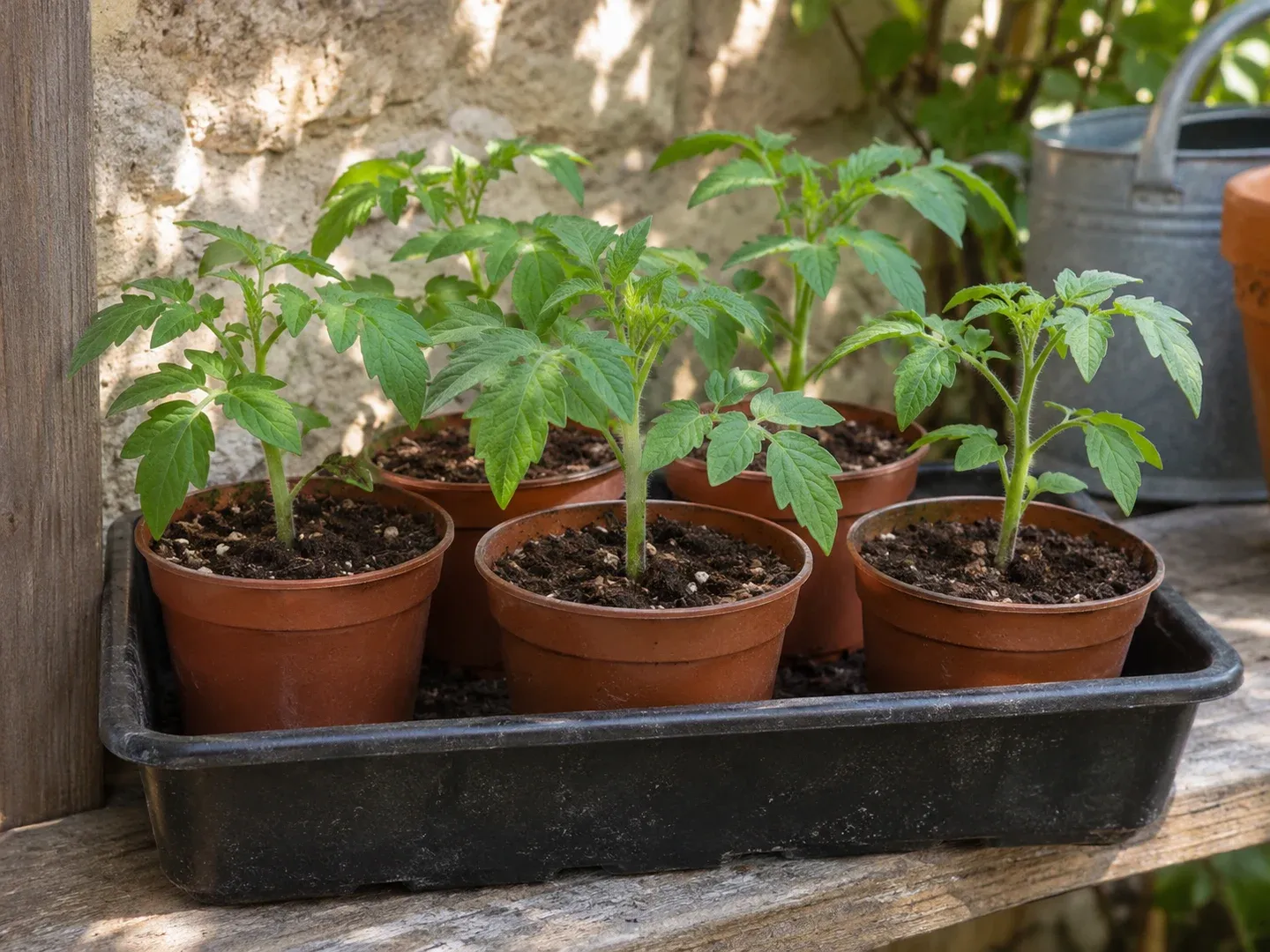
Also check how the plants were raised. A tomato plant bought from a greenhouse and a courgette plant raised indoors need a transition to outdoor conditions. Finally, reserve their location before taking them out of their pots: check the variety label for the space required and supports to be provided.
Three crops, three possible decisions
This deliberately limited choice allows you to organise tasks without making May a list of mandatory plantings.
| Crop and stage | Possible task | Condition to verify |
|---|---|---|
| Tomato in pot | Plant in its final location | Acclimatised plant, no further frost risk, and sunny location. SNHF · RHS |
| Courgette | Plant out a pot-grown plant or sow directly | After the frost risk, in loose, humus-rich soil, in full sun. Adjust direct sowing in May to your climate. SNHF |
| Bean to sow | Start a first small row | Frost risk passed and soil warmed: SNHF provides a benchmark of 15 to 18 °C in the soil. SNHF · RHS |
Measure the soil temperature before sowing beans
The afternoon air temperature does not reflect that of the soil. Using a soil probe thermometer, check at the sowing depth indicated on the seed packet, early in the morning, then repeat over several days at the same location. This Ask Extension method avoids deciding based on a single measurement after a warm day. Follow the stabilisation time specified by the device.
Compare the readings with the 15 to 18 °C in the soil benchmark provided by the SNHF, the packet instructions, and the following days’ forecasts. If the soil remains cold or cooling is expected, wait. The green bean sowing guide then explains how to sow; no threshold compensates for waterlogged soil.
For courgettes, direct sowing is an option when conditions allow, even if you have not raised plants in pots. The SNHF suggests this in May, while also noting the plant’s sensitivity to frost. After sowing, keep the soil moist until seedlings emerge. The general advice in our sowing guide will help you prepare and monitor this stage.
Verify conditions for additional crops
Before adding a crop, identify which of these actions you are planning: plant out a ready-grown plant, sow directly, or reassess the plan. Availability in shops and the month of May do not determine when it can be planted out.
For a ready-grown plant, consult the planting requirements for sweet potato, ginger, or basil, then check acclimatisation, warmth, and space. For direct sowing, revisit the packet and species sheet before allocating the row. If you do not have a suitable site, sowing window or way to care for the crop, keep the plan under review instead of opening the packet.
Compare sweet corn, watermelon, and different beans before planting
At this decision-making stage, the sweet corn and watermelon guides help you assess the space and growing time available. For bean seeds, first identify the species: runner bean, yard-long bean, and Lima bean each have their own requirements. Then use the relevant crop guide to choose how to sow and what support to provide, without automatically transferring the instructions for green beans.
Complete acclimatisation before planting
If your plants are already accustomed to outdoor conditions, continue this transition while considering the weather. If they come from indoors or a greenhouse, do not move them directly to full-day exposure: the RHS recommends a gradual adaptation, typically over two to three weeks, depending on growing conditions and plant sensitivity.
Start with a sheltered location, protected from intense sun, then bring the plants indoors at night. Gradually extend outdoor exposure as the weather permits. This acclimatisation does not make tomatoes or courgettes frost-hardy. A purchased plant may therefore wait before being planted out, even if sold as ready to plant.
Stagger sowings of dwarf French beans
For dwarf French beans intended to be harvested as pods, you can reserve part of the bed for subsequent sowings. The RHS explains that their production period is relatively short, and multiple sowings allow for staggered harvests. Start with a small quantity suited to your needs, then decide on the next steps based on available space, variety, and still-favourable sowing conditions.
This advice does not set a mandatory interval between two sowings. Note the date and variety of each row to distinguish the batches. If you have chosen climbing French beans, provide their support from the outset: they climb, unlike dwarf varieties. The SNHF advises installing supports very soon after seedlings emerge.
Monitor establishment and seedling emergence
For tomatoes that require staking, install the stake before planting. Not all have the same growth habit: the SNHF distinguishes determinate varieties, some of which are grown without stakes, from indeterminate varieties. Water at planting, then water at the base, avoiding wetting the foliage.
Regularly revisit sown and planted areas: observe seedling emergence, soil moisture, and any flattened or damaged plants. For French beans, the RHS recommends watering in dry weather, with particular attention when they begin to flower and form pods. This stage may occur later; the need is not determined solely by the month of May.
A useful note: “First row of beans sown; variety and location recorded; space reserved for another batch.” For a transplanted plant, also note the planting date and subsequent observations. You will have concrete benchmarks to adjust your next steps.
Sources and references
- Cool weather around the Ice Saints: does it still occur?Météo-France Accessed on 15 October 2026.
- TomatoFrench National Horticultural Society (SNHF), fact sheet by Jean-Marc Muller Accessed on 15 October 2026.
- CourgetteSNHF, fact sheet by Jean-Marc Muller Accessed on 15 October 2026.
- French beansSNHF, fact sheet by Jean-Daniel Arnaud Accessed on 15 October 2026.
- Hardening off tender plantsRoyal Horticultural Society (RHS), in English Accessed on 15 October 2026.
- How to grow French beansRoyal Horticultural Society (RHS), in English Accessed on 15 October 2026.
- Soil temperature — response no. 865965Ask Extension, Michigan, in English Accessed on 8 November 2026.