
The vegetable garden notebook / Crops
Growing ginger in pots: warmth, care and harvest
Edible ginger requires a long warm period. In pots, you can start it indoors and bring it inside before the cold; harvesting young ginger is a more attainable goal than producing a large, mature rhizome.
Adapt this guidance to your garden’s climate and conditions.
Which ginger should you plant?
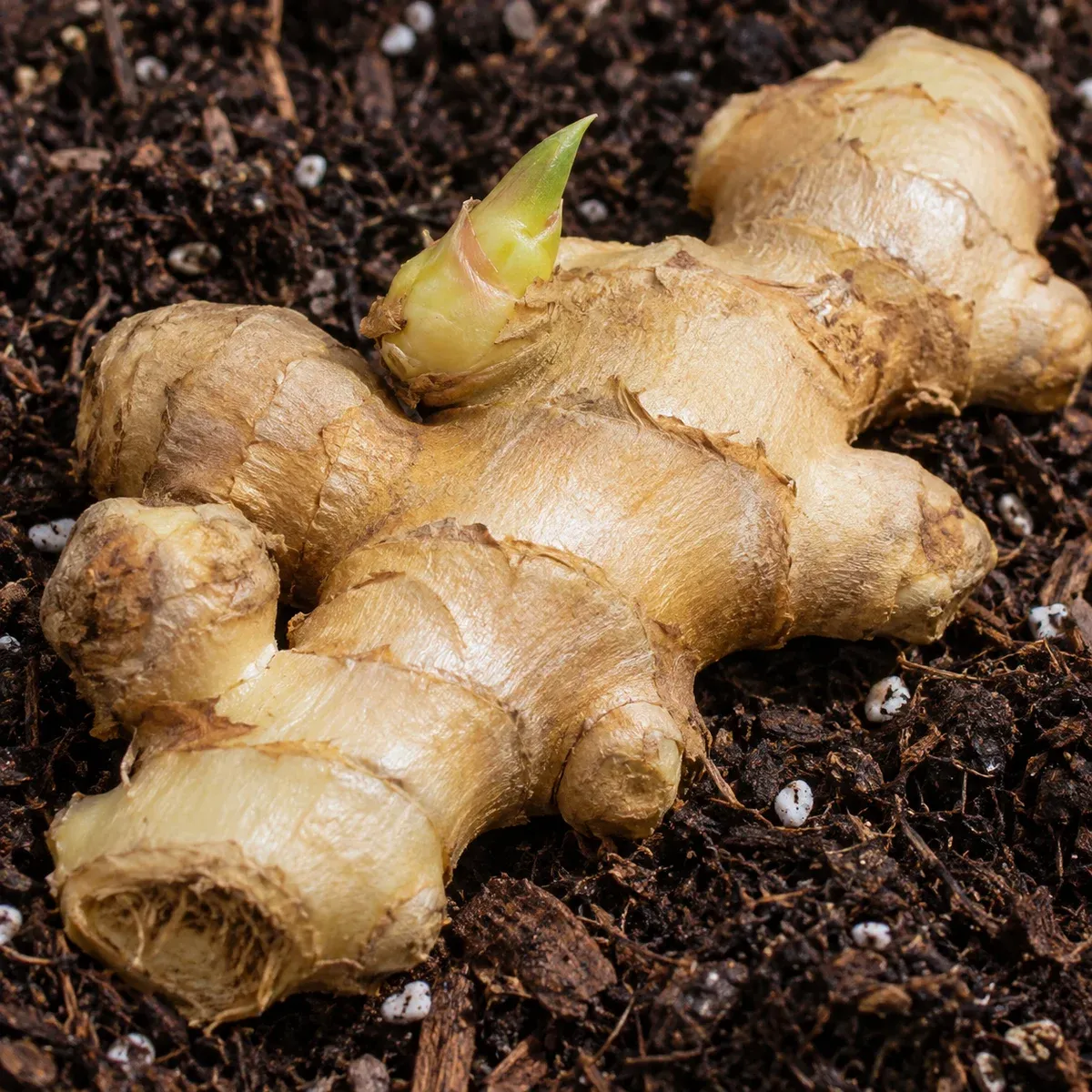
Choose Zingiber officinale for the rhizome used in cooking. The RHS recommends a fresh, fleshy piece with clearly visible buds. Ornamental ginger should not be considered interchangeable. RHS
Opt for material intended for planting. The Illinois Extension notes that rhizomes sold for eating may have been treated to inhibit sprouting and are not certified disease-free. Success is therefore not guaranteed. Illinois
How do you start a rhizome in a pot?
The RHS advises 25 to 28 °C for propagation, in a well-draining substrate that retains moisture. This range applies to the starting phase; it is not a minimum temperature to maintain throughout the entire growing period. RHS
The Illinois Extension suggests a pot of at least 15 inches in diameter, approximately 38 cm: barely cover the rhizome and leave room to add growing medium as it rises towards the surface. Illinois
Can ginger be moved outdoors to the garden?
Growing in containers indoors or in a heated greenhouse suits the conditions described by the RHS: filtered light, humid atmosphere, and rich, well-draining soil. RHS
To move a pot outdoors, the Illinois Extension waits for consistent warmth of 70 to 80 °F, approximately 21 to 27 °C. This benchmark explains why the end of frost alone is insufficient. Adapt your decision to actual conditions, without copying the American calendar. Illinois
How should you water ginger?
Avoid both waterlogged soil and complete drying out. Check the substrate before watering, with particular attention to pots. The watering guide helps observe the soil without imposing the same frequency in all situations. Illinois
When should you feed ginger?
The Wisconsin Extension advises nutrient applications during growth, except in already very fertile soil. In pots, check what the potting compost contains, then follow the instructions for the chosen fertiliser. Observe the emergence of new shoots rather than fertilising on a fixed schedule. At the start, water lightly until shoots appear; then maintain moisture without saturation. Mulching is particularly useful in open ground to limit competition and moisture loss. Wisconsin
Brown or yellow leaves: what should you check?
The Illinois Extension links brown tips to a lack of water or excessive sunlight. Check the substrate and exposure before watering more. It also mentions a need for nutrition when leaves turn yellow; however, this sign alone does not prove a deficiency. Consider the growth stage and pot conditions, particularly after bringing the plant indoors. Illinois
If the substrate remains waterlogged, check drainage and remove standing water before adding any fertiliser. Persistent wilting or a soft rhizome should not be confused with seasonal leaf drop: isolate the pot from others and seek advice with photos of the foliage, the base of the stem, and the substrate condition. The sources describe a plant sensitive to excess water; they do not provide grounds for attributing every case of decline to a specific disease. RHS · Illinois
Which pests should you look for under cover?
The RHS reports mites under glass. If fine pale speckling appears, inspect the undersides of leaves with a magnifying glass and look for tiny moving creatures or fine webs. These signs justify identification, not random spraying. If the symptoms progress, seek confirmation of the cause. RHS · RHS, mites
When should you harvest and how can you overwinter ginger?
The Illinois Extension distinguishes between young ginger, harvestable after about four months of growth, and a mature rhizome, which requires eight to ten months in a tropical climate. Young ginger is fragile and lacks a thick skin. Illinois
For young ginger, carefully remove the soil to access the rhizome, without scratching it or pulling on the stems. The Wisconsin Extension emphasises its easily damaged skin during extraction. For a mature harvest, the Illinois Extension describes bringing the plant indoors before frost, then carefully extracting it when the foliage browns and dries; its November timing is not a fixed date for France. Wisconsin, Illinois
Before lifting the rhizomes, decide whether to harvest them all or keep the plant growing in its pot. The Wisconsin Extension allows for harvesting all or part of the rhizomes from plants kept in containers; keep the parts intended for regrowth identified as planting material. This does not mean randomly removing parts from a soft or suspect rhizome. Skin thickness and age are no substitute for checking the plant’s health and the growing conditions it has actually experienced. Wisconsin
Bring the pot indoors before frost if you wish to continue growing. The RHS describes a plant that needs warm conditions under cover; a space that is merely frost-free does not replicate the conditions it recommends. Record your start dates and the actual time spent in warmth. RHS · Illinois
After bringing ginger indoors: dormancy or failure?
Gradual leaf loss after bringing the plant indoors may correspond to dormancy as described by the Illinois Extension. Note the season, light, and temperatures, and check the pot’s condition before discarding the rhizome. Illinois
For a potted plant that is leafless and genuinely dormant, the Wisconsin Extension advises suspending watering and resuming when new shoots appear. Keep the rhizome in its pot, protected from the cold; warmth and light encourage regrowth. This approach does not apply to a still-growing, leafy plant, nor to decline accompanied by rot. Cut only dead old stems. Wisconsin · RHS
Arranging neighbouring crops and keeping records
For this movable container, keep a record of each stage, for example: “started indoors, buds visible”; “moved outdoors after checking warmth, filtered light”; “brought indoors before cold, still leafy”; then “foliage gradually disappeared, rhizome firm: monitoring dormancy” or “harvest chosen”. Use this template to record your dates and observations: it does not describe an actual trial conducted by Binette.
This log helps you distinguish a plant still in active growth, watered according to its growing medium, from a leafless plant that is genuinely dormant. You can then choose whether to keep the rhizome or harvest it. If the pot shares a setup with other crops, the layout method helps preserve light and access; it does not replace monitoring specific to ginger.
Key points for this crop
Practical guidance
- Species
- Zingiber officinale, edible ginger
- Start
- Fresh rhizome with visible buds, in warmth
- Environment
- Filtered light, moist and well-draining substrate
- Cold
- Protect the crop; do not wait for frost before bringing the pot indoors
Sources and references
- Zingiber officinaleRoyal Horticultural Society, in English Accessed on 18 October 2026.
- How to grow tropical ginger for at-home spiceUniversity of Illinois Extension, in English Accessed on 18 October 2026.
- Ginger, Zingiber officinaleUniversity of Wisconsin–Madison Extension, in English Accessed on 18 October 2026.
- Glasshouse red spider miteRoyal Horticultural Society, in English Accessed on 18 October 2026.