
The vegetable garden notebook / Vegetable garden calendar
The vegetable garden in April: sow outdoors or keep seedlings under cover?
In April, new sowings sit alongside seedlings already started. Before filling a bed or moving pots outside, check the crop’s requirements, the state of the ground and the expected outdoor conditions.
Adapt this guidance to your garden’s climate and conditions.
This guide uses French examples and seasonal references. Adjust them to your garden’s climate and local conditions.
Three priorities this month
- Choose where to start each crop
Distinguish crops that can be sown outdoors from courgettes that need a warm start.
- Gradually prepare seedlings for moving outside
Adapt acclimatisation to the weather; it does not protect a tender plant from frost.
- Monitor seedlings that have already emerged
Check moisture, carrot spacing and ventilation under cloches.
Base decisions on the weather and soil conditions
One mild afternoon is not enough reason to put all your seedlings outside. Météo-France notes that spring can alternate between warmth and cold snaps, with possible frosts in April. Check local forecasts before moving pots outside and before planting.
Also inspect the available beds. If the soil is waterlogged, wait until it becomes workable again and avoid walking on it: the RHS recommends this precaution to prevent further compaction. Preparing labels and selecting varieties can still be done during this waiting period.
What to sow outdoors, what to prepare under cover?
Here are four scenarios to guide your choices. The periods mentioned are reference points to compare with your variety’s instructions and your garden’s conditions.
| Crop | Possible action in April | Condition to check |
|---|---|---|
| Salad radishes | Sow in open ground: radish sowing technique | Suitable variety and light, moist, non-compact soil. SNHF |
| Carrot | Sow directly: prepare and monitor the carrot row | Soil suitable for root growth, preferably light and deep, without fresh manure before sowing. SNHF |
| Courgette | Start in pots in warmth: how to sow courgettes | Daylight and a temperature of approximately 20 °C; planting only when frosts are no longer expected. SNHF |
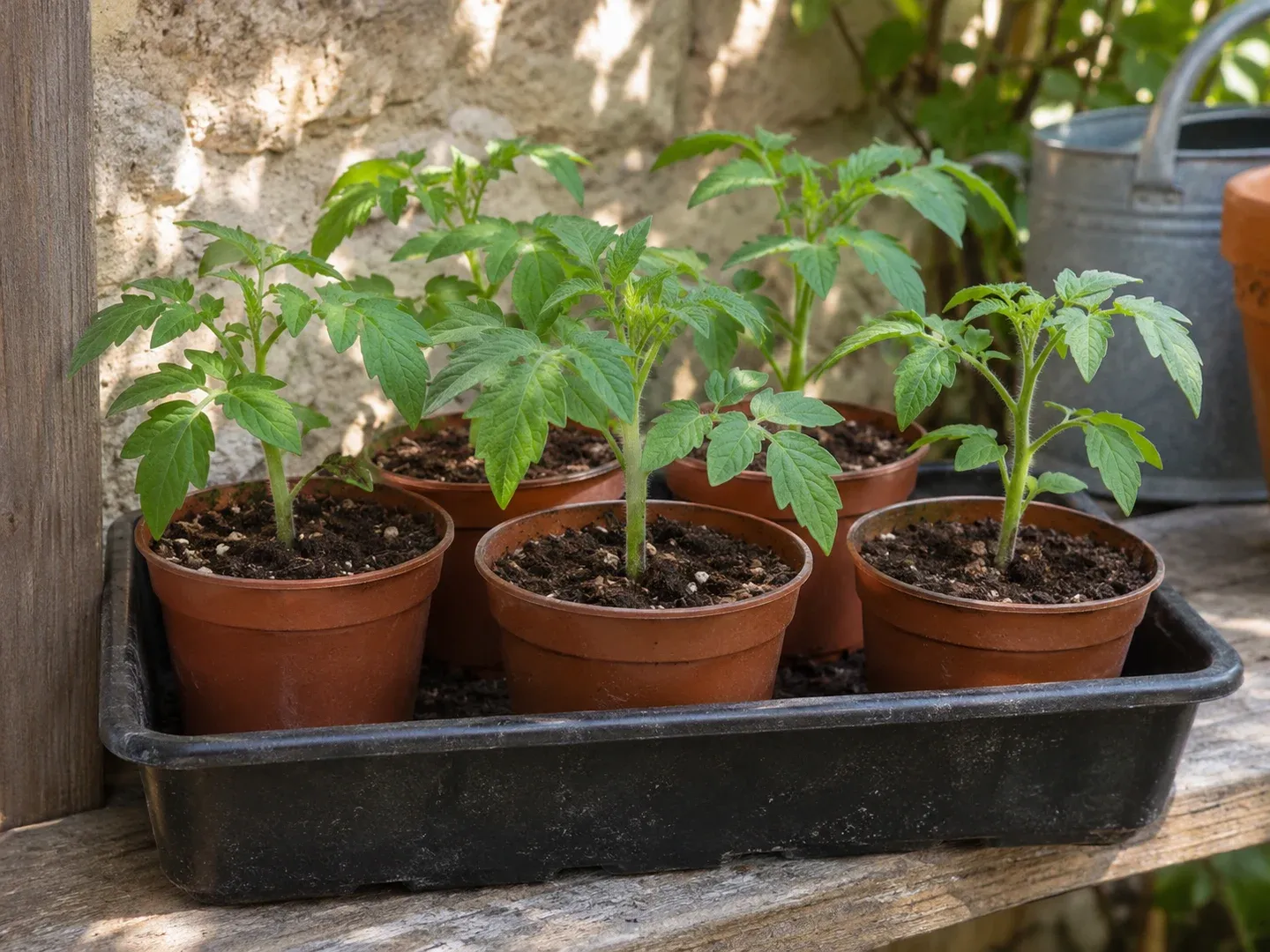
| Tomato already in pots | Gradually harden off the plants, then decide on planting | Do not plant out in the garden while frost remains a risk. SNHF |
For radishes, the SNHF places sowings of salad radish varieties from mid-March to the end of September. This does not apply to winter radishes, which are sown in summer. For carrots, April falls within the general open-ground sowing window from March to July; varietal choice and soil conditions remain decisive.
Sowing courgettes in pots in April assumes you can maintain the pots in the specified conditions. Keep the potting mix moist without excess water. If you do not have this space, the sheet also suggests direct sowing in May: this reference must also be adapted to the climate. You can wait before starting.
Acclimatise seedlings before planting
Seedlings raised indoors or in a greenhouse need a transition to outdoor conditions. The RHS recommends gradual exposure. When days are mild enough for the crop, begin by placing seedlings in a spot sheltered from wind and intense sun, then bring them back inside at night. Gradually increase their exposure as the weather allows.
This preparation also applies to purchased seedlings previously kept under cover. Ask how they were raised. Crucially, acclimatisation does not make a tender plant frost-resistant. The tomato remains sensitive to cold, and courgettes are vulnerable to frost; their planting can therefore wait beyond April.
Monitor young crops already in place
Before starting a new sowing, revisit the previous rows. For radishes, monitor moisture: the SNHF advises light, frequent watering, especially in dry, hot weather. This does not mean watering already sufficiently moist soil on a fixed schedule.
Once carrot seedlings have emerged, check their spacing. The SNHF recommends a first thinning at the two-to-three true-leaf stage, then a second pass. Removing some seedlings gives the rest space; refer to the variety’s instructions for the desired spacing. Our sowing guide covers starting and follow-up techniques.
Under cloches or small tunnels, check fixings and openings. Ventilate to limit excess humidity and observe the soil before watering. The RHS highlights both the risks of overly humid conditions and the fact that the cover intercepts rain. A downpour outside is therefore not enough to determine watering needs under cover.
A note to keep: “Seedlings placed outdoors during the day in a sheltered spot, brought back inside in the evening; planting still postponed.” Add the date, the crop and your observations. This record will help you recall what you actually did, without turning one year’s experience into a mandatory calendar.
Sources and references
- Why does the weather change so quickly in spring?Météo-France Accessed on 15 October 2026.
- Waterlogging and floodingRoyal Horticultural Society (RHS), in English Accessed on 15 October 2026.
- RadishSociété nationale d’horticulture de France (SNHF), fact sheet by Jean-Daniel Arnaud Accessed on 15 October 2026.
- CarrotSNHF, fact sheet by Jean-Daniel Arnaud Accessed on 15 October 2026.
- CourgetteSNHF, fact sheet by Jean-Marc Muller Accessed on 15 October 2026.
- TomatoSNHF, fact sheet by Jean-Marc Muller Accessed on 15 October 2026.
- Hardening off tender plantsRoyal Horticultural Society (RHS), in English Accessed on 15 October 2026.
- ClochesRoyal Horticultural Society (RHS), in English Accessed on 15 October 2026.