
The vegetable garden notebook / Techniques
Hardening off young plants: preparing them for the garden
A seedling grown indoors must gradually adapt to garden conditions. Start in a sheltered spot away from wind and direct sunlight, then extend outdoor periods based on its response and the weather. This acclimatisation does not protect against frost.
Adapt this guidance to your garden’s climate and conditions.
Practical steps
- Prepare
Choose a sheltered location and check outdoor conditions.
- Acclimatise
Gradually extend outdoor periods and exposure to light.
- Plant
Wait for suitable growing conditions and monitor their establishment.
Why not move young plants straight outside?
Indoors, seedlings are sheltered from wind and outdoor temperature fluctuations. Direct transfer to the garden can scorch leaves or cause wilting, explains the University of Minnesota. Acclimatisation, sometimes called hardening off, helps plants make this transition.
This also applies to purchased seedlings that have been grown under cover. Ask what conditions they have already experienced, rather than assuming their readiness based on size. The RHS distinguishes between adaptation to outdoor conditions and frost resistance: a hardened-off tomato remains sensitive to cold.
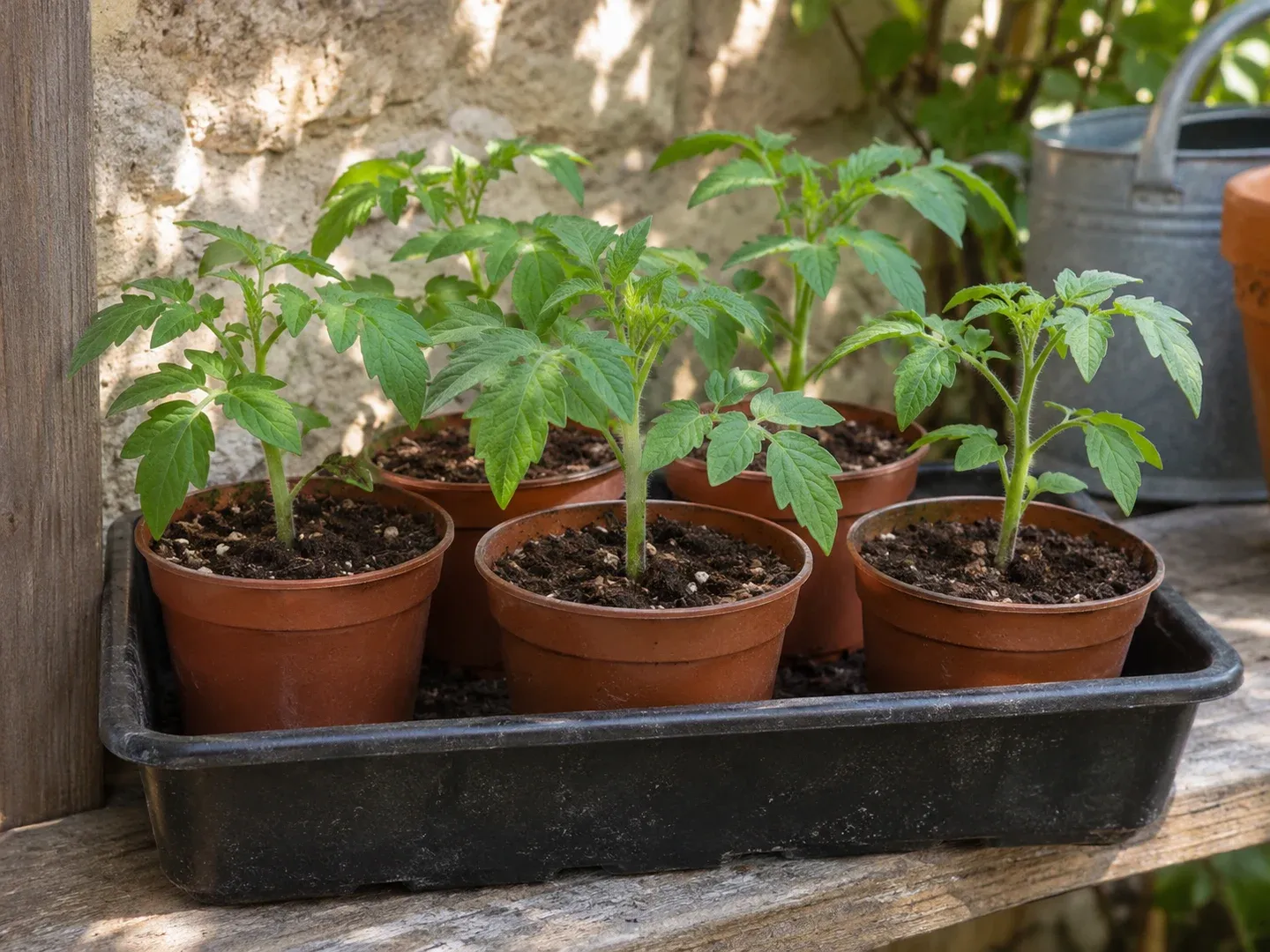
Plan a progression, without a fixed schedule
The RHS typically recommends two to three weeks, while the University of Minnesota describes a two-week progression. The species, its growing conditions, and the weather all influence the transition.
Before starting, check the forecast and prepare a place to bring pots back indoors. The month on the calendar is not enough to decide whether to leave a sensitive crop outside overnight. The guide to the Ice Saints explains why a national date cannot replace local observations.
Start in the shade, then increase exposure
The University of Minnesota protocol begins with a few hours outdoors in the shade and sheltered from wind, followed by a return indoors before evening temperatures drop. Gradually increase the duration of outdoor periods and exposure to sunlight.
Keep pots accessible so you can move them if conditions worsen. If using a cold frame, the RHS recommends gradually increasing ventilation. A closed shelter alone does not ensure a smooth transition to the open air.
If seedlings wilt during outdoor periods
Do not extend the outdoor period if a seedling wilts: return to the shaded, wind-sheltered spot used in the early stages. Check the root ball and water if it is drying out, then resume exposure more gradually once the seedling has recovered and the weather permits. This approach combines the University of Minnesota progression with the RHS guidance on preventing water stress.
When colder weather is expected, bring pots indoors before temperatures fall. If damage persists despite protection and a properly moist root ball, investigate the cause before continuing the schedule: the number of days elapsed does not prove the seedling is ready.
Check seedlings before planting
Acclimatisation does not replace inspecting roots and moisture levels. The RHS advises planting before seedlings become difficult to water without wilting and avoiding frost risk for sensitive crops. Handle root balls carefully and prepare workable soil.
After planting, monitor the seedlings’ condition and water needs. For tomatoes, revisit the guide from sowing to planting. To plan your next batch, return to the general sowing guide: space available during acclimatisation is part of the preparation.
Sources and references
- Hardening off tender plantsRoyal Horticultural Society, in English Accessed on 7 November 2026.
- Starting seeds indoors — Moving seedlings outdoorsUniversity of Minnesota Extension, in English Accessed on 7 November 2026.
- Vegetables: transplantingRoyal Horticultural Society, in English Accessed on 7 November 2026.