
The vegetable garden notebook / Crops
Growing basil: planting, pots, watering and pruning
Basil requires warmth, well-draining soil and regular harvesting. A purchased plant raised under cover needs to get used to outdoor conditions gradually before you plant it in its final spot.
Adapt this guidance to your garden’s climate and conditions.
Which basil should you choose?
First, select based on culinary use and available space. The SNHF lists varieties such as ‘Grand Vert’, ‘Fin Vert’, ‘Marseillais’ and ‘Pourpre’. For pesto and tomato-based dishes, classic sweet basil is a common choice; for an aniseed or lemon flavour, consider Thai or lemon basil, respectively. Purple varieties also add colour. These flavour and foliage differences are described by the RHS.
For small containers, look for a compact, rounded habit with small leaves, such as the “bush” basils described by Maryland Extension, rather than choosing solely based on the height of a young plant in-store. If downy mildew has been an issue before, a variety advertised as resistant may be an additional criterion; however, this does not eliminate the need to ensure good airflow around plants. Check this characteristic on the seed packet or with the producer.
When should you plant basil outdoors in France?
Wait until the risk of frost has passed and nights are consistently above 10 °C, a benchmark provided by the RHS. A warm afternoon is not enough: also check the forecast for night-time temperatures. The timing varies depending on the region, altitude and garden exposure.
Common basil is a cold-sensitive annual. The SNHF recommends a warm, sunny spot in light, rich, well-draining soil. Where conditions are still cool, keep the plant under cover in a bright place; a pot makes it easier to move as needed.
To start from seeds, follow the steps in how to sow basil. This guide covers caring for the plant through to harvest.
How do you harden off a purchased pot-grown basil plant?
A plant grown under cover is not immediately ready for direct sunlight and wind. The SNHF suggests about one week outdoors, sheltered from wind and sun, before its final placement, if temperatures allow. Gradually increase its exposure and bring it indoors if nights remain cold.
Distinguish between a plant intended for the garden and a supermarket herb pot. The RHS notes that the latter often contains many densely packed young plants, designed for a short harvest period. Dividing and repotting them can extend their lifespan; the RHS recommends keeping them indoors in containers to limit the risk of introducing diseases to the garden.
Planting in the ground or choosing a pot
For a plant intended to continue growing in a container, the RHS recommends at least 20 cm in width and depth, with suitable potting compost. Maintain the previous planting level. In open ground, also choose a sheltered spot that drains excess water.
Allow air to circulate around the foliage. University of Maryland Extension reminds us that a warm, humid environment encourages basil downy mildew and that overcrowded plants increase the risk. Moist soil is suitable; a constantly waterlogged root ball is not a useful water reserve.
How should you water without drowning the roots?
Check the growing medium, especially in a pot exposed to sunlight. Water to maintain consistent moisture during growth, allowing excess to drain away. The RHS advises avoiding splashing the leaves and, if possible, watering in the morning. Refer to the observation guidelines in the watering guide.
Spotted leaves: what to check?
Before adding water or fertiliser, note the recent temperatures, any change in exposure and the actual moisture level of the root ball. Basil does not tolerate cold; if you have recently moved it outdoors, review the hardening-off precautions above. If the root ball is waterlogged, check water drainage; if it is dry, resume measured watering. A yellow or black leaf alone cannot tell you whether the cause is stress or disease. SNHF, RHS
Next, examine both sides of the leaves, young shoots and the base of the stems, then monitor the progression:
- Yellowing and grey down on the underside: together, these signs suggest downy mildew as described by Maryland Extension. Move the pot away from other basil plants, keep the foliage dry when watering and improve ventilation under cover. If the problem worsens, have it confirmed; removing affected plants is a measure indicated by this source.
- Spots starting from the edge, then grey mould and curled leaves: this progression is described for botrytis by INRAE. Photograph both sides and the initial spots before they merge: the final “scorched” appearance alone is not sufficient for diagnosis.
- Deformed shoots, visible insects or eaten leaves: look for the organisms before any intervention. The RHS reports aphids, slugs and snails on basil. A bite mark alone does not identify what caused it; inspect young plants and their surroundings, particularly in the evening for molluscs.
Avoid overcrowding pots and watering the foliage: good airflow and limiting moisture on the leaves reduce conditions favourable to diseases. The SNHF also mentions damping-off and rot. For seedlings that collapse or a rotting base, have the whole plant examined along with its growing conditions; a treatment chosen based solely on leaf colour may miss the cause.
Where should you cut basil, and should you remove the flowers?
Harvest the tips of the stems rather than stripping the plant entirely. Keep at least two pairs of leaves from the base, according to the SNHF, to allow the plant to bush out. Regular pinching encourages a branched habit, as Maryland Extension confirms.
If your goal is to harvest leaves, remove flower stems as soon as they appear: this helps maintain the quality of the leaves. You can also let one dedicated plant flower if you have several. As cold weather approaches, harvest any remaining usable leaves: basil remains sensitive to cold, even in pots. RHS
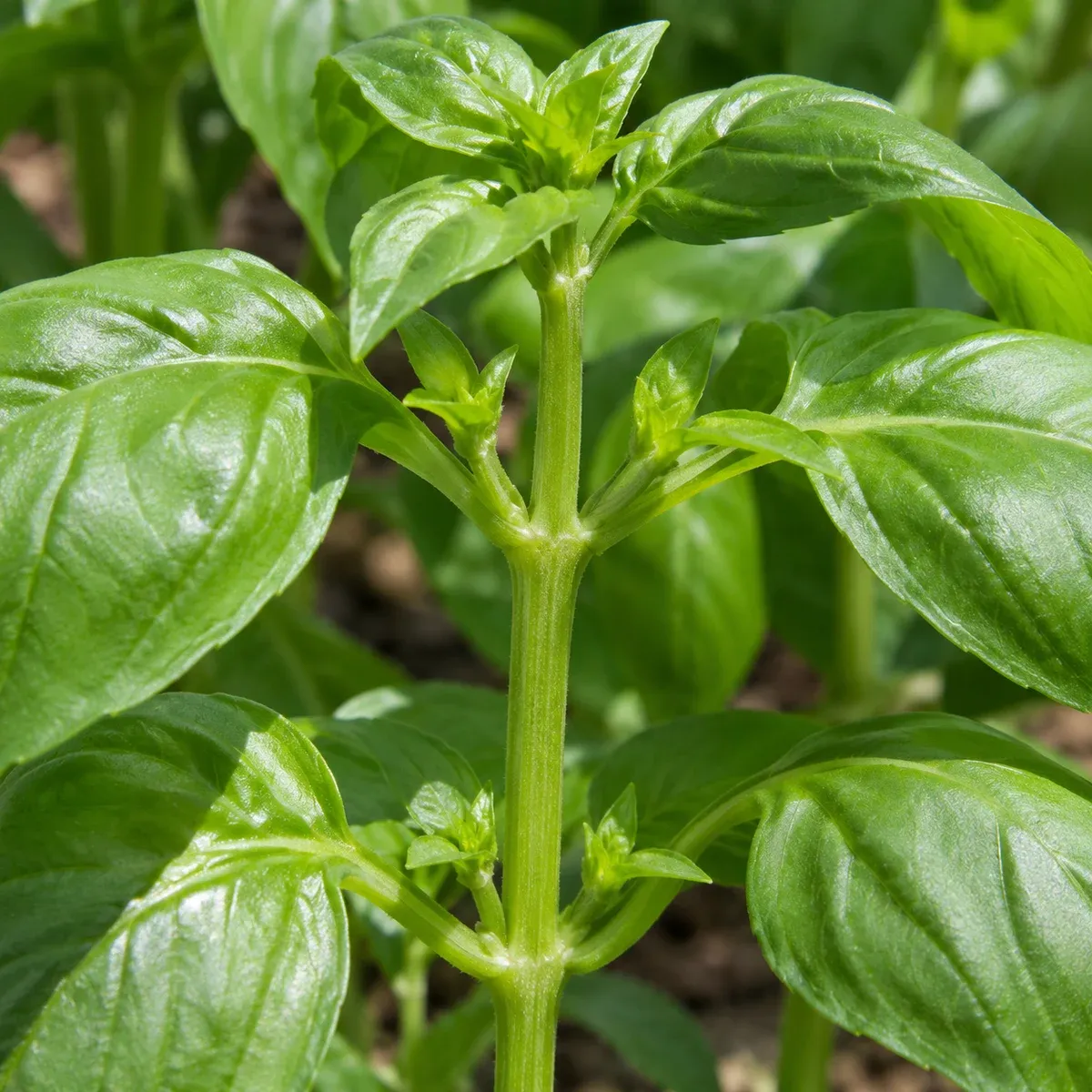
Key points for this crop
Practical guidance
- Species
- Ocimum basilicum, generally grown as an annual
- Outdoor placement
- After the last frost, with nights consistently above 10 °C
- Location
- Warm, sunny, sheltered from wind; well-draining soil
- Harvest
- Stem tips, leaving leaves on the plant
Sources and references
- BasilFrench National Horticultural Society Accessed on 18 October 2026.
- How to grow basilRoyal Horticultural Society, in English Accessed on 18 October 2026.
- Growing Basil in a Home GardenUniversity of Maryland Extension, in English Accessed on 18 October 2026.
- Downy Mildew on Basil in the Home GardenUniversity of Maryland Extension, in English Accessed on 18 October 2026.
- Basil botrytis — Distinguishing it from similar problemsINRAE, Ephytia / VigiJardin Accessed on 18 October 2026.
- Slugs and snailsRoyal Horticultural Society, in English Accessed on 18 October 2026.