
The vegetable garden notebook / Crops
Growing sweetcorn: sowing, pollination and harvest
Sweetcorn is harvested when its kernels are still tender. Success depends as much on available warmth as on plant arrangement: a block of several rows helps pollen reach the silks of the cobs.
Adapt this guidance to your garden’s climate and conditions.
Choosing sweetcorn to harvest while tender
Purchase a variety labelled sweetcorn: grain maize, popcorn and baby corn do not share the same harvest objective. Compare the stated time to maturity and height; if summers are short or the garden cool, opt for an early type. The RHS distinguishes these uses and varietal differences.
Also retain the type indicated on the packet, particularly “supersweet”. Cross-pollination with other types or with field maize can alter the quality of the current harvest’s kernels. For a first attempt, select a single type and check the supplier’s isolation guidelines. Minnesota Extension details these compatibilities: a single variety in the garden does not prevent the arrival of neighbouring pollen.
Sowing when the soil is ready
The SNHF gives April to June as a guide to sowing in France, in soil warmed to approximately 12 °C. Also respect the sowing temperature stated on the packet. At higher altitudes or in a cold spring, wait longer; a late sowing still needs enough warm weather left in the season to mature.
For direct sowing, prepare loose soil and sow to a depth of about 3 cm, then thin to one plant per position once the seedlings emerge. If the soil is slow to warm, start in deep pots, in light and warmth, or purchase young plants. Harden them off gradually and plant out after the last frosts, according to the RHS. The sowing guide explains this transition from shelter to garden.
Allocating a block in full sun
Choose deep, fertile soil enriched with mature garden compost; it should retain moisture without becoming waterlogged. Avoid a site exposed to strong winds. To produce cobs with kernels, plant in a block, with several short adjacent rows: pollination occurs by wind. The RHS suggests 34 to 45 cm between plants in both directions, depending on the variety. Do not combine this grid with spacings for another cultivation method.
Container growing is possible with compact varieties, large containers and the same attention to spacing and proximity between plants. An isolated plant on a balcony meets pollination conditions less effectively; open ground remains preferable. Plan watering and container stability before purchase.
Supporting growth and flowering
At the outset, weed without working deeply near the roots. Then mulch to limit competition and drying out. Water taking rainfall and subsurface moisture into account, particularly during flowering and cob swelling. The RHS identifies these sensitive stages. A weekly schedule does not replace on-site observation.
Build soil fertility with well-rotted organic matter; adjust any additional feeding to the state of the soil rather than using the same rate everywhere. Minnesota Extension recommends basing applications on a soil analysis. If wind shakes the stems, add support or mound soil at their base.
The tassel at the top provides pollen; the silks visible on the sides correspond to female flowers. Gaps without kernels on a cob may accompany poor pollination. Before blaming a pest, note plant arrangement and conditions during flowering.
Observing damage without jumping to conclusions
Poor emergence calls for a check of warmth, moisture and whether any seeds have been removed; birds and small rodents may be involved. Young plants may also be eaten by slugs. If a broken stem contains a tunnel or kernels have been chewed, look for a caterpillar: the SNHF cites the European corn borer. Breakage alone does not identify it.
Abnormal swellings on a cob or orange pustules on leaves require identification, as diseases cited by Minnesota Extension have distinct appearances. Photograph the entire organ and lesions before any intervention; no treatment should be decided based solely on a leaf yellowing.
Harvesting, then preparing for the next season
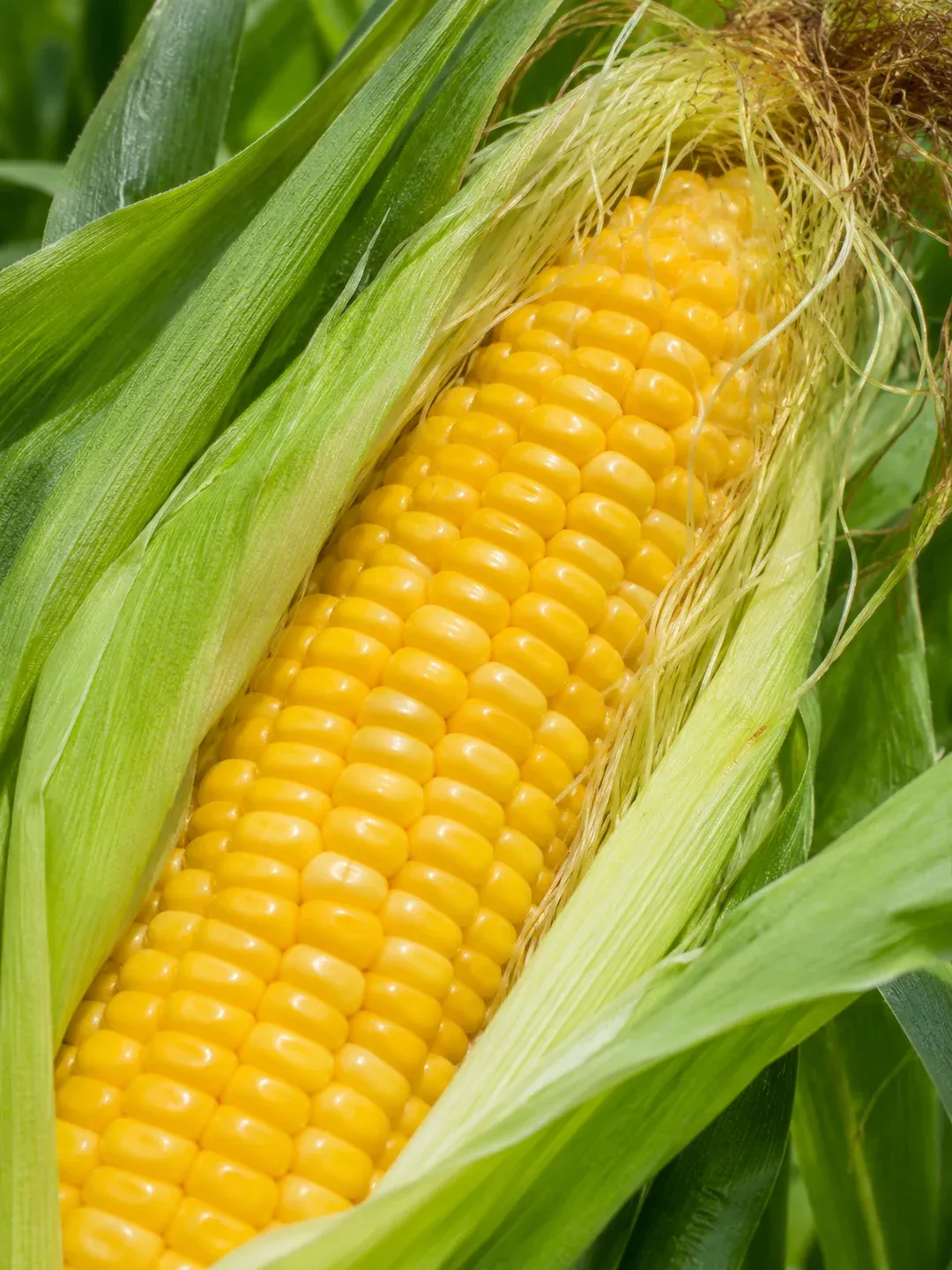
When the silks turn brown, peel back the husk slightly and test a plump kernel. It should remain tender and release a milky liquid. A watery kernel is too young; thick paste indicates an over-mature stage. Harvest based on this test, without waiting for a fixed number of days. Consume promptly or refrigerate: sugar retention varies by type. The SNHF also mentions freezing.
To produce seeds, set aside cobs from a non-hybrid variety, where pollination has been controlled, and allow them to mature and dry: these are no longer cobs to eat while tender. Seeds saved from an F1 hybrid will not come true to type.
Sweetcorn is an annual. After harvest, remove residues; the SNHF recommends shredding them to limit shelter for the European corn borer and leaving four years before returning sweetcorn to the same spot. Note this on your crop rotation plan. Growing it with beans and squash requires space and a coherent choice of varieties: consult the companion planting guide to organise these three crops.
Key points for this crop
Practical guidance
- Exposure
- Full sun, sheltered from strong winds
- Planting
- Soil warmed and risk of frost past
- Arrangement
- Several short rows grouped in a block
- Harvest
- Kernels swollen, tender and milky
Sources and references
- SweetcornFrench National Horticultural Society (SNHF) Accessed on 18 October 2026.
- How to grow sweetcornRoyal Horticultural Society (RHS), in English Accessed on 18 October 2026.
- Growing sweet corn in home gardensUniversity of Minnesota Extension, in English Accessed on 18 October 2026.