
The vegetable garden notebook / Climate
Vegetable Gardening in a Mediterranean Climate: Adapting the Calendar and Watering
In a Mediterranean climate, prepare for summer before expanding plantings: which crops can you water and maintain? Also allocate space for cooler-season crops, depending on your garden’s conditions.
Adapt this guidance to your garden’s climate and conditions.
This guide uses French examples and seasonal references. Adjust them to your garden’s climate and local conditions.
- Summer water
- Choose which crops to grow, and how many plants, according to the water and care available.
- Local conditions
- Adjust planting dates to altitude, exposure, and your garden’s specific forecasts.
- Intense rainfall
- Identify areas where water pools and wait until the soil becomes workable again.
Three decisions to prepare your vegetable garden
Before choosing sowing dates, make these three decisions using the guidance below:
- Growing season: Which harvests should you aim for during the cooler seasons?
- Area to tend in summer: How many plants can you realistically water and tend?
- Location: Which area provides shelter from the wind? Check that water drains away there after heavy rainfall.
Locating your garden in relation to the sea and surrounding terrain
The Mediterranean climate combines hot, dry summers, generally mild winters, abundant sunshine, and occasionally violent winds. Rainfall is irregular and can be intense in spring or autumn, particularly near hills and mountains. These are the key characteristics described by Météo-France.
A coastal vegetable garden and an inland garden may not follow the same calendar. Altitude lowers temperatures; distance from the sea also alters conditions, and inland areas may experience more summer heat without the cooling effect of sea breezes. The same source explains these differences. Note your garden’s exposure, observed cold nights, and wind patterns before adopting a neighbour’s planting dates.
Which calendar for a vegetable garden in Corsica?
Météo-France classifies Corsica as a Mediterranean region and notes that temperatures decrease with altitude. For a Corsican garden, note the altitude, exposure, and sea influence before adopting coastal garden dates. At higher elevations, also consult the mountain vegetable garden guidelines and check local temperatures and cold risk before planting sensitive crops. These differences require garden adjustments; there is no single sowing date for the entire island.
Preparing for a manageable summer
Before selecting the number of plants, assess your availability and water supply. If watering will be difficult, limit new summer plantings and plan more crops to be harvested before the dry period. The RHS recommends this adaptation when drought is expected and watering is unfeasible.
Lettuces and other leafy vegetables are particularly vulnerable to lack of water. Tomatoes also require consistent care: the RHS emphasises the water needed for establishment, followed by regular watering during flowering and fruiting. Tomatoes should therefore not be chosen as a crop guaranteed to need no watering simply because they like heat.
Watering according to soil and growth stage
Check moisture beneath the surface before deciding on watering. Needs vary with soil type, plant species, and development stage; there is no single daily quantity valid for all Mediterranean vegetable gardens. For established crops, make sure water penetrates the root zone rather than just wetting the surface. Newly sown seeds and young plants require consistent moisture from the start. These distinctions come from the RHS vegetable watering guide.
For tomatoes, aim for fairly regular moisture: significant fluctuations can contribute to fruit splitting or blossom-end rot (apical necrosis). Pots and containers dry out quickly in hot weather and deserve close monitoring, notes the RHS. Adapt practices using the watering guide.
Retaining moisture and accounting for wind
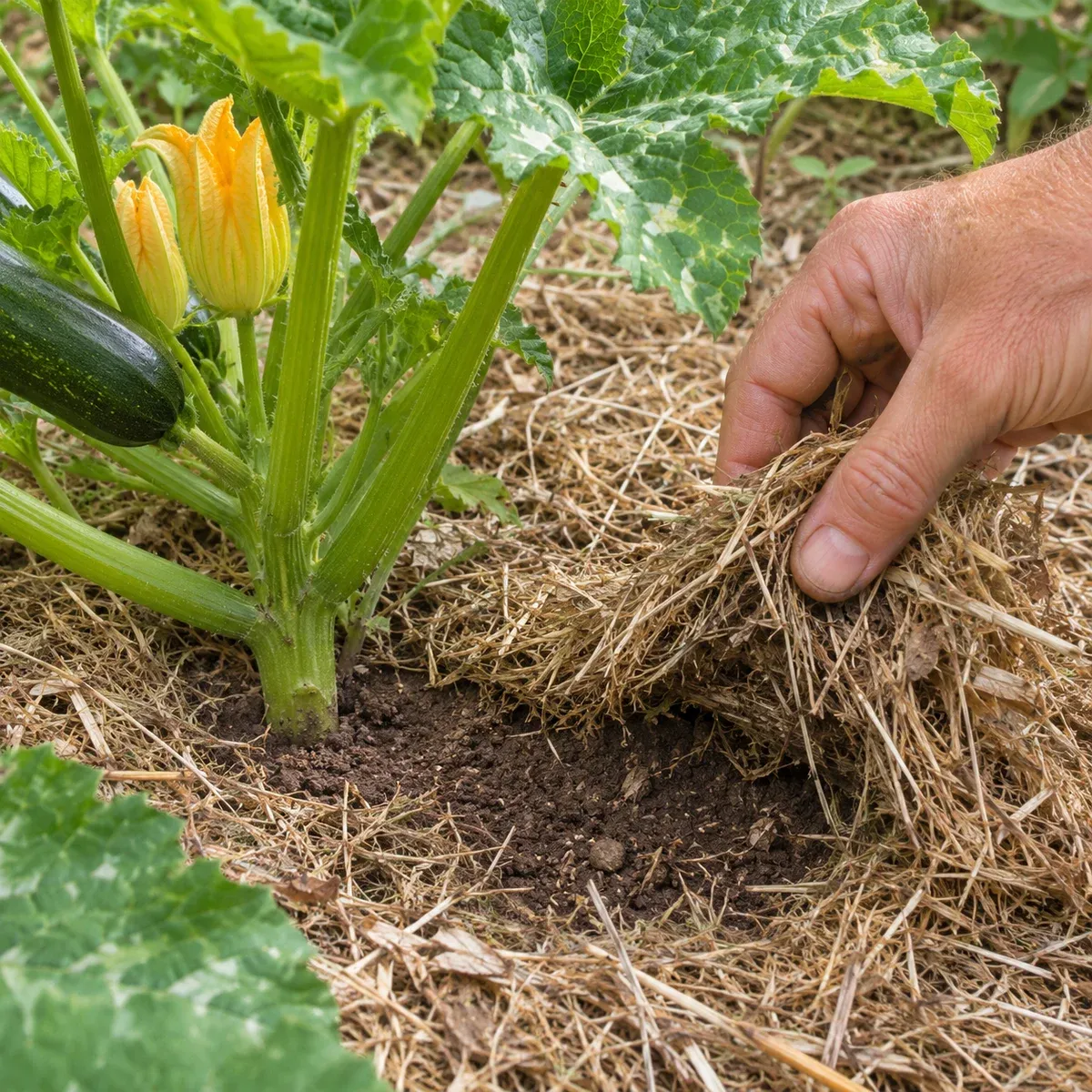
Around established crops, an organic mulch helps limit moisture loss and weed competition. A sheltered location also reduces plant water loss, according to the RHS. Identify the most exposed areas before planting crops you will need to monitor closely.
Around tomatoes, keep mulch away from the base of the stems, as recommended by the RHS. The mulching guide details material selection and application. Continue observing the soil beneath the cover.
Using cooler seasons without imposing a fixed date
Broad beans illustrate the benefit of moving certain crops away from extreme heat: the SNHF indicates that heat can halt their growth before pod formation. It recommends autumn sowing in the warm regions of the Midi and Southwest, and early spring sowing elsewhere. This guideline depends on your specific conditions; it does not apply uniformly to all southern gardens.
For spring tomatoes, wait for sufficiently warm conditions and harden off plants raised under shelter, following the RHS. Check local forecasts before planting out. Regional climate helps plan the season but does not replace this verification.
After heavy rain, check water drainage
Identify areas where water remains after the rainy episode. Prolonged soil saturation deprives roots of oxygen; the RHS distinguishes this waterlogging from water passing through briefly. Wait until the soil becomes workable again before walking on beds or working them, to avoid compacting it.
Keep your observations from one season to the next: plots that dry quickly, waterlogged zones, monitored crops, and harvest dates. These will help adjust the placement of summer and cooler-season crops.
How to protect the vegetable garden during a heatwave?
Start by checking soil moisture in beds and containers, then decide on watering based on the crop and its stage. For necessary watering, target the root zone during the cooler part of the day. Prioritise newly sown areas, young plants and crops in production, using the watering guide as a reference.
Postpone a planting that can wait if the soil is parched and establishment is difficult. For autumn salad crops, the RHS suggests starting them in pots in light shade when the soil is scorching and dry. However, postponement depends on the crop: a winter crop that needs to establish cannot wait indefinitely. Adding fertiliser does not compensate for lack of water. RHS, heatwave and drought
In a greenhouse or tunnel, plan how to ventilate and monitor the temperature: this shelter can overheat. The shelter comparison guide details the constraints before moving plants into them.
How to adapt the vegetable garden to climate change?
Météo-France describes more intense and longer heatwaves, milder winters, and increased pressure from droughts and intense rainfall. This evolution does not provide a new uniform sowing date for the entire country. Météo-France
To adjust your garden, compare sowing dates, dry spells, and harvests each year. Revisit the three decisions at the start of this guide in light of this assessment: season, area to maintain, and location. The sections on summer and cooler seasons present the ways to plan ahead described by the RHS; the one on the heatwave concerns management during the episode itself.
Which varieties to choose for drought conditions?
The RHS highlights the frequent lack of comparable information on drought tolerance between vegetable varieties. A tomato’s name, a southern origin, or a commercial claim is therefore not sufficient to conclude that it is a crop that needs no watering. Also distinguish between heat tolerance and the ability to produce with little water. RHS
Start with the species and season: according to this source, Swiss chard and chicories generally require less water than lettuces and spinach but still need to be monitored. To choose within a species, look for a trial specifying the climate, soil, stage, water applied, and yield obtained. If no such trial is available, run a small trial of your own and keep a record of your local results.
Sources and references
- The climate of mainland France and CorsicaMétéo-France Accessed on 16 October 2026.
- Vegetables: care during droughtRoyal Horticultural Society (RHS), in English Accessed on 16 October 2026.
- Watering vegetables and fruitRoyal Horticultural Society (RHS), in English Accessed on 16 October 2026.
- How to grow tomatoesRoyal Horticultural Society (RHS), in English Accessed on 16 October 2026.
- Broad beanSociété nationale d’horticulture de France (SNHF), Jean-Marc Muller Accessed on 16 October 2026.
- Waterlogging and floodingRoyal Horticultural Society (RHS), in English Accessed on 16 October 2026.
- What are the effects of climate change?Météo-France Accessed on 17 October 2026.
- What not to do in the garden during a heatwave and droughtRoyal Horticultural Society, Guy Barter, in English Accessed on 17 October 2026.