
The vegetable garden notebook / Climate
Mountain Vegetable Garden: Adapting Crops to Terrain and Frost
In mountain areas, start by observing your garden’s slope, cold spots, and season. These benchmarks help choose crops and decide when to plant them.
Adapt this guidance to your garden’s climate and conditions.
This guide uses French examples and seasonal references. Adjust them to your garden’s climate and local conditions.
- Altitude and Terrain
- Gardens at the same altitude can have different exposures and night-time temperatures.
- Frost
- Monitor forecasts and cold pockets before setting out frost-sensitive plants.
- Available Growing Season
- If it is short or cool, compare the earliness of varieties without assuming their stated duration is guaranteed.
From Mountain Range to Garden: Changing Scale
Météo-France indicates that temperature generally decreases with altitude, while winds and precipitation vary significantly depending on location. Latitude and proximity to the sea also contribute to regional differences. A single calendar for the Alps, Pyrenees, Jura, or Massif Central would therefore be too broad to determine planting times.
The name of the mountain range locates your garden; the microclimate describes its local conditions. On your vegetable garden plan, note the orientation, shaded areas, and spots exposed to wind. When comparing notes with neighbours, focus on gardens in similar settings.
Identifying the Slope and Areas Where Cold Lingers
A south-facing exposure generally receives more light and heat than a north-facing one. However, buildings and trees alter actual sunlight: observe it at the location of the beds. The RHS also recommends identifying hollows where cold air can accumulate and wind-exposed passages.
A valley floor may be colder at night than a higher location. Météo-France explains this inversion during cloudless anticyclonic conditions: the ground cools, and cold air accumulates at the bottom. This phenomenon depends on the weather; it does not mean valleys are always colder. Therefore, do not apply a fixed delay for sowing based solely on altitude increments.
Choosing Crops for Your Growing Season
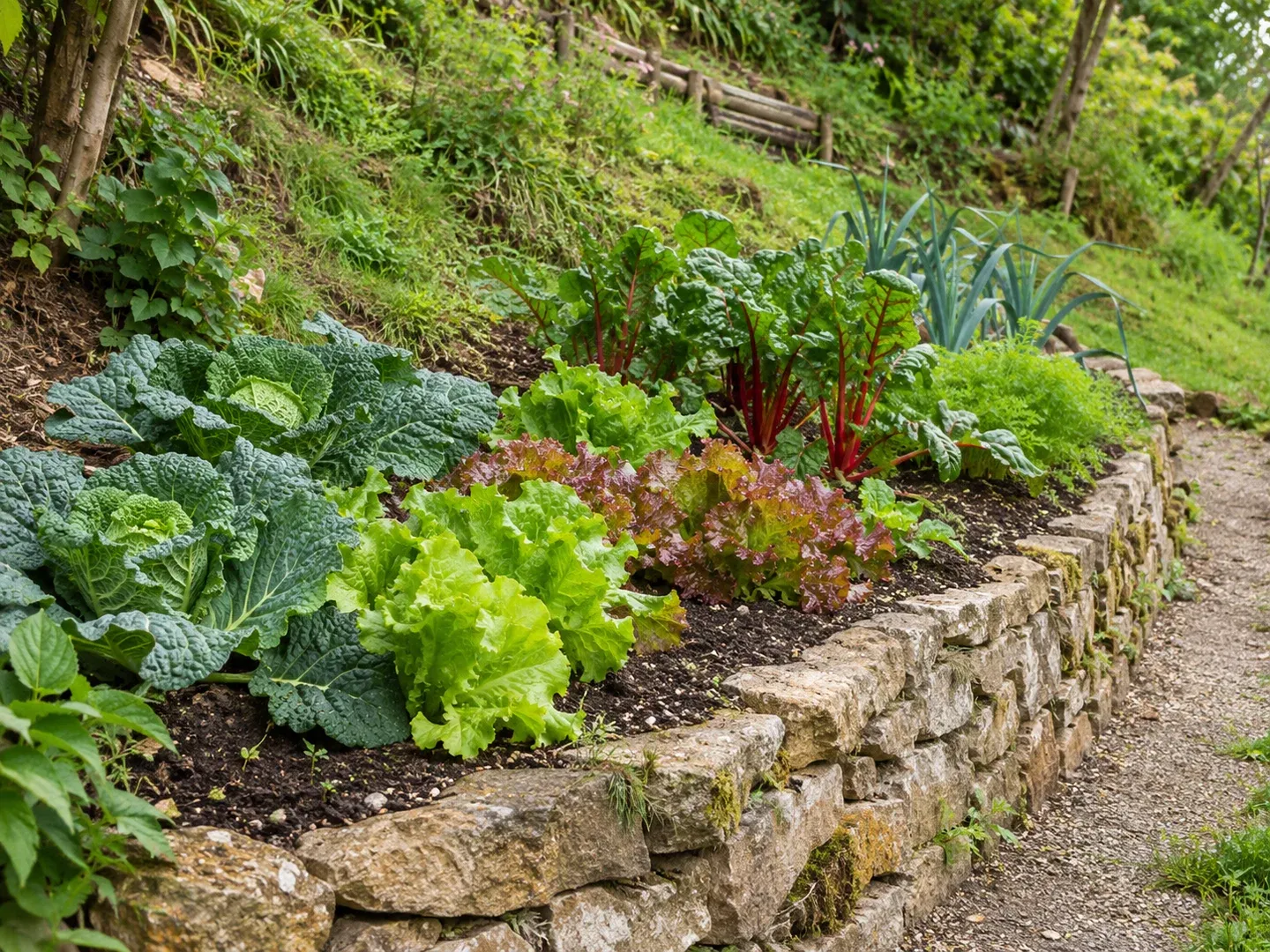
If your summers remain cool or the frost-free period is short, start with a few cool-season vegetables: lettuces, spinach, peas, carrots, or radishes. The Colorado State University Extension lists these in its mountain gardening guide. This source pertains to Colorado: it supports this choice for cool conditions without providing a French calendar.
Within a species, compare early varieties and their stated suitability for cool conditions. The time to harvest given on a seed packet may be longer in mountain gardens. Reserve a limited trial of heat-demanding vegetables, such as tomatoes, for the most favourable spot rather than dedicating the entire garden to them immediately. These are the selection principles proposed by the same source.
Deciding When to Plant Based on Conditions
Before direct sowing, wait if the soil remains frozen or snow-covered, as the CSU guide notes. For cold-sensitive plants, a sunny day is not enough: check the night-time forecast and the crop’s requirements.
The RHS recommends gradually acclimatising plants raised indoors, then deciding whether to plant out based on the forecast and the microclimate. The absence of frost is not always sufficient: nights that are too cool can also slow or damage tender vegetables. Keep plants sheltered if conditions remain unfavourable and plan appropriate protection in case of forecasted cooling. Horticultural fleece provides limited frost protection; it does not guarantee plant survival during significant cold snaps.
Two Situations to Handle Differently
The bed remains snow-covered or frozen. Wait to sow; choose varieties and prepare labels while staying on the paths, then reassess the soil after thawing. The CSU guide explicitly advises waiting when snow and frost persist. Note the date when each area becomes accessible again: one snow-free slope does not represent conditions across the whole plot.
Tomato seedlings in pots are ready while nights remain too cold. Keep them in their sheltered, bright location; continue hardening them off outdoors only when the weather allows, then return them under cover. The RHS recommends this transition before planting and notes that cold nights can remain unfavourable without frost. Only consider a planting trial in a small, favourable area after these checks; it does not involve exposing all plants to meet a set date. The tomato sowing guide helps monitor seedlings during the waiting period.
Building Your Local Calendar
Record the variety, sowing and planting dates, exposure, and first harvests. Add any frosts and the protective measures used. An example note, fictional and without a fixed planting date, could be: “tomato seedlings in pots; frost observed in the hollow last night; area beside the sheltered wall unaffected; no fleece used; decision: keep seedlings sheltered and check subsequent nights.” The consequence is clear: the contrast between two locations does not give the green light for the entire bed. For a future trial, also note the protection actually used and the condition of the plants in the morning, to compare equivalent situations.
Compare several seasons afterwards: success against a sheltered wall does not become a valid date for all beds, nor does a favourable year establish a permanent rule.
Sources and references
- The climate of mainland France and CorsicaMétéo-France Accessed on 16 October 2026.
- Terrain: lower minimum temperatures in valleys than at higher altitudesMétéo-France Accessed on 16 October 2026.
- Microclimates: assessing your gardenRoyal Horticultural Society (RHS), in English Accessed on 16 October 2026.
- Vegetable Gardening in the MountainsColorado State University Extension, in English Accessed on 16 October 2026.
- When to plant out tender plants – avoiding late frostsRoyal Horticultural Society (RHS), in English Accessed on 16 October 2026.