
The vegetable garden notebook / Crops
Growing lettuce: varieties, sowing and harvesting by season
To grow lettuces, first decide whether to harvest leaves or wait for a head. Next, check the growing season indicated for the variety: a single packet is not necessarily suitable for all periods.
Adapt this guidance to your garden’s climate and conditions.
Which type of lettuce should you choose?
Cultivated lettuce is Lactuca sativa. Corn salad, rocket, and chicories are other salad greens: their requirements are not covered in this guide. The SNHF distinguishes in particular:
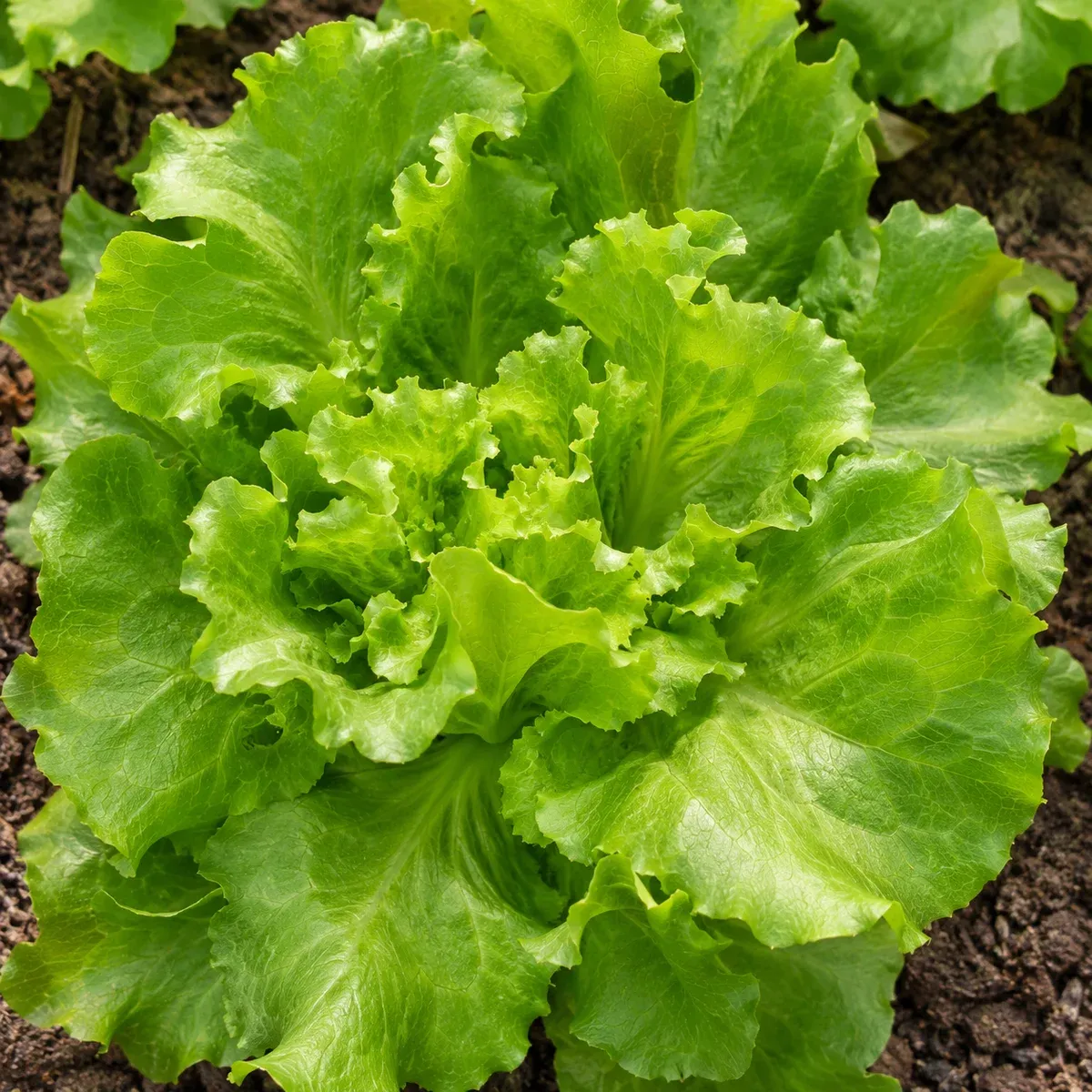
- Loose-leaf lettuces, including oakleaf types and Salad Bowl varieties;
- Head lettuces, including butterhead and Batavia types;
- Romaine lettuces.
Note the type and exact variety name before purchasing. “Batavia” or “oakleaf” alone is not sufficient to establish a schedule.
Which variety for the season?
Lettuce prefers cool conditions. In spring and autumn, a sunny position is suitable; for summer cultivation, choose a variety advertised as slow to bolt and provide light shade during the hottest hours. The University of Maryland recommends these adaptations and notes that tolerance to light frost does not protect against hard frost.
To get through winter, select a variety intended for this purpose and appropriate protection for the location. The RHS cites, for example, the romaine ‘Winter Density’; it describes growing in a greenhouse or cold frame, or under a cloche in mild conditions. Its British schedule does not constitute a sowing date for all of France.
To plan your seasonal garden care, continue with the summer vegetable garden or preparing the vegetable garden in winter, depending on your situation.
Prefer several small batches to one large planting: choose the next based on your consumption, expected weather, and the packet’s instructions.
Sowing and planting without overheating
The SNHF indicates 12 to 15 °C as a favourable benchmark for germination. This is not an exclusive range valid for all varieties. In hot periods, some germinate poorly: the RHS advises sowing in cooler weather or in the evening, with some shade.
Sow thinly in prepared soil or in small containers. For sowing directly in the ground, the RHS suggests approximately 1 cm depth, with rows 30 cm apart. Follow the packet’s specific instructions. Plants raised indoors must be hardened off before being planted outside.
With plug plants, the SNHF recommends leaving about one-third of the plug above the soil to limit collar rot. The sowing guide details the preparation and care of young plants.
What spacing to allow, and how to water?
Thin according to the expected result. The RHS suggests approximately 15 cm for small loose-leaf types and 30 cm for large head lettuces. For a fully grown loose-leaf lettuce, the University of Minnesota indicates 25 to 30 cm: harvesting small leaves and harvesting a large plant do not require the same space.
Choose well-draining soil that retains moisture. Check below the surface, next to the plants, before adjusting watering; the University of Minnesota recommends this observation. Avoid saturating the soil: excess water can encourage diseases, notes the University of Maryland. Our watering guide helps adjust watering to the soil.
How to plant lettuces in a container?
For planting out young lettuces, the RHS suggests a container at least 30 cm wide and deep, filled with multipurpose potting compost. Adjust the number of plants to their mature spacing: a harvest of small leaves does not occupy the same space as a large head lettuce.
Check water drainage and monitor moisture, especially during establishment. In high heat, light shade during the hottest hours limits drying out and the risk of bolting. Potting compost in a pot can dry quickly; check it before deciding on watering, without setting a fixed daily volume for the entire season. RHS
Harvesting before bolting
For a loose-leaf lettuce, pick usable leaves while leaving most of the small leaves to continue growing. The University of Minnesota describes the possibility of multiple harvests in this way.
For a head lettuce, observe its shape: a butterhead forms a loose head, a romaine has upright leaves that overlap, and an iceberg forms a compact, firm head. These criteria from the University of Maryland are more useful than a uniform timeframe for all types.
A lengthening flower stalk signals bolting. Long days and heat can encourage this and make leaves bitter, according to the University of Minnesota. Even a slow-bolting variety will eventually flower if left long enough, notes the RHS. Record the variety, conditions, and stage of your first harvest to adjust the next batch.
Severed, wilted or soft lettuce: three different checks
- Base gnawed or plant suddenly severed: look for the animal and bite marks around the collar. Cutworms can attack the base and roots; slugs and other animals produce similar damage. The cut alone does not identify the caterpillar.
- Wilting without an obvious cut: first check moisture. On a plant that has died or one you are examining, colonies and waxy deposits on the roots may indicate root aphids, but drought and other issues can also cause a lack of vigour. Do not assume a deficiency without examining the plant and soil.
- Soft tissues with a grey-brown fuzz: grey mould is a possibility, cited among lettuce problems by the RHS. Note prolonged moisture and ventilation, then seek clarification if the cause remains uncertain.
Keep photos of the entire plant and close-ups of the affected area, along with the date and watering conditions. These observations help choose an appropriate response; adding water or fertiliser at the first sign of wilting can mask the cause.
Key points for this crop
Practical guidance
- Species
- Lactuca sativa; not all salad greens are lettuces
- Variety
- To be chosen based on season and harvest method
- Spacing
- To be adjusted according to expected size and harvest stage
- Water
- Consistent moisture, without excess
Sources and references
- LettucesSociété nationale d’horticulture de France (SNHF), Jean-Daniel Arnaud Accessed on 16 October 2026.
- How to grow lettucesRoyal Horticultural Society (RHS), in English Accessed on 16 October 2026.
- Growing lettuce, endive and radicchio in home gardensUniversity of Minnesota Extension, Marissa Schuh and Jill MacKenzie, in English Accessed on 16 October 2026.
- Growing Lettuce in a Home GardenUniversity of Maryland Extension, in English Accessed on 16 October 2026.
- CutwormsRoyal Horticultural Society (RHS), in English Accessed on 18 October 2026.
- Root aphidsRoyal Horticultural Society (RHS), in English Accessed on 18 October 2026.
- Grey mouldRoyal Horticultural Society (RHS), in English Accessed on 18 October 2026.