
The vegetable garden notebook / Seasons
Winter vegetable garden: protecting crops and planning ahead
In winter, each bed can serve a different purpose: supporting an established crop, remaining covered while waiting, or accommodating a crop suited to a specific shelter. Start with this assessment.
Adapt this guidance to your garden’s climate and conditions.
This guide uses French examples and seasonal references. Adjust them to your garden’s climate and local conditions.
- Monitor existing crops
Adapt protection to the crop, variety, and locally forecasted cold.
- Preserve the soil before working it
Wait if it is frozen or waterlogged and maintain appropriate cover on bare areas.
- Prepare for upcoming choices
Review previous crops and verify necessary conditions before scheduling a sowing.
Start with existing crops and your climate
Winter harvests largely depend on crops established earlier. Terre vivante notes that in cold climates, they must be sufficiently developed by the end of autumn; in milder regions, some continue to grow. A garden that is empty at the start of winter cannot immediately provide winter harvests.
Conduct a simple assessment: crops still present, bare areas, and available protection. In metropolitan France, consider the conditions in your garden and local forecasts. The same source emphasises that cold resistance depends on variety, wind, humidity, and the speed of frost onset.
Choose your starting point
- Vegetables are still in place: Begin with their harvest stages and protection needs, detailed below. The November calendar helps distinguish between harvesting, leaving in place, and protecting.
- The bed is bare: Proceed to soil cover. This does not require starting a new crop during the coldest period.
- You are considering sowing: First, check the shelter actually available, then the January calendar or December calendar, depending on the period.
Two established crops to monitor differently
For corn salad, identify the formed rosettes to be picked at the base and the plants that still need to develop. The choice of a winter variety matters; the SNHF cites ‘Verte de Cambrai’ and ‘Coquille de Louviers’ and recommends fleece in extreme cold. Keep the leaves visible to monitor their condition, without burying them under mulch. SNHF
For Brussels sprouts, examine the sprouts along the stem: the SNHF recommends starting the harvest with the largest ones at the bottom. This progressive picking is not based on harvesting the entire plant at a fixed date. If access requires stepping on frozen or waterlogged soil, postpone the task as explained below. SNHF
Protect without losing track of crops
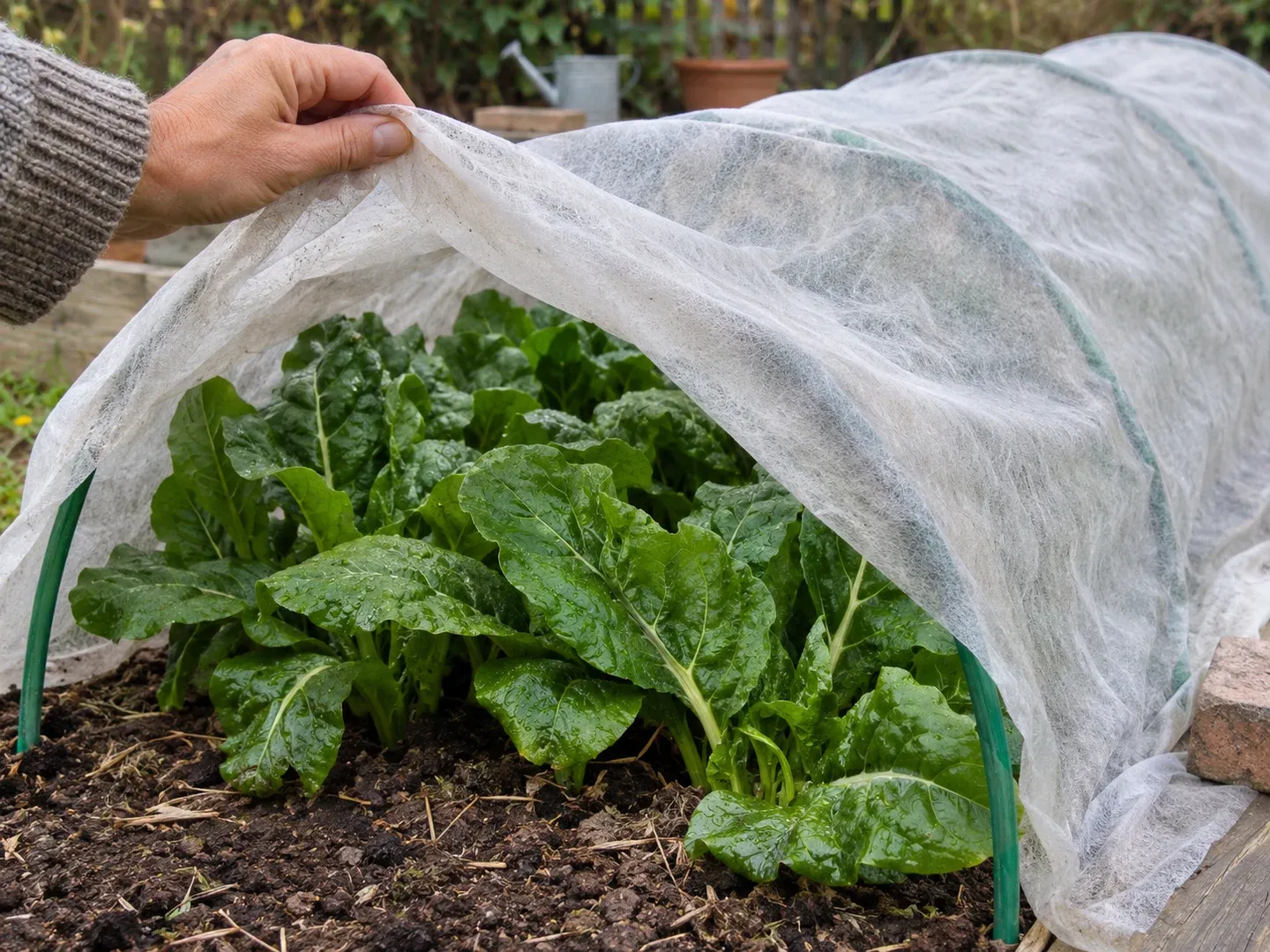
Before a cold spell, check the needs of existing crops and the protection you have available. Fleece provides partial protection: according to the RHS, without solar heat input, the temperature around covered plants can quickly match that of the outside air.
Under a cloche or small tunnel, check fixings after wind and keep openings accessible. The RHS stresses anchoring and sufficient ventilation to limit excessive humidity, which favours certain diseases.
Also monitor the soil under shelter. Terre vivante advises airing small shelters during the warmest hours and watering to prevent drying out. The season does not replace this monitoring: a sheltered crop still requires observation.
Pause work without leaving the soil bare
First, observe the beds from the paths. If the soil is waterlogged, avoid stepping on it: this can compact it and worsen the situation, explains the RHS. Wait until it is workable again. Also postpone working on frozen soil, in line with soil preparation precautions.
On a bare area, mulch can protect the surface from rain impact. Jardiner Autrement recommends keeping these materials on the surface, removing diseased plant debris, and not mulching frozen soil. If you add cover around crops, keep their collars clear. The mulching guide details these precautions.
Here, ‘pause’ means a break in your interventions. You can wait for good conditions to prepare the soil while maintaining its cover. Note areas where water persists: these will influence the choice of future planting locations.
Distinguish protection from sowing under heated shelter
Before following any ‘under shelter’ indication, verify what it entails. Fleece, a small tunnel, and a heated greenhouse are not interchangeable conditions. In its late January calendar, Terre vivante, for example, specifically recommends sowing early radishes and carrots suitable for forcing under heated cover.
This condition is part of the advice. For any sowing considered, check the variety, period, and indicated growing conditions, then compare them with your setup. If they are not met, postpone sowing until a suitable window. The December and January guides detail decisions specific to these months.
Plan ahead based on a realistic layout
During days when the ground remains unworkable, map out the year’s crops, as suggested by Terre vivante. Add what still occupies each location and useful observations: persistent water, shade, or crop issues.
Next, list the vegetables you wish to harvest and their possible locations. Rotation aims to alternate crops, but soil, exposure, and long-term plantings limit certain movements, notes Jardiner Autrement. The crop rotation guide helps you make this choice without imposing a scheme impossible for your garden.
For each new sowing, keep a brief record: variety, indicated window, planned location, and necessary shelter. You can resume work based on these conditions, rather than starting on the first mild day.
Sources and references
- The benefits of growing vegetables in winterTerre vivante, excerpt from Blaise Leclerc Accessed on 16 October 2026.
- Fleece and crop coversRoyal Horticultural Society (RHS), in English Accessed on 16 October 2026.
- ClochesRHS, in English Accessed on 16 October 2026.
- Waterlogging and floodingRHS, in English Accessed on 16 October 2026.
- How to make a raised bedRHS, in English Accessed on 16 October 2026.
- The effects of mulching in the gardenJardiner Autrement, a programme run by the SNHF Accessed on 16 October 2026.
- Garden tasks calendar — 16 to 31 JanuaryTerre vivante Accessed on 16 October 2026.
- Crop rotation in the vegetable gardenJardiner Autrement, a programme run by the SNHF Accessed on 16 October 2026.
- Corn saladFrench National Horticultural Society Accessed on 8 November 2026.
- Brussels sproutsFrench National Horticultural Society Accessed on 8 November 2026.