
The vegetable garden notebook / Techniques
Preserving Harvests: Choosing Storage Based on Your Vegetables
Before building a reserve, compare the needs of each vegetable with the conditions actually available in your home. A cellar, garage, and flat are not automatically suitable for the same crops.
Adapt this guidance to your garden’s climate and conditions.
Practical steps
- Identify
Distinguish species, variety, and whether the harvest is young or intended for storage.
- Compare
Check how cool, humid, dark and well ventilated the space is, and whether it can freeze.
- Sort
Keep only sound produce for storage, prepared as appropriate for each crop.
- Monitor
Keep batches accessible and remove any items that rot.
Start with the Vegetables and Available Space
An abundant harvest does not automatically become a reserve. Garden Organic distinguishes the needs of roots, potatoes, bulbs, and squashes, and emphasises their good condition when stored. Garden Organic
Make a list of batches with their variety, harvest date, and intended use. Then examine your space: is it cool, dry, or damp, lit, ventilated? Can it freeze? A thermometer helps describe the space; its name, “cellar” or “garage,” is not enough to decide.
Why Not Store Everything Together?
| Harvest to preserve | Conditions to seek | What to watch for |
|---|---|---|
| Carrots, beetroots, and other roots suitable for storage | Coolness and protection from drying out; slightly damp sand may be used | This method does not apply to all vegetables |
| Storage potatoes | Cool, dry, and dark place | Light causes greening; warmth encourages sprouting |
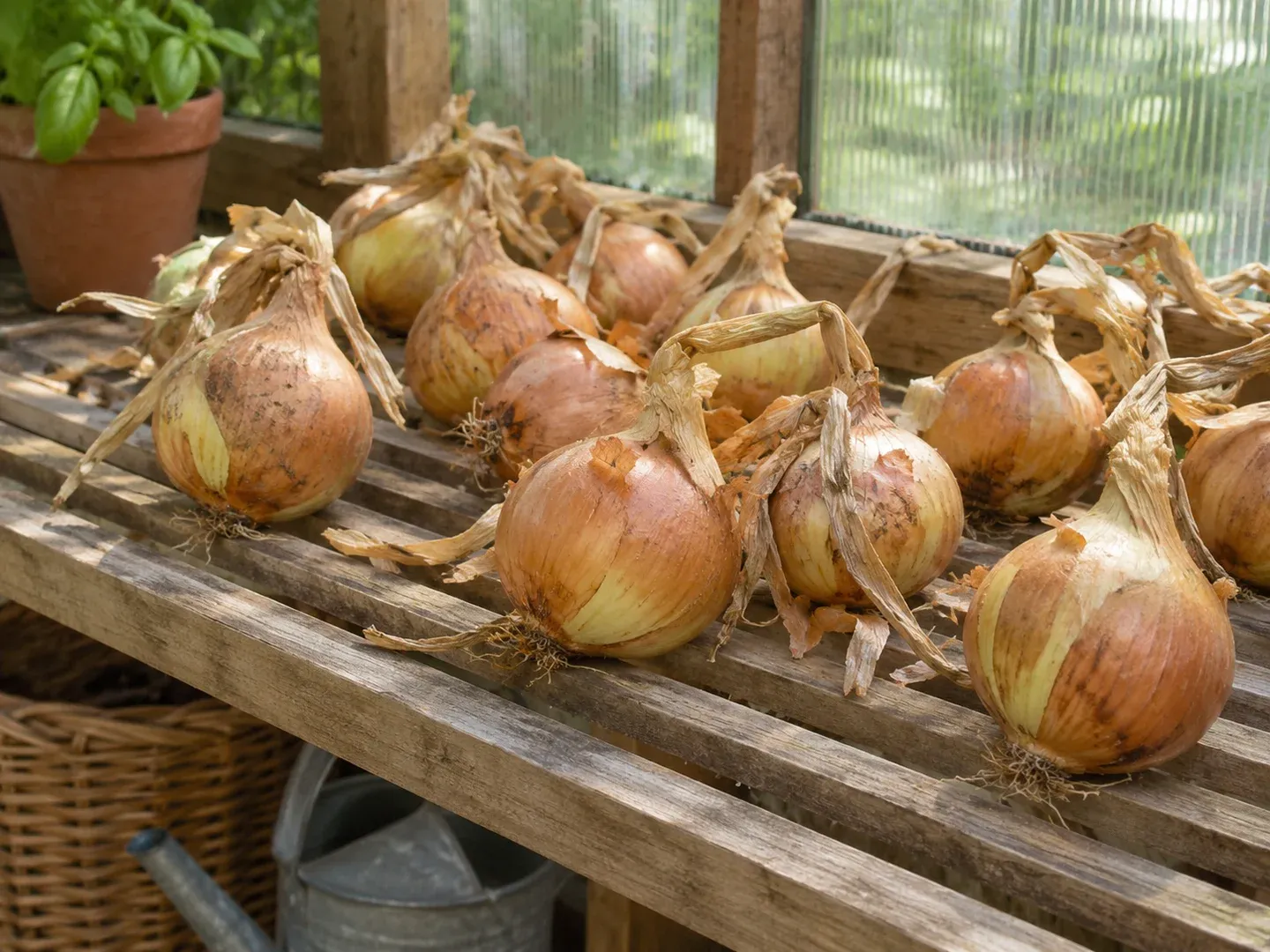
| Cured garlic, onions and shallots | Bulbs cured before storage, with air circulating around them | A closed, damp container does not replace drying |
| Whole storage squashes | Dry atmosphere, spaced fruits, no stacking | Avoid knocks and early signs of rot |
These differences come from Garden Organic, the Ministry of Agriculture, Terre vivante, and the SNHF on Hortiquid. Potatoes are distinct from roots stored in sand. Terre vivante specifies that a sufficiently cool cellar normally allows them to be stored without burying them in sand.
Which Temperatures Should You Check?
Garden Organic provides 0 to 4 °C for roots excluding potatoes, 5 to 10 °C for potatoes, 2 to 4 °C for cured bulbs, and 10 to 15 °C for storage squashes. These are storage conditions to compare with the space, along with the humidity and ventilation requirements in the table. These benchmarks apply to whole vegetables before cutting. None of these batches should freeze. Garden Organic
What to Do Without a Cellar?
Compare the available spaces with the table rows. A dry room may meet some of the needs of squashes without suiting carrots. A dark cupboard only meets the needs of potatoes if its other conditions are also suitable.
If no space is suitable, plan to use sound produce soon and adjust the quantity intended for storage. Adapt the storage duration to the variety, space, and condition of the vegetables, regularly checking your batches.
Preparing Batches Before Storage
Handle vegetables gently and exclude damaged ones from the batch intended for storage. For bulbs, wait until their preparation is complete: the guides for harvesting garlic and onions detail drying and sorting. Garden Organic
For squashes, keep the stalk intact near the fruit and allow for curing before storage. The SNHF recommends then storing in a dry place, allowing air circulation and, if possible, no contact between fruits. Hortiquid
Example: Storing Carrots in a Crate
Choose a batch intended for storage, without damage or deterioration. Remove excess soil without washing or rubbing the skin, then cut off the leaves near the crown. In a shallow crate, separate layers of roots with a slightly damp material, such as sand; do not soak it. This process comes from Garden Organic; Terre vivante confirms slightly damp sand for roots.
Place the crate in the cool space provided and keep it accessible. During checks, remove any roots that deteriorate and re-examine the neighbours; do not return a rotten vegetable to the middle of the batch. Monitoring complements the initial sorting; it does not turn an unsuitable crate into safe storage.
Keeping a Reserve Easy to Inspect
Keep batches accessible and check them as you take from them. Quickly remove any squashes showing early signs of rot to avoid contaminating others. Hortiquid
This guide helps choose between storing whole vegetables and processing surpluses: start with the available conditions, then move on to the appropriate method below. For a particular harvest, refer back to its growing guide and check its actual condition; discard any spoiled produce.
Processing Surpluses: Which Method to Choose?
To complement fresh storage, start with the vegetable, its condition, the intended culinary use, and your equipment. Processing a harvest is not a way to salvage spoiled produce.
| Method considered | When to consider it | What to check before starting |
|---|---|---|
| Freezing | You have a freezer and want to prepare portions. | Preparation specific to the vegetable, possible blanching, packaging, and freezer capacity; do not confuse freezing fresh produce with storing already frozen products. |
| Drying | You want a dry product, with a different texture and use from fresh. | Protocol specific to the food and equipment allowing controlled drying; drying time is not the same for herbs and thick vegetables. |
| Fermentation | You are looking for a transformation in taste and texture. | Reliable recipe matching the vegetable and process, quantities, conditions, and monitoring; do not improvise salt levels. |
| Heat-processed preserves | You have the equipment and protocol suitable for the product and container. | Preparation, sealing, and validated schedule for this combination; a sealed jar is not proof of safety. |
These guidelines are based on the consumer hygiene guide, the NCHFP for freezing and drying, INRAE for fermentation factors, and the Ministry for preserves.
Preparation, Cold Storage and Fermentation Are Not Interchangeable
The NCHFP explains how preparation for freezing varies with the vegetable and size of the pieces: blanching is useful for many vegetables, but the time needed is not the same for all of them. Start with its method sheet, then the relevant food. The French guide requires, in particular, suitable equipment, sealed and dated packaging; cold does not sterilise the harvest.
For fermentation, INRAE studies the effect of vegetable type, cutting, and salt on microbial communities. This research presentation does not alone provide a ready-to-use domestic recipe. Choose a complete protocol before preparing a batch; a pleasant smell or texture does not replace process control. INRAE
Preserves: Use the Right Equipment and Follow a Complete Procedure
The Ministry of Agriculture notes that boiling alone is not enough to eliminate Clostridium botulinum spores. Equipment, product, and schedule matter; do not adapt a recipe time from one vegetable to another or from one container to another.
Consult its section “Home Preserving,” which refers to the hygiene guide, and validated instructions corresponding to your equipment. Without a suitable procedure, choose another method you can carry out reliably or use the produce soon. Do not taste a questionable preserve to test it: the toxin may be present without an unusual taste or smell or any visible swelling of the container. Ministry
Sources and references
- Harvesting and storing vegetablesGarden Organic, Henry Doubleday Research Association, in English Accessed on 18 October 2026.
- Ugly fruits and vegetables and vegetable storage guideMinistère de l’Agriculture Accessed on 18 October 2026.
- Storing root vegetablesTerre vivante, Les 4 Saisons magazine Accessed on 18 October 2026.
- When should you harvest squashes, pumpkins and potimarrons (red kuri squash)?Hortiquid, answers from the Société nationale d’horticulture de France Accessed on 18 October 2026.
- Botulism and preserves: preventing risks associated with Clostridium botulinumMinistère de l’Agriculture Accessed on 18 October 2026.
- Collection of good hygiene practice recommendations for consumersDILA and consumer associations, published by the ministère de l’Agriculture Accessed on 18 October 2026.
- FLEGME: a participatory research project on vegetable fermentationINRAE Accessed on 18 October 2026.
- Blanching VegetablesNational Center for Home Food Preservation, University of Georgia, in English Accessed on 18 October 2026.
- DryingNational Center for Home Food Preservation, University of Georgia, in English Accessed on 18 October 2026.