
The vegetable garden notebook / Seasons
Autumn vegetable garden: organising harvests and subsequent crops
Prepare for autumn as crops free up space. For each area, decide what remains in production, what can follow it, and how to protect the soil in the meantime.
Adapt this guidance to your garden’s climate and conditions.
This guide uses French examples and seasonal references. Adjust them to your garden’s climate and local conditions.
- Identify crops requiring monitoring
Cross-reference each vegetable’s growth stage with its sensitivity to the forecast cold.
- Choose possible follow-on crops
Check the variety, local timeframe and soil condition before sowing or planting.
- Plan cover for vacant spaces
Choose a mulch or cover suited to the time available before the next crop.
Assign a purpose to each space
Sketch your vegetable garden, noting current crops and spaces soon to be available. For each location, choose a direction:
- Keep the crop. Note what remains to be harvested and the next sign to observe.
- Plant a follow-on crop. Identify the variety under consideration, its sowing or planting period, and the space it will subsequently occupy.
- Cover temporarily. Reserve the area for a later crop without committing to sowing another food crop.
Add a date for your next visit. This organisation allows you to work progressively, without clearing all beds on the same day. The calendars for September and October provide examples of possible crops; subsequently verify their conditions in your garden.
Prioritise cold-sensitive harvests
Consult local forecasts and identify vegetables to harvest before frost. For squashes intended for storage, the SNHF on Hortiquid recommends observing a hardened skin and stem, as well as fully developed colour. Allow them to ripen as long as the weather permits, but bring the fruits indoors before frost.
Harvest when possible in dry weather, without snapping the stem off at the fruit or bruising the fruit. Prepare a dry place where the fruits can be stored without touching; inspect them and remove any that begin to rot. These guidelines apply to storage squashes, not courgettes harvested young. The squash guide covers sorting and storage, including differences between types.
On your sketch, distinguish between a space that is now free and one still occupied. Only prepare the succession based on this actual availability.
Check the soil before starting a new crop
After rainfall, identify areas where water remains. The RHS advises against walking on waterlogged soil until it becomes workable again, to avoid compacting it further. Keep to the paths and postpone preparing these areas.
Garlic illustrates this choice well: a variety intended for autumn may be suitable, but the SNHF requires sunshine and excludes plots that retain water in winter. The favourable season does not compensate for poorly drained soil. Verify the variety name and its instructions before following the garlic planting guide.
For any other follow-on crop, gather the same information: variety, local conditions, the care you can provide, and the period when you will need the space again. If these details are missing, keep the decision open rather than sowing by default.
Cover vacant spaces
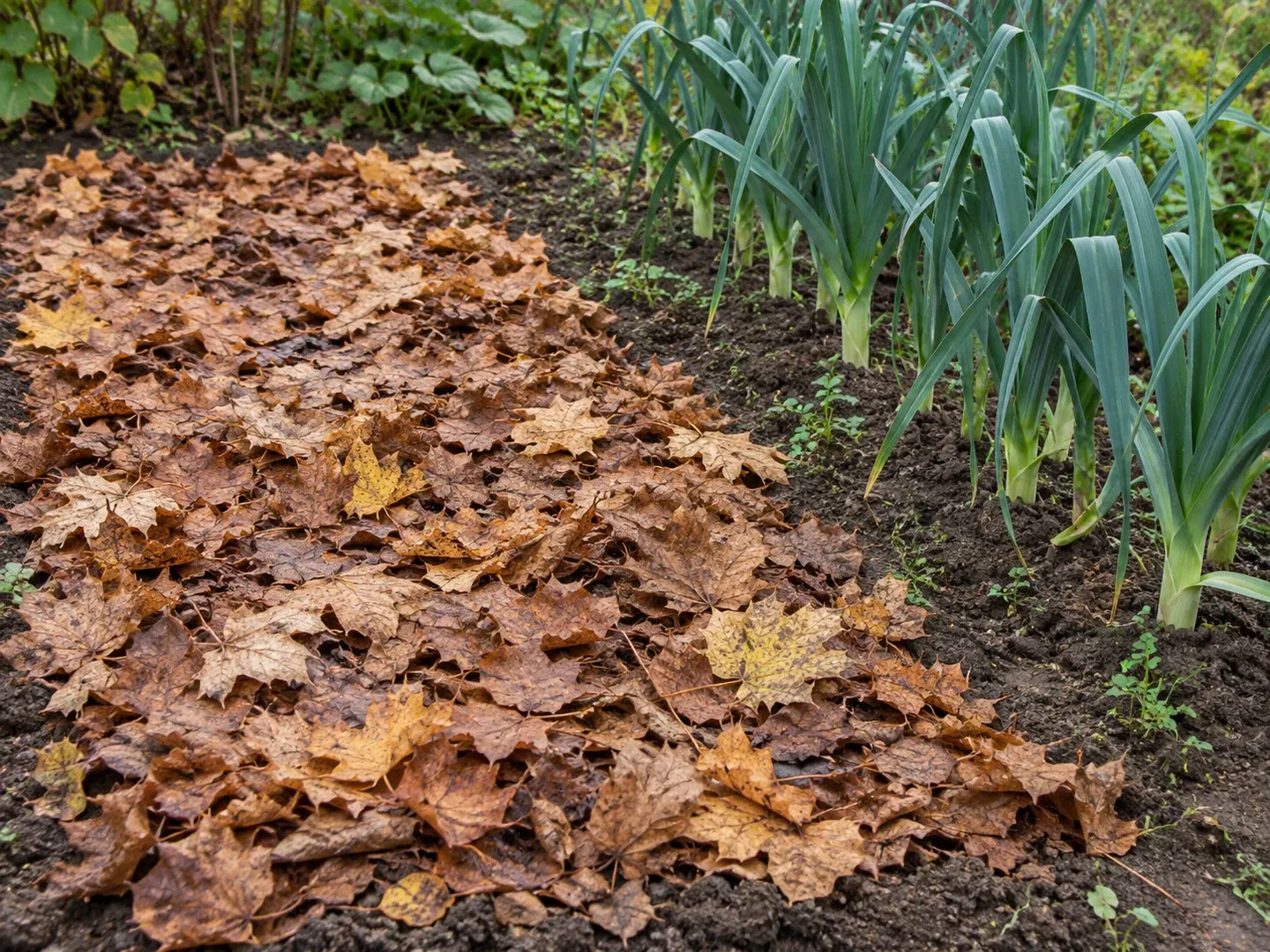
Mulch protects the surface from the impact of rain. Jardiner Autrement recommends weeding before application and using healthy plant materials, such as fallen leaves. Keep them on the surface without mixing them into the soil, and clear the base of plants you are keeping. Wait if the soil is frozen.
When sowing or planting next, move this cover aside at the relevant location. The mulching guide specifies material choices and precautions around young shoots.
Green manure offers another option but requires a schedule: species-appropriate sowing, cutting, and management of the cover before the next vegetable. Jardiner Autrement also advises considering the families of previous and subsequent crops: avoid mustard before or after cabbages and turnips, for example. The source discourages these sowings in cases of severe slug infestation. Verify these points before choosing a cover; autumn does not make all species interchangeable. The green manure guide details selection, sowing, and cover termination.
Example: a bed freed up before planting garlic
In a sample plan, a completed harvest leaves a sunny space intended for an identified autumn garlic variety. Note “harvest completed; garlic planned; soil to check,” then confirm drainage and the variety’s timeframe before planting. If these conditions are met, proceed to the planting step. If the soil remains waterlogged, postpone the intervention; the presence of a vacant space does not correct the soil. SNHF, RHS
If you had planned green manure but the species’ sowing window has passed or time is short before the garlic, do not sow by default. For an area that will remain free, consider the surface cover solution, using healthy materials on unfrozen soil. The choice depends on the time actually available, not just the season’s name. Jardiner Autrement, mulching
Keep a record for the following season
Conclude your notes with a few concrete observations: last harvest, variety planted, material applied, and areas that remained damp after rain. For a sown cover, add the planned intervention before the next crop. These notes will allow you to resume work on each space without reconstructing its history in spring.
Sources and references
- Waterlogging and floodingRoyal Horticultural Society (RHS), in English Accessed on 16 October 2026.
- When should you harvest squash, pumpkins and potimarron squash?Hortiquid, answers from the SNHF Accessed on 16 October 2026.
- Cultivated garlicFrench National Horticultural Society (SNHF) Accessed on 16 October 2026.
- The effects of mulching in the gardenJardiner Autrement, a programme run by the SNHF Accessed on 16 October 2026.
- How to use green manures in the gardenJardiner Autrement, a programme run by the SNHF Accessed on 16 October 2026.