
The vegetable garden notebook / Vegetable garden calendar
The vegetable garden in September: preparing autumn sowings
In September, summer crops and the first autumn sowings can share the vegetable garden. Choose a genuinely available spot, a suitable variety, and a small area you can monitor for seedling emergence.
Adapt this guidance to your garden’s climate and conditions.
This guide uses French examples and seasonal references. Adjust them to your garden’s climate and local conditions.
Three priorities this month
- Prepare the transition from summer crops
Identify cleared spaces and vegetables still producing.
- Select a few suitable sowings
Check the type of radish, the corn salad variety, and the indicated period for spinach.
- Support seedling emergence
Be able to maintain the moisture of the sowing if heat and drought persist.
Prepare the transition without clearing the entire vegetable garden
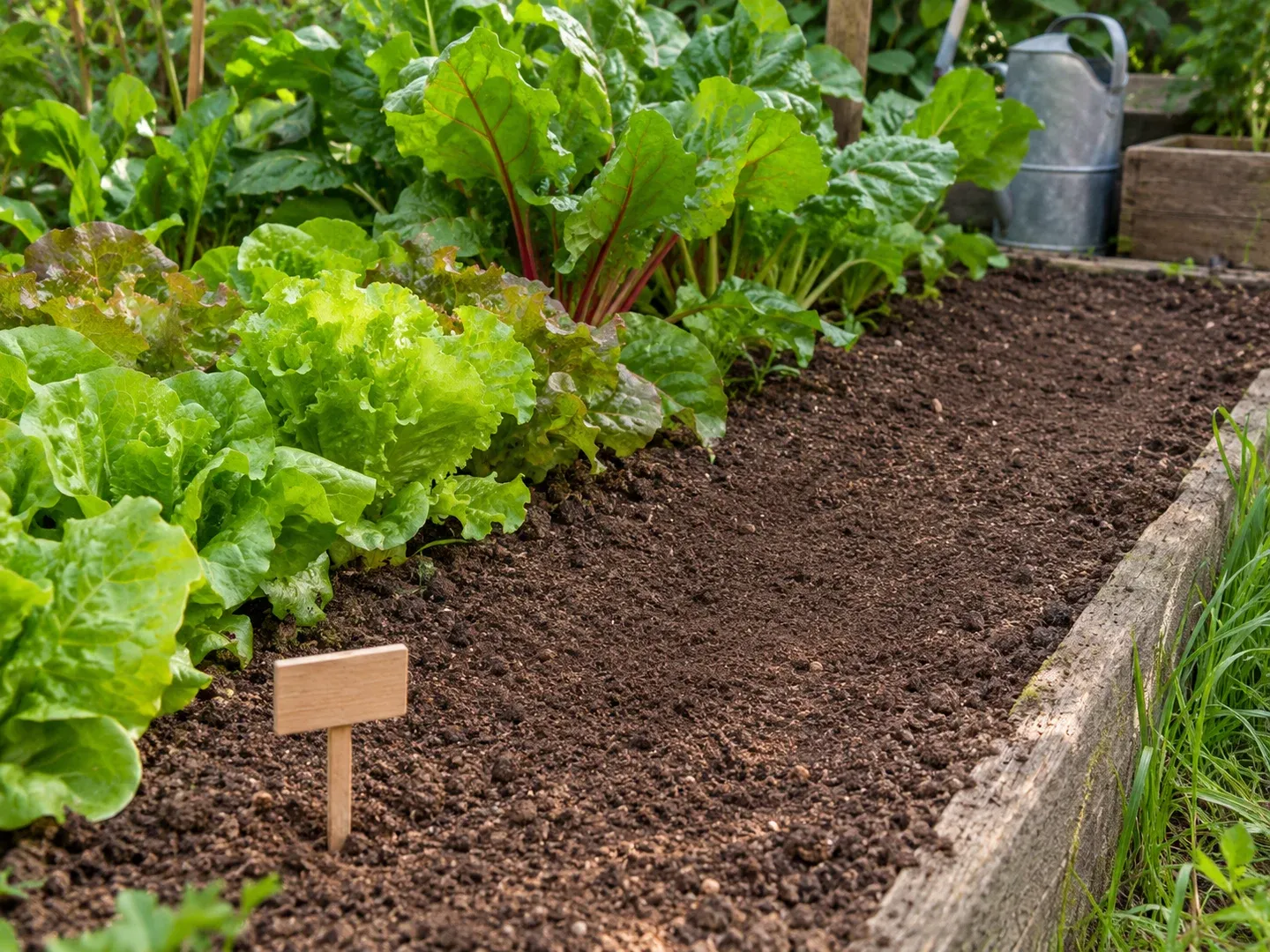
Survey the beds before taking out the seed packets. Identify crops still producing, spaces already free, and those you can clear soon. For each planned sowing, also check that you can return to observe the soil and water if necessary. A short row monitored regularly is easier to manage than a large area as a first attempt.
The goal is to allow new crops time to establish. Terre vivante notes that winter vegetables significantly slow their growth when the cold arrives. A vegetable resistant to cold does not necessarily grow much in winter.
If cold arrives early in your area, do not automatically choose the latest date on a calendar. Conversely, a warm late season primarily requires monitoring soil moisture in the sown areas. The options below are choices to compare with the seed packet, your exposure, and local conditions; none of the three crops is mandatory.
Three sowings to consider in September
Corn salad selected for the cold season
The SNHF classifies ‘Verte de Cambrai’ and ‘Coquille de Louviers’ among cold-resistant varieties. Terre vivante places sowings of small, frost-resistant varieties between mid-August and mid-October, while large-leaved, cold-sensitive types are sown earlier. Verify the variety rather than relying solely on the word “corn salad”.
Loosen the soil superficially, sow on firm ground, then cover very lightly and firm with a rake, according to the SNHF. The corn salad fact sheet guides you from choosing a variety through to harvest.
Spinach in moist soil
The SNHF indicates direct sowing in place in August-September. Spinach appreciates moist, humus-rich soil and a rather sunny exposure in autumn. Choose a packet with instructions matching an end-of-summer or autumn sowing.
The same fact sheet suggests rows spaced 30 to 40 cm apart, then thinning to 8 cm along the row when plants have four or five leaves. If the soil remains dry, first ensure you can provide the necessary watering. The month on the calendar is not enough to make the location favourable. The spinach fact sheet details follow-up after this sowing.
Salad radishes, without confusing them with winter radishes
Salad radishes can still be sown in September according to the SNHF. This possibility does not extend to all radishes: the fact sheet places sowings of summer, autumn, and winter types from June to August. “Winter” here describes a group of radishes and their harvest, not an invitation to sow late.
Sow a small quantity in light, moist soil. Follow the depth instructions for your variety: a round radish is not sown like a long radish. In dry, hot periods, the SNHF advises light, frequent watering. Harvest as roots form, without waiting for them to become hollow.
Two other choices to prepare for spring
Salad rocket is another possibility: the SNHF recommends sowing in September–October for a spring harvest. A harvest during winter depends on a mild late season; do not promise continuous harvesting. SNHF
For spring cabbages, the SNHF places sowing from mid-August to the end of September, depending on the region, with a suitable variety. This process does not replace the earlier sowing of cabbages intended for harvest this winter. Reserve the space until the target season before starting. SNHF
Supporting seedling emergence when heat persists
Keep the corn salad sowing moist, without saturation. The SNHF suggests using crates to provide shade in hot weather and warns of damping-off if conditions are too damp during establishment.
Water according to the observed state of the sowing, without prescribing the same number of waterings every day. Terre vivante recommends regular but not excessive watering for corn salad. If you cannot ensure this monitoring during a dry period, reduce the area or postpone the trial after rechecking the sowing window for the variety.
Our sowing guide reviews preparation and monitoring steps. In September, the useful question remains very practical: does the soil where the seeds are located retain enough moisture between visits?
Keep records of this first trial
Note the variety, sowing date, location, watering carried out, and the date when you see the first seedlings. Add a few words about conditions: persistent heat, rain, shading used, or uneven seedling emergence. These observations will allow you to compare two trials without attributing differences solely to the sowing month.
Keep the harvest date as a reference to adjust based on observations. The aim in September is to organise the transition and help the new crops establish. The November calendar will then help assess current crops and tasks compatible with the arrival of cold.
Find cultivation fact sheets and other possibilities
To continue after seedlings emerge, open the fact sheets for corn salad and spinach: they cover sowing, water, harvest, and the limits of overwintering. The timeframes and precautions described above remain applicable. SNHF, corn salad · SNHF, spinach
Sources and references
- What to sow or plant at the end of summer?Terre vivante, Blaise Leclerc Accessed on 15 October 2026.
- How to sow corn salad successfully for a tender cropTerre vivante, Antoine Bosse-Platière Accessed on 15 October 2026.
- Corn saladSociété nationale d’horticulture de France (SNHF), Jean-Daniel Arnaud Accessed on 15 October 2026.
- SpinachSNHF, Jean-Marc Muller Accessed on 15 October 2026.
- RadishSNHF, Jean-Daniel Arnaud Accessed on 15 October 2026.
- Rocket (arugula)French National Horticultural Society Accessed on 17 October 2026.
- Smooth-leaved headed cabbageFrench National Horticultural Society Accessed on 17 October 2026.