
The vegetable garden notebook / Crops
Growing rocket: sowing, watering and harvesting leaves
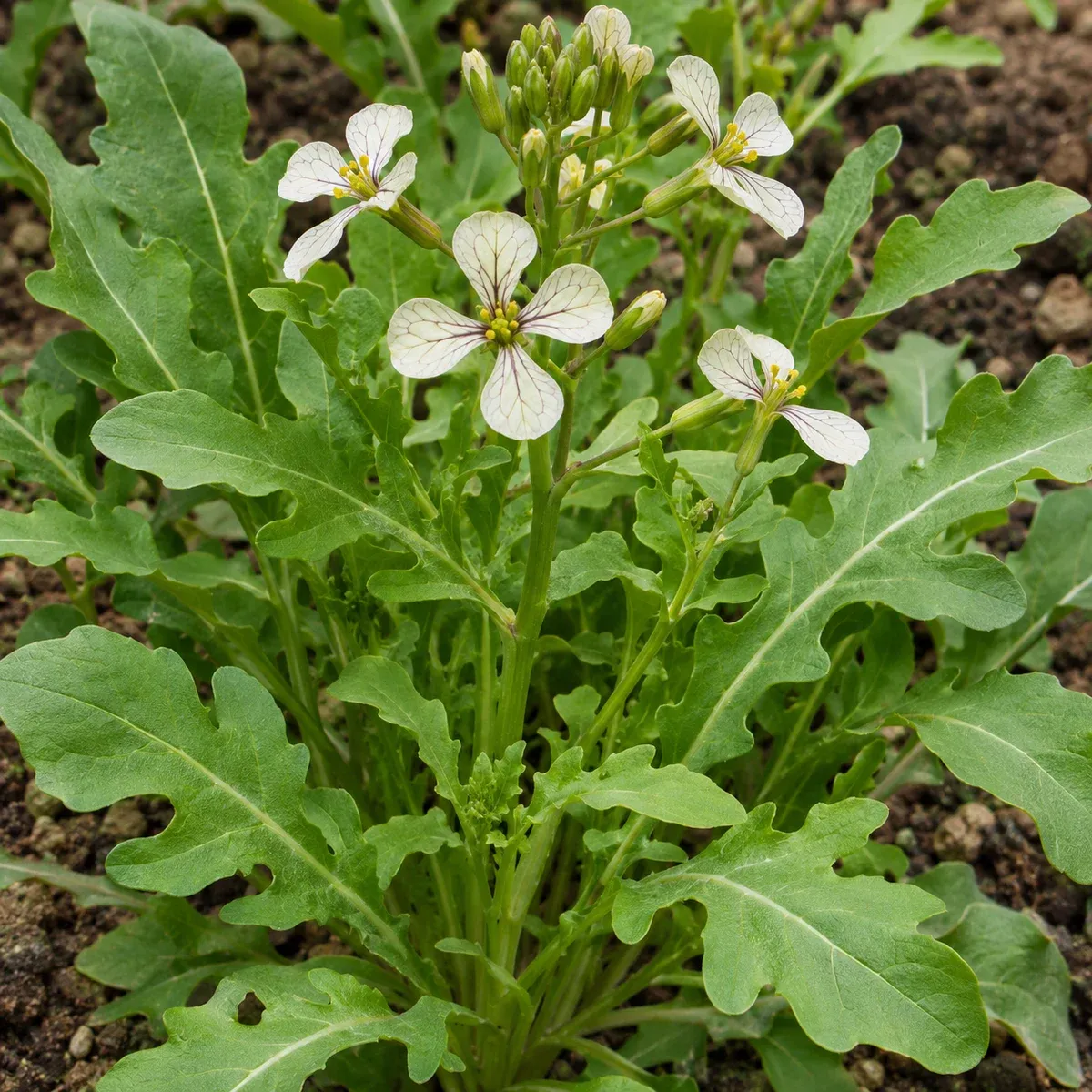
Cultivated rocket produces leaves quickly but also flowers rapidly in hot, dry weather. Opt for small successive sowings and a cooler location during hot periods.
Adapt this guidance to your garden’s climate and conditions.
Cultivated rocket or wild rocket?
This factsheet covers annual cultivated rocket, Eruca sativa, also known as Eruca vesicaria subsp. sativa. Perennial wild rocket sold under the name Diplotaxis tenuifolia lives for several years and is managed differently: do not apply the same cycle to both. SNHF · RHS
When to sow rocket?
In France, the SNHF recommends sowing from April to August, then September to October for a spring harvest. However, it advises against sowing during the hot, dry peak of summer, which accelerates bolting. These sowing windows do not guarantee seedling emergence or successful overwintering in every region: check the variety and garden conditions. SNHF
Make small successive sowings rather than a single long row; the annual’s harvest period is limited. In hot weather, choose light shade to extend leaf production. RHS
The calendars for April and September help plan available rows.
How to sow and thin?
Sow directly in soil that remains moist. The SNHF specifies 1 cm depth and 20 cm between rows. After a few leaves appear, remove the weakest seedlings to leave 5 to 10 cm between the remaining plants. Adjust these guidelines based on the seed packet and the space needed for harvesting. SNHF
Label the date and botanical name: this will help distinguish trials of annual and perennial rocket. Find seedbed preparation in the sowing guide.
How to water and feed rocket?
Water after sowing, then as needed to keep the soil moist. Weed around the row. These practices delay bolting but do not prevent it indefinitely. SNHF
In light soil that dries quickly, well-rotted garden compost incorporated before sowing can help retain moisture. The RHS recommends fertile soil for cultivated rocket; it distinguishes wild rocket, which tolerates poorer, drier soil. This does not imply automatic fertiliser use. RHS
Why does my rocket bolt so quickly?
The annual naturally completes its cycle with flowering, accelerated by heat and drought. Maintaining moisture and choosing partial shade in summer may extend the harvest; cutting flower stems offers only temporary relief. Prepare a new small sowing to replace the exhausted row. RHS
How to harvest for multiple pickings?
Pick a few leaves from several plants, without stripping a single one. The RHS describes several possible harvests before flowering; their duration depends on the season. The SNHF mentions a harvest start at around six weeks under good conditions. RHS · SNHF
Can it be grown in pots and harvested in winter?
A well-drained pot is suitable; the RHS advises at least 30 cm width to limit drying out. For autumn sowings, the SNHF notes winter harvests only if the late season remains mild. Protection may extend cultivation but does not guarantee continuous production. RHS · SNHF
Small holes in the leaves: is it a disease?
Flea beetles may nibble rocket; slugs and snails are also possible. Observe the culprits before concluding: holes alone do not prove disease or the need for treatment. RHS
To compare signs of flea beetles, caterpillars and other pests by crop, consult the pest guide for brassicas and related vegetables. It distinguishes leaf examination from root inspection; use only the guidelines explicitly applicable to rocket.
Key points for this crop
Practical guidance
- Species covered
- Annual cultivated rocket: Eruca sativa
- Soil
- Moist, with consistent moisture
- Exposure
- Sun in cool seasons, partial shade during heat
- Harvest
- A few young leaves from each plant
Sources and references
- RocketFrench National Horticultural Society Accessed on 17 October 2026.
- How to grow rocketRoyal Horticultural Society, in English Accessed on 17 October 2026.