
The vegetable garden notebook / Crops
Growing potatoes: planting, earthing up and harvesting
First decide whether you want to eat your potatoes quickly or keep some for later. This choice determines the variety, harvest timing and sorting of the crop.
Adapt this guidance to your garden’s climate and conditions.
Choosing seed potatoes and the intended use of the harvest
Use certified seed potatoes: a potato intended for cooking may carry a disease without visible signs, notes the University of Maryland. Keep the label to identify the variety and earliness.
The SNHF distinguishes early, mid-early and late varieties. ‘New potatoes’ are harvested before maturity, with thin skins, and should be eaten soon; the term does not mean an early variety. For storage, choose a variety known for this ability, as recommended by Minnesota. Also check the stated culinary use: waxy, floury or in-between.
Should seed potatoes be chitted before planting?
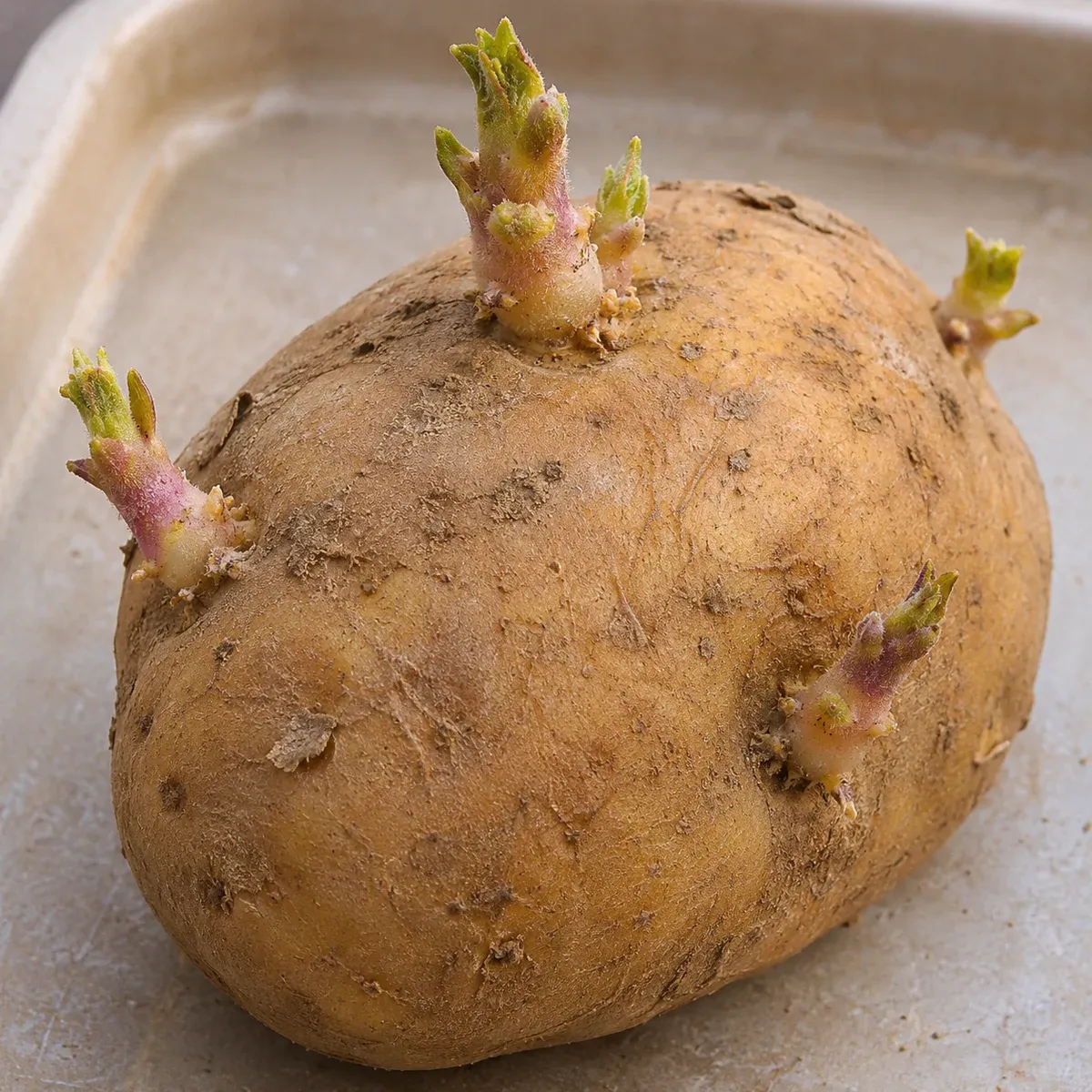
Chitting is optional. The RHS considers it particularly useful for advancing the harvest of early varieties. Place the tubers in a tray, eyes facing upwards, in a bright, cool, frost-free location. If your seed potatoes are already sprouted, handle them carefully to avoid breaking the shoots.
When and how to plant?
The SNHF advises planting in soil that is drained and warmed to around 10 °C at depth, after the risk of late frosts. Choose a sunny spot. In well-drained soil, prepare the ground with decomposed organic matter, as recommended by Maryland and the RHS.
The SNHF planting guidelines are:
- holes about 10 cm deep;
- 30 to 40 cm between plants, with sprouts facing upwards;
- at least 60 cm between rows, to allow earthing up.
Check the specific instructions for your seed potatoes before marking out the rows. A single national planting date cannot replace observing your own plot.
Earthing up, weeding and watering
When the stems reach about 15 cm, draw soil up from each side of the row: this first earthing up, described by the SNHF, protects the developing tubers from light. Continue building up the ridge during growth, leaving the top of the foliage visible, following RHS guidance.
Hoe shallowly to avoid damaging the plants. Minnesota recommends using a small trowel to check how far down the soil is moist. If rainfall is insufficient, water at the base, particularly during tuber development; Maryland highlights problems associated with both excess and lack of water. Our watering guide helps organise this monitoring.
Potatoes in pots or bags: what setup?
The RHS recommends early varieties for containers and suggests a minimum of 30 cm in both width and depth, with a single plant in a 30 cm diameter pot. These are dimensions, not a volume in litres derived from them.
Start with about 15 cm of suitable potting compost, place the seed potato just below the surface, then gradually add substrate during growth, keeping the top of the foliage visible. A bag must have drainage holes at the bottom to remove excess water. Position the container in full sun and monitor the root ball: foliage can deflect rain, leaving the container dry even in wet weather. RHS
A tall setup called a ‘tower’ also requires drainage and careful watering. Adding layers here is not a guarantee of a multiplied harvest: the documented method still requires a container with enough space for the plant and regular checks throughout growth. To start, an accessible pot or bag makes it easier to check the substrate and harvest.
Monitoring without confusing disease and maturity
Yellowing or deteriorating foliage alone does not provide a diagnosis. Minnesota emphasises identifying the causes: compare the state of the foliage with the signs below before deciding the crop is ready to harvest.
Late blight can cause leaves to brown and collapse rapidly, mark stems and then affect tubers. In humid conditions, a whitish down may appear under the lesions: the RHS describes this set of symptoms, without diagnosing from an isolated spot. The same pathogen can affect tomatoes.
The SNHF also mentions viruses, for which it describes no curative treatment. Deformed or yellowed leaves require a broader examination; holes call for a search for pests, with checks for Colorado potato beetles detailed below. Do not treat these situations as a single disease.
Photograph leaves, stems and, if necessary, an affected tuber; note the speed of progression, weather and neighbouring plots. If lesions spread, seek horticultural advice to decide on crop management and sorting the harvest. Do not store tubers suspected of rot with the healthy batch. The RHS notes that secondary rots can spread during storage. RHS
Colorado potato beetles: inspecting multiple stages on leaves
When faced with chewed foliage, look for adults, larvae and eggs: these stages can coexist on the same crop. Jardiner Autrement recommends removing and destroying them by hand once the pest is identified. Inspect plants regularly rather than only removing visible adults; holes alone may also come from other animals.
Afterwards, look out for volunteer potato plants and keep records of the origin of seed potatoes and the history of Solanaceous crops grown. Minnesota advises a three- to four-year gap between two crops of this group, particularly potatoes and tomatoes. Plan their location using the crop rotation guide; this does not guarantee the absence of new Colorado potato beetles or wind-borne late blight. Minnesota · Jardiner Autrement
Flowers and small berries: what is their link to the harvest?
For early varieties, the RHS uses the opening of flowers or the fall of buds as a time to check the size of a few tubers. This indicator does not show whether potatoes intended for storage are mature: keep the skin and foliage criteria described below.
The small green balls formed above ground are the plant’s fruits, distinct from the underground tubers. Iowa notes that many flowers dry and fall without forming fruit. Do not eat these berries: they contain solanine. Their presence does not replace checking tubers or choosing between an early harvest and storage.
Harvesting new potatoes or mature tubers for storage
To harvest new potatoes, gently uncover a few tubers to check their size; cover them again if you want to let them grow larger. This method, suggested by the RHS, avoids uprooting an entire row based on a simple estimate.
Before relying on foliage dieback as a harvest sign, revisit the health check if the foliage shows lesions. For storage, wait for maturity: Minnesota gives two indicators: dried foliage and skin that does not rub off with your thumb. In a healthy crop, Maryland advises leaving tubers in the ground for two weeks after foliage dieback to thicken their skin. Harvest when the soil is not waterlogged, lift gently with a fork and avoid bruising. Do not wash tubers before storage.
Sorting and storing out of the light
Store only dry, undamaged potatoes. The RHS recommends a cool, frost-free, dark place, paper or cloth sacks, and regular checks for rot.
Do not eat green, heavily sprouted or old and shrivelled tubers. The BfR considers them unfit for consumption due to the risk from glycoalkaloids. Also discard any dish of potatoes with a bitter taste. Keep the harvest cool, dry and in the dark; earthing up and protected storage do not make an already damaged or deteriorated tuber safe to eat.
Key points for this crop
Practical guidance
- Start
- Certified seed potatoes and a variety suited to the intended use
- Planting
- Drained and warmed soil, risk of frost avoided
- Earthing up
- Keep tubers out of the light
- Harvest
- New potatoes to eat soon, or mature tubers for storage
Sources and references
- PotatoSociété nationale d’horticulture de France, section Jardins potagers et fruitiers Accessed on 16 October 2026.
- How to grow potatoesRoyal Horticultural Society, in English Accessed on 16 October 2026.
- Growing Potatoes in a Home GardenUniversity of Maryland Extension, in English Accessed on 16 October 2026.
- Growing potatoes in home gardensUniversity of Minnesota Extension, Marissa Schuh and Cindy Tong, in English Accessed on 16 October 2026.
- Solanine in potatoes: Green and strongly germinating potato tubers should be sorted outInstitut fédéral allemand d’évaluation des risques (BfR), in English Accessed on 16 October 2026.
- Potato blightRoyal Horticultural Society, in English Accessed on 17 October 2026.
- Potato — Colorado beetleJardiner Autrement, SNHF Accessed on 17 October 2026.
- Tomato-like Fruit on Potato PlantsIowa State University Extension, Richard Jauron, in English Accessed on 18 October 2026.