
The vegetable garden notebook / Techniques
Vegetable Garden Diseases: Observe, Identify, and Prevent
A spot or a wilting plant does not, on its own, indicate a disease. Start by examining the plant, its neighbours, and growing conditions. You can then seek identification and choose actions suited to the cause.
Adapt this guidance to your garden’s climate and conditions.
Practical steps
- Observe
Describe the symptoms and their distribution without immediately assigning a name.
- Document
Record the crop, progression, weather, and recent interventions.
- Identify
Cross-reference the clues and seek advice when the cause remains uncertain.
- Adapt
Choose prevention and interventions based on the identified problem.
Start with What You See
Choose an entry point without turning a clue into a diagnosis:
- Leaves with holes or chewing damage: begin by searching for the animal and the timing of the damage, then, for cabbage, refer to pests of Brassicaceae.
- Spots, powder, deformation, or damaged fruit: compare the organs using the tomato or courgette guides if that is your crop.
- Wilting plant or still uncertain cause: note the distribution, organs, and context before changing watering or inputs.
This approach follows the initial steps of INRAE: species, symptom location, and distribution within the crop. Multiple causes may coexist.
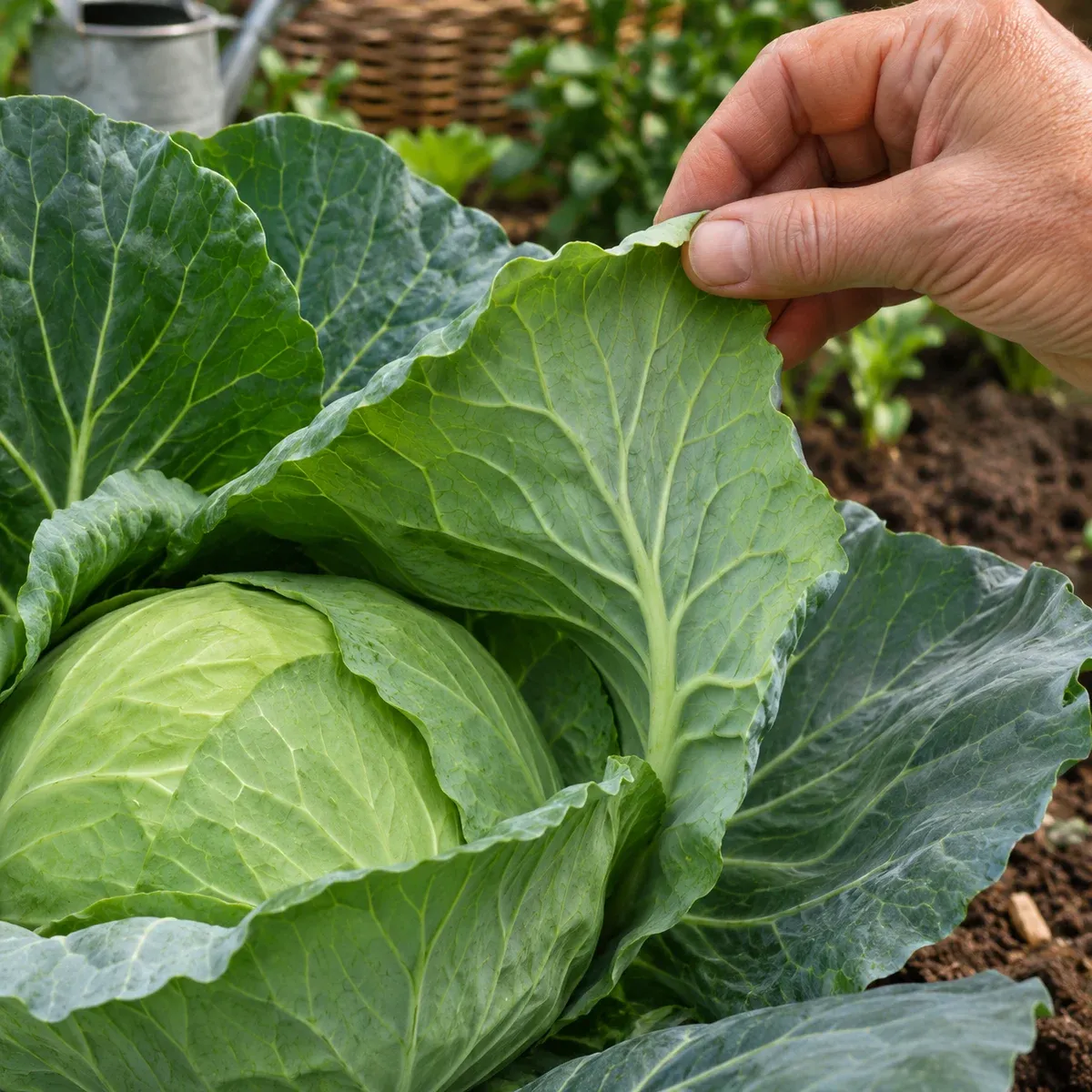
A Damaged Plant Does Not Necessarily Have an Infectious Disease
Keep three possibilities open at the start of observation:
- An infectious disease, caused notably by a fungus, oomycete, bacterium, or virus.
- An abiotic disorder, i.e., non-infectious: climate, soil, irrigation, or an intervention may disrupt the plant. INRAE distinguishes these two origins and notes they can combine.
- A pest, to be investigated alongside diseases. The tomato index thus separately classifies aphids and leaf-miner flies. Note observed animals without automatically attributing damage to the first insect present.
This distinction avoids searching for a treatment against an infection when the cause remains unknown. To compare symptoms specific to a crop, continue with the guides on tomato diseases or courgette diseases.
Record Clues in a Useful Order
The INRAE approach for vegetables cross-references the species and its stage, symptoms on plants, and their distribution within the crop. Here is a field sheet to organise these observations:
- The crop: vegetable, variety if known, recent sowing or plant already in production.
- Location: an isolated plant, several neighbours, a row, or multiple zones. Also compare with apparently healthy plants.
- Organs: old or new leaves, upper and lower leaf surfaces, stems, fruits, and plant base. Describe spot, powder, hole, deformation, or rot before seeking a name.
- Progression: date of first sign, spread since the previous visit, new affected plants.
- Context: rain, heat, soil moisture, watering, fertiliser applications, products used on site or nearby, previous crops.
This contextual information follows the INRAE procedure for tomatoes, adapted here for a vegetable garden notebook. Separate observations from hypotheses: write “three wilted plants, damp soil” before “root disease”.
What to Do When the Cause Remains Uncertain?
Prepare photos of the area, the whole plant, and details, accompanied by your notes. Seek horticultural advice before choosing a treatment, especially if symptoms spread rapidly, affect multiple plants, or appear contradictory.
A photo can guide the investigation but may not be enough to identify the cause. INRAE highlights symptoms that are too non-specific and situations requiring laboratory tests. If a sample is useful, ask the consulting service which organs to provide and how to prepare them.
During this investigation, check the soil before altering watering; the watering guide helps you decide how much water is needed. Record each action taken and subsequent progression. Avoid accumulating fertilisers and sprays in response to the same unexplained spot.
Prevent Problems Through Growing Conditions
Prevention begins before symptoms appear. Jardiner Autrement recommends choosing plants suited to the soil, exposure, and climate, monitoring soil moisture, and cleaning equipment, especially cutting tools. Incorporate these practices into your garden visits.
If choosing a variety advertised as resistant or tolerant, verify the specific disease concerned: this criterion does not provide general protection against all problems. The source distinguishes several levels of resistance.
For crops sensitive to powdery mildew, the RHS advises allowing air circulation and avoiding overly dense plantings. This does not justify routinely removing leaves from all vegetables: adapt the setup to the crop and the problem encountered.
How to Start an Organic Vegetable Garden?
The starting points—crop choice, site, water and cropping history—are covered by the prevention advice above. To plan a first project, follow the vegetable garden plan, then return to the sheet for the observed problem. An “organic” approach alone does not diagnose a damaged plant.
Is a Natural Treatment Always Safe?
No. Natural origin does not guarantee safety, as Jardiner Autrement points out. “Natural”, “homemade”, or “permitted in organic farming” are insufficient to choose an intervention for your vegetables.
First identify the problem and ask whether an intervention is necessary. If considering a product, verify its use for the relevant crop and target, then read its conditions, risks, and precautions on the label, as advised by the precautions sheet. Do not improvise doses or mixtures based on a recipe found for another plant. The case of Bordeaux mixture on tomatoes illustrates why distinguishing prevention from cure matters.
Non-chemical actions also exist, depending on the identified cause. Against tomato aphids, if intervention becomes necessary, a jet of water can dislodge them only on a robust plant, early in the day so foliage dries quickly (UC IPM). On a fragile plant, prefer manual removal of a small colony, without damaging the shoot or beneficial insects, following the method proposed by the RHS. To prevent carrot fly, the RHS recommends full coverage with a suitable net, combined with rotation; this does not repair already tunnelled roots.
Humidity Does Not Affect All Diseases in the Same Way
“The foliage is diseased because it rained” is too hasty a conclusion. Tomato blight requires prolonged surface wetness to infect. Powdery mildews, however, can infect under drier conditions; high air humidity favours them, but free water has a different effect.
Above all, identify the disease before deciding how to respond. Do not turn these differences into a spray recipe: the cultivated species and other possible diseases also matter.
Rotation and Hygiene Must Address the Identified Problem
Keep a record of crops to prepare the vegetable garden rotation. However, changing location does not guarantee a plot will be disease-free again.
White rot of Allium, affecting garlic, onion, and leek, illustrates this limit: its long persistence in soil makes rotation impractical as a solution to established contamination, according to the RHS. Contaminated soil can also travel on tools and footwear. When this disease is identified, preventing this spread matters more than mechanically following a cycle of a few years.
For another disease, ask for clarification on the host plants, residues to remove, and precautions specific to the causative agent. Keep in your notebook the source of the identification, actions taken, and remaining uncertainties: this summary will guide decisions for the next season.
Leaves with Holes: Look for the Animal and When Damage Occurs
A leaf with holes is not necessarily diseased. Jardiner Autrement explains that several insects, but also molluscs or rodents, can chew plants. The shape of the cut guides the examination but is insufficient to choose a treatment.
Start with both sides of the leaf and neighbouring shoots. Look for the animal near the damage; some hide at ground level during the day. If nothing is visible, return at another time and compare new damage. Slime trails may indicate molluscs but do not identify the responsible animal alone. Jardiner Autrement
For Brassicaceae, the guide to pests of cabbage and related vegetables distinguishes flea beetles, caterpillars, and root damage, along with affected crops. On potatoes, look for Colorado potato beetle stages rather than applying a method intended for caterpillars. A hole in a cabbage leaf does not explain a plant wilting from root damage.
Horsetail and Homemade Preparations: Specify Use Before Spraying
The reputation of horsetail as an “antifungal” does not specify the plant species prepared, the method, or the targeted disease and crop. It does not justify treating a spot, powdery mildew, downy mildew or late blight indiscriminately. Return to the diagnosis and the conditions of the intended use: a preparation to stimulate a plant and an intervention against a pathogen do not share the same objective.
The precautions outlined above remain valid: natural origin does not mean safety, and a general recipe does not replace verified instructions for the crop and target. Do not automatically use a fermented horsetail extract or weekly spray for all vegetables. Jardiner Autrement — Natural, Precautions
The SNHF synthesis published in 2012 reported varying results depending on plant preparations, crops, and trials, with many inconclusive outcomes. This historical perspective encourages examining the specific experimental set-up; it provides neither general proof of horsetail’s curative effect nor a complete overview of current knowledge.
Sources and references
- Di@gno-Lég — The Two Main Types of DiseasesINRAE, Ephytia, D. Blancard Accessed on 16 October 2026.
- Tomato — Disease and Pest IndexINRAE, Ephytia Accessed on 16 October 2026.
- Di@gno-Lég — Generic Diagnostic ApproachINRAE, Ephytia, D. Blancard Accessed on 16 October 2026.
- Tomato — Diagnostic ProcedureINRAE, Ephytia, D. Blancard Accessed on 16 October 2026.
- Di@gno-View — Limitations of Photo-Based DiagnosisINRAE, Ephytia, D. Blancard, T. Ruet and J. Gaudin Accessed on 16 October 2026.
- ProphylaxisJardiner Autrement, SNHF Accessed on 16 October 2026.
- Powdery mildewsRoyal Horticultural Society (RHS), in English Accessed on 16 October 2026.
- Tomato blightRoyal Horticultural Society (RHS), in English Accessed on 16 October 2026.
- Onion white rotRoyal Horticultural Society (RHS), in English Accessed on 16 October 2026.
- Natural SubstancesJardiner Autrement, French National Horticultural Society Accessed on 17 October 2026.
- Precautions Before TreatmentJardiner Autrement, French National Horticultural Society Accessed on 17 October 2026.
- Aphids — Home and LandscapeUniversity of California, Statewide IPM Program, in English Accessed on 17 October 2026.
- AphidsRoyal Horticultural Society, in English Accessed on 17 October 2026.
- Carrot flyRoyal Horticultural Society, in English Accessed on 17 October 2026.
- Chewed LeavesJardiner Autrement, SNHF Accessed on 18 October 2026.
- Plant Protection: Tradition and Nettle MacerationSNHF Scientific Council, 2012 edition Accessed on 18 October 2026.