
The vegetable garden notebook / Crops
Growing Chilli Peppers: Sowing in Warmth, Planting, and Harvesting
Start with the variety name, its heat level, and the space available. Chilli peppers require warmth: a suitable location and well-prepared plants matter more than a uniform planting date across all regions.
Adapt this guidance to your garden’s climate and conditions.
Which chilli pepper should you choose?
Sweet peppers and some hot chilli peppers belong to Capsicum annuum. However, the term “chilli pepper” also encompasses other species: Iowa State University classifies habanero as C. chinense and tabasco as C. frutescens. An elongated shape alone is not enough to identify a hot chilli pepper.
Check the stated heat level, culinary use, and plant size. For a small space, look for a compact variety; for a first attempt, choose a heat level you are already familiar with. The RHS notes that growing conditions and maturity also affect heat levels.
When and how to sow indoors in warmth?
For its C. annuum fact sheet, the SNHF recommends March to April, in pots at 20–25 °C, using seed compost kept moist without excess. This French guideline should be compared with the instructions for your specific variety; it does not set a universal schedule for all chilli peppers.
Sow approximately 6 mm deep, the metric equivalent of the quarter-inch depth recommended by the University of Minnesota. After the seedlings emerge, provide sufficient light. The RHS then advises 16–18 °C for young seedlings: this guideline applies to this stage, not germination.
Separate seedlings when true leaves appear, following the University of Minnesota. If several seedlings have emerged in one pot, the SNHF suggests keeping the most vigorous seedling. If you lack a warm, bright location, start with young plants; the sowing techniques remain useful for preparing your containers.
Planting outdoors, in pots, or under cover
Wait until the risk of frost has passed. Choose well-draining soil and a sunny location, as advised by Iowa State University.
For permanent outdoor planting, the RHS recommends nights consistently at at least 12 °C, after two to three weeks of gradual hardening off. In cooler conditions, prioritise a greenhouse or polytunnel. Ventilate during warm periods: above 30 °C, fruit set may decrease.
The RHS suggests 38–45 cm between plants, depending on the variety, and 30 cm for dwarf forms. In pots, select a container suited to the expected growth. Plant at the original root ball level, firm gently, and water, as per the University of Minnesota.
Maintenance without pruning
The SNHF advises staking and a no-prune approach. Weed around young plants and mulch to limit drying out.
Monitor moisture in the root zone, especially in pots. The University of Minnesota recommends consistent moisture and watering at the base; superficial wetting is insufficient. Adjust watering based on soil and weather, using our watering guide.
At what stage should you harvest?
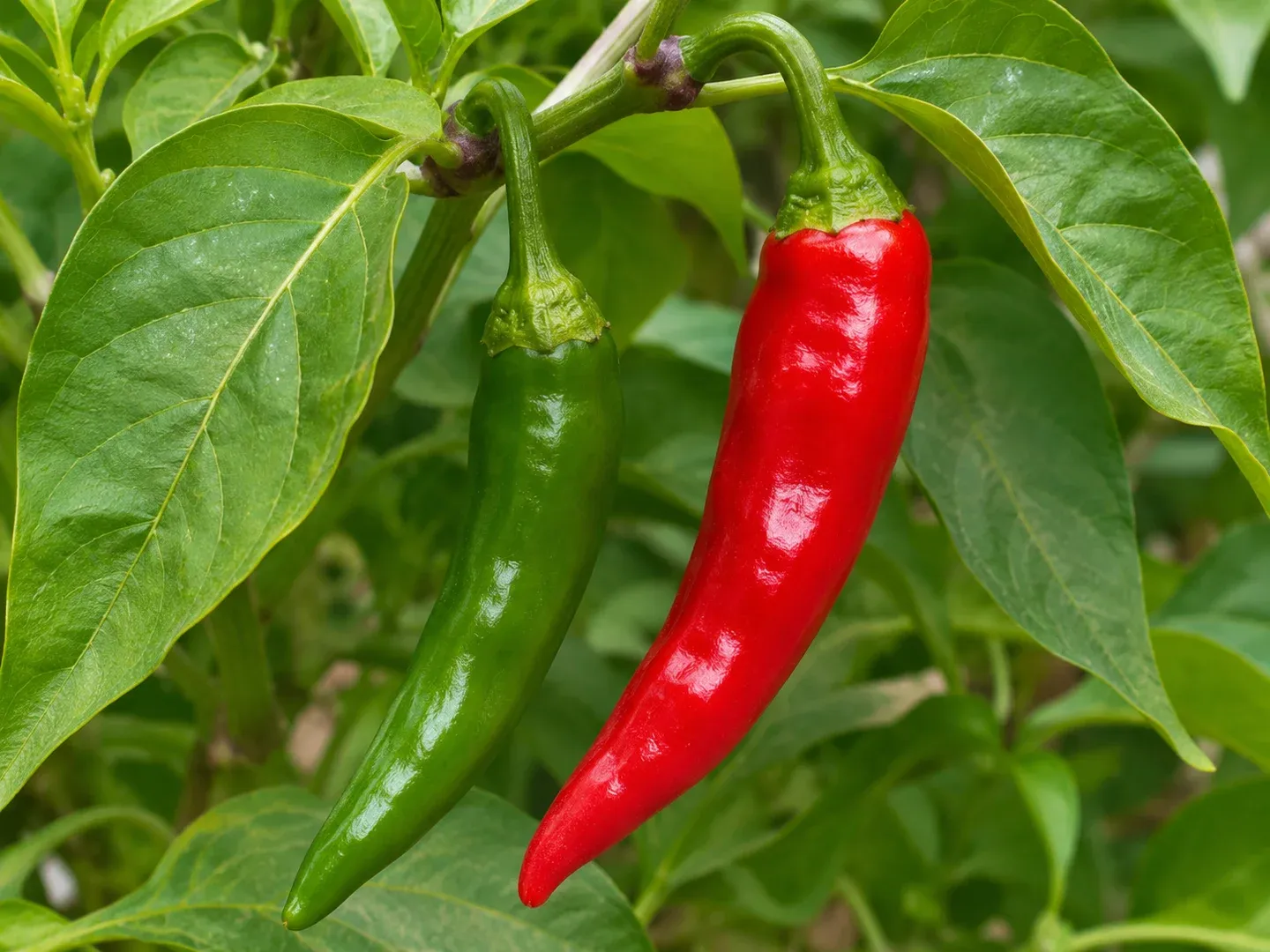
Iowa State University states that chilli peppers can be harvested green or fully ripe. Wait until they reach the size typical for the variety, then choose the stage based on use. A jalapeño, for example, can be used green, notes the University of Minnesota. Keep the label to know the expected final colour.
Cut the stem with scissors or secateurs. Wear gloves when handling hot chilli peppers and avoid touching your face; wash your hands afterwards. These precautions are highlighted by the University of Minnesota and Iowa State University.
Can you keep a chilli pepper plant over winter?
Overwintering is an option if you have a warm, bright location; an unheated greenhouse does not automatically meet this requirement. The RHS describes overwintering plants in a bright indoor space or heated conservatory, with pruning to reduce the plant to a manageable size and reduced watering.
Winter pruning differs from the no-prune approach during the growing season. South Devon Chilli Farm, a British producer, first recommends selecting a healthy plant and harvesting the last fruits. Their heavy pruning protocol reduces the plant to 10–15 cm above the soil, cutting above a node, removing dead leaves and weak branches. Their FAQ also includes a simple reshaping prune: heavy pruning is not mandatory for every plant. Producer’s protocol · FAQ
Before allocating space, ensure you can monitor the pot during the off-season. Check the substrate before adding a little water: “reduced” does not mean keeping the root ball constantly wet or applying summer watering frequency. Keep the variety name and note the plant’s condition at the start of the trial. RHS
When growth resumes, wait for signs of new growth before resuming nutrient applications, according to the producer’s protocol. The return outdoors then requires the same hardening off and sufficiently mild nights as a young plant. South Devon Chilli Farm · RHS
If you lack suitable space, start again with seeds or young plants the following season. The overwintering option does not alter the requirements for warmth and hardening off before moving plants outdoors again. The unheated greenhouse guide explains why shelter alone does not guarantee a temperature compatible with chilli peppers.
What pot size and nutritional care should you plan?
The RHS suggests a 22 cm diameter pot for one plant, using a suitable growing medium. This guideline reflects their practice, not a pot size guaranteed to suit all large chilli varieties: verify the variety’s growth, pot stability, and your ability to monitor watering before choosing. RHS
The same source distinguishes the feeding needs of plants in containers from those grown in previously enriched soil, and recommends a potassium-rich fertiliser from flowering onwards. Follow the product label, taking account of nutrients already present in your potting compost; do not automatically try to remedy poor fruiting by adding nitrogen. RHS · University of Minnesota
Flower buds dropping or damaged leaves: what to check?
A plant in a dried-out pot may shed flower buds; excessive heat can also disrupt fruiting, according to the RHS. First, check soil and temperatures, without watering a root ball that is already wet. Before bringing a plant indoors for winter, also inspect young shoots and both sides of leaves: the RHS lists aphids, whiteflies, and mites among greenhouse pests. Their presence must be observed; a yellow leaf does not confirm them. RHS
Note affected areas and progression. The vegetable garden disease guide helps compile observations, and the aphid guide applies to an identified infestation. Growing chilli peppers does not in itself justify routine preventative spraying.
Storing harvested fruits
The University of Minnesota recommends short-term refrigeration and notes that prolonged cold can damage the skin. Sort healthy fruits, monitor them, and use them quickly. Drying, fermentation, and preserves require proper food-safe methods. University of Minnesota
Organising neighbours and keeping records
To compare space, light, water, and access for crops, use the bed layout method. Also, keep a record of planting locations before planning the next season. These two methods do not guarantee a protective effect from plant pairings.
Key points for this crop
Practical guidance
- Selection
- Variety, heat level, and plant size
- Sowing
- Indoors, in warmth, and with sufficient light
- Planting
- After frosts, when nights are sufficiently mild
- Harvest
- According to size, variety, and intended use
Sources and references
- Sweet peppers and chilliesSociété nationale d’horticulture de France (SNHF), Jean-Marc Muller Accessed on 16 October 2026.
- How to grow chilli peppersRoyal Horticultural Society (RHS), in English Accessed on 18 October 2026.
- Growing peppers in home gardensUniversity of Minnesota Extension, Marissa Schuh and Cindy Tong, in English Accessed on 18 October 2026.
- Growing Peppers in the Home GardenIowa State University Extension and Outreach, Aaron Steil, Cynthia Haynes and Ajay Nair, in English Accessed on 16 October 2026.
- 10 Steps to Preparing Chilli Plants for WinterSouth Devon Chilli Farm, British producer; Amrit Madhoo, in English Accessed on 8 November 2026.
- Growing FAQsSouth Devon Chilli Farm, British producer, in English Accessed on 8 November 2026.