
The vegetable garden notebook / Techniques
Aphids in the Vegetable Garden: Deciding When and How to Intervene
Natural control of aphids begins with a decision at the plant level. A colony on a well-developed vegetable, an infested young shoot, or a plant suspected of viral infection each requires a different response. Monitor damage before choosing an action.
Adapt this guidance to your garden’s climate and conditions.
Practical steps
- Assess
Identify the crop, its stage, and the affected parts.
- Compare
Monitor colonies, new shoots, and natural enemies.
- Intervene
Select a local action the plant can tolerate.
- Re-evaluate
Check progress and distinguish between infestation and viral risk.
Observe each crop before deciding
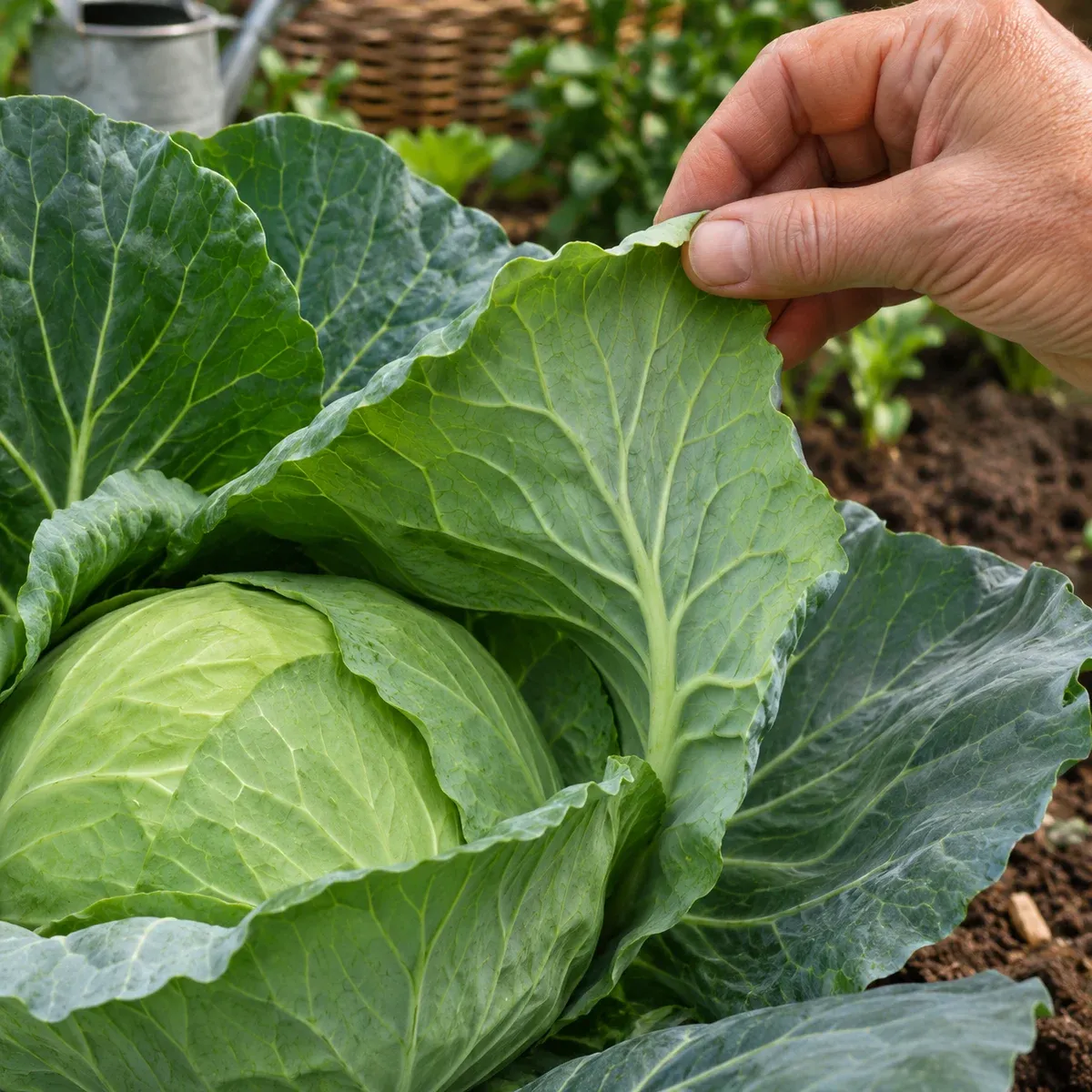
Examine the tips of shoots and the undersides of young leaves: colonies are often visible there. Deformed leaves, white shed skins, and sticky honeydew may accompany them. The RHS describes these signs; a single damaged leaf is not enough to identify the cause.
For each infestation, note the crop, its stage, the affected parts, and the condition of new shoots. A photograph of the same spot makes comparison easier during your next visit. The goal is to answer three questions: Are the colonies spreading? Is the damage progressing? Are natural enemies present?
The plant’s stage matters. The University of California highlights the vulnerability of many vegetables at the seedling stage and the greater tolerance of established plants. This justifies close monitoring of young plants, without declaring all mature vegetables safe.
Choose between observation and local intervention
These qualitative guidelines help with decision-making; they do not constitute a treatment threshold applicable to all vegetables.
- The plant continues to grow and the infestation remains limited: monitor its progress. The RHS advises tolerating aphids when possible.
- A small, accessible colony is spreading to a young shoot: you can crush the aphids between your fingers, a method suggested by the RHS. Protect the shoot and any observed natural enemies.
- The plant is robust and the colonies are accessible: a jet of water can dislodge them. Act early in the day so the foliage dries quickly. These conditions come from the University of California; avoid using a jet if it risks breaking the plant.
- Leaves are tightly curled: aphids are less accessible, particularly to natural enemies. Do not compensate with a stronger jet. This difficulty is described by the University of California.
Recognise the allies already present
Among predators are adult ladybirds and their larvae, as well as lacewing and hoverfly larvae. Ladybird larvae are elongated, very different from the rounded adult; hoverfly larvae have no legs. The University of California’s gallery, illustrated on tomato, helps identify these stages.
Also look for aphids turned into mummies by parasitoid wasps: they may be beige, golden brown, or black. Their presence shows that parasitoids are active. Illustrated guidelines.
Before intervening, identify the areas where these natural enemies are active. For observations specific to this crop, consult the guide on aphids on tomato.
Prepare future crops
Inspect plants before planting them out: this is a measure recommended by the University of California to avoid introducing colonies.
Near the vegetable garden, floral resources and vegetation serving as refuges can support natural enemies. INRAE explains the role of pollen in their diet and the importance of habitats for their survival. Providing these resources supports future natural pest control; it is not a way to immediately eliminate a colony. The companion planting guide helps distinguish these functions from plant combinations claimed to have a general repellent effect.
Protective cover also requires crop-specific reasoning. For young squash and courgettes, INRAE describes the benefits of fleece against CMV vectors but notes that pollinators must have access at flowering. Reopening exposes shoots to aphids again. You cannot therefore keep every vegetable under a closed cover without considering its needs. Conditions and limitations.
Reducing aphids does not guarantee the absence of viruses
Cucumber mosaic virus, or CMV, provides an important example for squash and courgettes: an aphid from outside can transmit it during a very brief probe. INRAE explains why reducing populations with insecticides is generally insufficient to prevent these epidemics; no method cures an already infected plant. Source INRAE.
The manual removal and water methods described here target accessible colonies, without promising antiviral protection. Conversely, the presence of aphids does not prove a viral infection. Before deciding to remove an entire plant, have symptoms verified in the context of the specific crop.
Purchase natural enemies, set a trap, or conserve those present?
Supporting existing natural enemies with refuges and resources constitutes conservation biological control. Introducing organisms reared to act on a population is another strategy, described by the SNHF. Purchasing ladybirds does not replace observing the species and stages already present. The SNHF also notes that introduced non-native species may compete with local natural enemies: prioritise conditions favourable to those in your garden.
Before releasing any organisms, seek clear guidance on the target pest and its life stage, whether the setting is outdoors or under cover, and the conditions the organisms need. The RHS reminds us that predators and parasitoids need time to act: their introduction assumes the presence of prey before a major outbreak.
A trap should have a specific purpose. Jardiner Autrement describes yellow sticky traps for detecting and capturing the first winged aphids. Counting trapped individuals does not prove that colonies already established under leaves are under control: continue examining shoots and natural enemies, as above. Do not assume that every trap or colour is suitable for every crop. SNHF — Aphids
Nettle Extract: Do Not Replace Diagnosis with a Recipe
Jardiner Autrement mentions a nettle preparation among the options against established aphids. This mention does not prove that a single homemade dilution suits all species, all vegetables, or all preparation methods. Nor does it demonstrate protection against the viruses previously discussed. SNHF
Distinguish between the nutritional or biostimulant purpose of a preparation and its insecticidal objective. Before spraying, verify the preparation, crop, target, and applicable conditions in a current reference; do not improvise a dose based on the word “natural”. The guide to diseases and interventions outlines this approach. Choose the physical methods described here according to how robust the plant is and which natural enemies you observe.
A 2012 SNHF synthesis noted the difficulty in demonstrating effects on pests and isolating the effect of nettle in certain mixed preparations. This historical observation does not prove ineffectiveness in all current situations; nor does it validate a universal recipe.
Return to the same plants to decide next steps
After taking action, revisit the same plants and new shoots. Record separately the remaining insects and new damage. If the plant continues to decline despite reduced colonies, seek a precise diagnosis instead of automatically repeating the intervention.
Keep a brief record: “affected parts”, “condition of new shoots”, “observed natural enemies”, “action taken”, and “progress at next visit”. This way, you will recall the assessment that informed your choice before deciding whether to continue monitoring, repeat a local action, or seek advice.
Sources and references
- AphidsRoyal Horticultural Society (RHS), in English Accessed on 16 October 2026.
- Aphids — Home and LandscapeUniversity of California, Statewide IPM Program, in English Accessed on 16 October 2026.
- Tomato — Natural Enemies of AphidsUniversity of California, Statewide IPM Program, in English Accessed on 16 October 2026.
- Ecological ControlINRAE, Encyclop’Aphid — E. Turpeau, M. Hullé and B. Chaubet Accessed on 16 October 2026.
- Courgette and Squash — CMV: Protection MethodsINRAE, Ephytia — H. Lecoq Accessed on 16 October 2026.
- Glossary: Biocontrol and Biological ControlJardiner Autrement, SNHF Accessed on 18 October 2026.
- Biological Control in the Home GardenRoyal Horticultural Society, in English Accessed on 18 October 2026.
- Using Biocontrol to Regulate and Prevent Aphid AttacksJardiner Autrement, SNHF Accessed on 18 October 2026.
- Plant Protection, Tradition, and Nettle MacerationSNHF Scientific Council, 2012 edition Accessed on 18 October 2026.