
The vegetable garden notebook / Techniques
Unheated greenhouse: ventilating, watering, and monitoring the cold
An unheated greenhouse requires monitoring of night-time cold as much as daytime heat. Decisions on opening, watering, and protection depend on the crops and the actual weather conditions encountered.
Adapt this guidance to your garden’s climate and conditions.
Practical steps
- Observe
Track minimum and maximum temperatures and soil moisture before deciding.
- Ventilate
Gradually adjust openings according to the weather and plants.
- Water
The cover excludes rain; monitor needs under shelter.
- Anticipate
Prepare for heat, cold nights, and monitoring arrangements during absences.
Is an unheated greenhouse frost-free?
Do not assume the absence of frost based solely on the presence of a greenhouse. Jardiner Autrement describes possible frost damage inside and the need for additional protections. The shelter does not replace the conditions required for a cold-sensitive plant. Jardiner Autrement
Before leaving sown containers or young plants inside, check each crop’s requirements at its current growth stage. “In a heated growing shelter” and “in an unheated greenhouse” correspond to two different situations; the winter guide maintains this distinction.
What should be measured before opening or closing?
The RHS recommends a minimum-maximum thermometer. Record the device’s location and the time of reading, then note the values and reset the extremes according to the instructions so that the next reading corresponds to a known period. Note the sunlight, openings, and crops present. The maximum indicates overheating; the night-time value helps decide if the location still suits the plants. RHS
Jardiner Autrement emphasises that temperatures can vary within the same shelter depending on orientation and proximity to openings. A reading in one area does not necessarily describe the entire greenhouse. Therefore, identify the zone occupied by the plants you are monitoring in your notebook; if you move the device, note this change instead of comparing the two sets of data as if the location were identical. This local monitoring does not measure the temperature of the leaves or the substrate. Jardiner Autrement
Example: young tomato plants in pots
Here is a decision-making case without invented temperatures: your pots are in the greenhouse in spring, the days are sunny, and a cold night is forecast. The previous day’s maximum and the current temperature help prepare a gradual opening as the heat rises; closing to accumulate heat all day risks overheating. Before nightfall, compare the minimum recorded at pot level with the tomato’s requirements and the forecast. The SNHF describes tomatoes as highly sensitive to cold: if the greenhouse does not provide the required conditions, keep the pots in a suitable location. Closing alone does not prove they are protected from frost.
Note the following day’s minimum and the decision taken. A high daytime maximum does not automatically compensate for a night that was too cold; this applies to young tomatoes, not a setting common to all plants. The tomato sowing guide covers starting tomato plants and moving them into their growing position.
How should you ventilate in each season?
Open gradually, taking wind and weather into account. Permanent confinement should be avoided even in winter; violent draughts can also harm plants. Jardiner Autrement
| Observed situation | Decision to prepare |
|---|---|
| Sunny spring days, still cold nights | Monitor the daytime maximum and reassess openings before nightfall |
| Persistent summer heat | Increase ventilation and assess the need for shade |
| Mild winter day | Ventilate according to crops, then reassess protection for the night |
These decisions combine the ventilation recommendations of the RHS, Jardiner Autrement, and Terre vivante. They do not set a universal closing time. If the cold is incompatible with the plants, prepare a suitable location or documented protection for them.
When should shade be added?
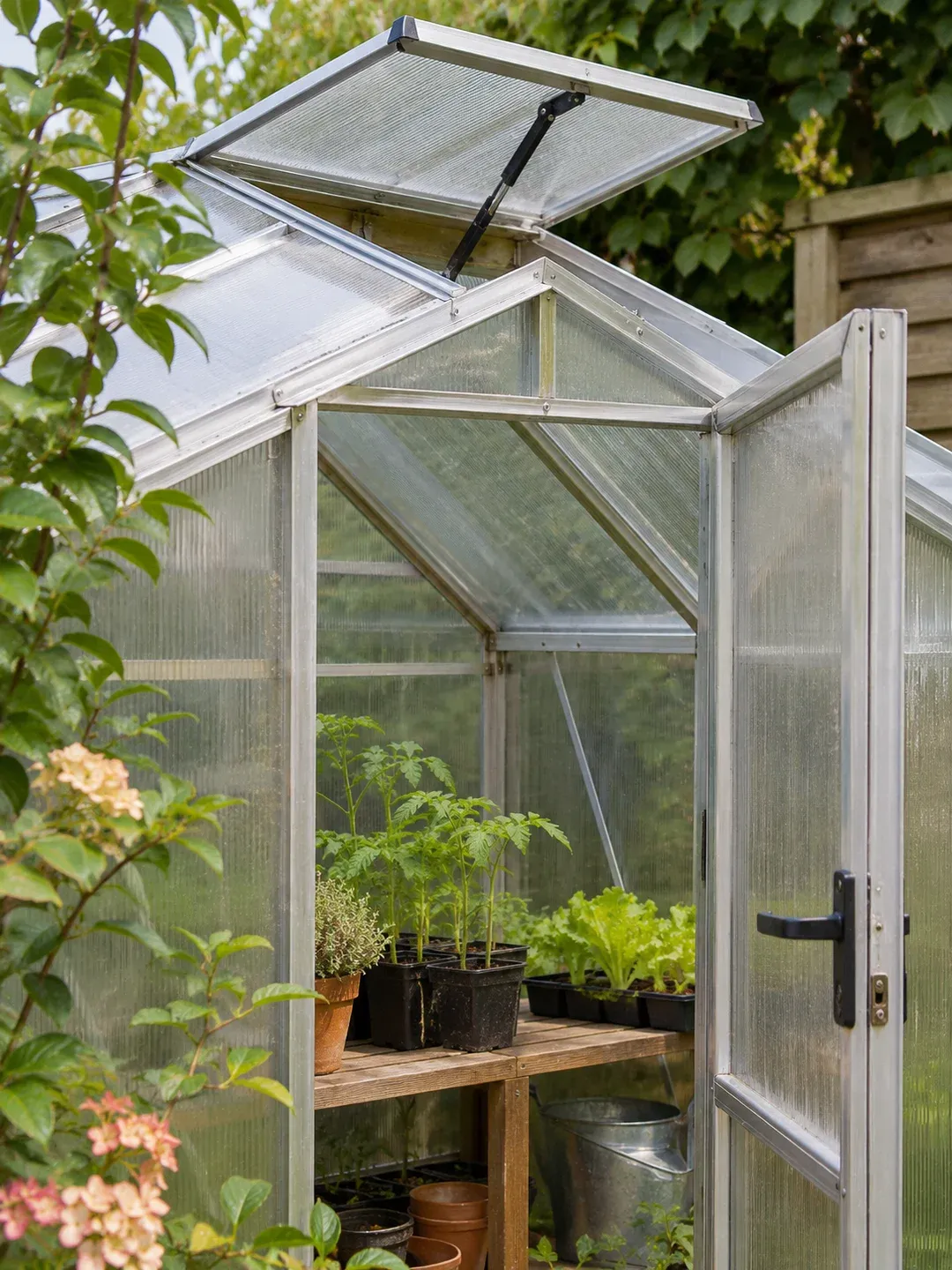
If ventilation no longer controls the heat, shading can supplement it. It also reduces the light received: adjust it and remove it when it becomes unnecessary. For greenhouse shading paint, check that it is suitable for the greenhouse covering and can be removed at the end of the season. RHS · Jardiner Autrement
Should watering be done even when it rains outside?
The greenhouse covering keeps rain off the crops. Jardiner Autrement reminds us that irrigation must meet their needs under shelter, without necessarily being daily. Check the soil and containers; external rain does not establish that they are moist. Jardiner Autrement
Do not monitor only the cultivated plants: Terre vivante also draws attention to the drying out of uncropped areas, including in winter. A soil cover helps limit this water loss. Adjust how much water you give to the conditions you observe rather than applying the same volume everywhere. Terre vivante
How should you prepare for time away?
An automatic vent opener can help, but the RHS notes a response delay in wax-cylinder models. It does not eliminate the need to ensure sufficient ventilation. RHS
Based on your records, prepare a handover: plants to check, access to openings, watering instructions, and decisions if the weather changes. Test the arrangement before leaving someone else in charge of the greenhouse. For small trays with lids, use the seed propagator guide instead: their care when seedlings emerge is on a smaller scale.
Sources and references
- Managing microclimate and irrigation in greenhouses and other growing sheltersJardiner Autrement, French National Horticultural Society Accessed on 18 October 2026.
- Greenhouse: ventilation and shadingRoyal Horticultural Society, in English Accessed on 18 October 2026.
- How should you care for greenhouse soil?Terre vivante, Caroline Vorwerk Accessed on 18 October 2026.
- TomatoFrench National Horticultural Society Accessed on 8 November 2026.