
The vegetable garden notebook / Techniques
Seedling Heat Mat: When to Use It and What to Measure
A heat mat can help seeds germinate when the potting compost is too cold. Decide whether to use it from the seeds’ requirements and a temperature reading in the growing medium, then reassess the need when shoots appear.
Adapt this guidance to your garden’s climate and conditions.
Practical steps
- Identify the Need
Check the germination conditions for the species and variety.
- Measure the Potting Compost
Compare the substrate temperature with the required conditions.
- Regulate and Monitor
Follow the device instructions and check temperature, moisture, and emergence.
- Adapt After Emergence
Reassess the heat and provide the necessary light for seedlings.
Do your seeds need extra heat?
A heat mat provides warmth beneath containers. It can be useful for seeds such as tomatoes or sweet peppers when a cool room does not meet the required germination conditions. Utah State University presents this use as a solution to cold conditions where the seeds are sown, with varying needs depending on the crop.
Before setting it up, check the instructions on the seed packet or a species-specific guide. Compare these with the potting compost temperature in your containers. If conditions are already suitable, adding heat is not a mandatory step. To organise the entire session, use the guide to sowing seeds.
What Temperature Should You Choose?
There is no single setting for all seeds. The University of Georgia explains that some germinate within a narrow range, while others tolerate broader conditions. Look for germination requirements for the specific crop; a temperature for growing seedlings or planting in the garden applies to a different stage.
The guides for sweet pepper sowing and tomato sowing detail these processes. Do not automatically apply their guidelines to another vegetable, nor assume room temperature equates to potting compost heating requirements.
Measuring the Substrate
A thermometer placed in the room is insufficient: the potting compost may be colder than the air, as noted by the University of Minnesota. The University of Georgia recommends measuring with the thermometer probe in the substrate, at the centre of the container or seed tray.
Record the container measured, the time, and the value obtained. You can compare your observations before and after heating. The setting chosen on a device and the temperature actually measured are two pieces of information to keep separately.
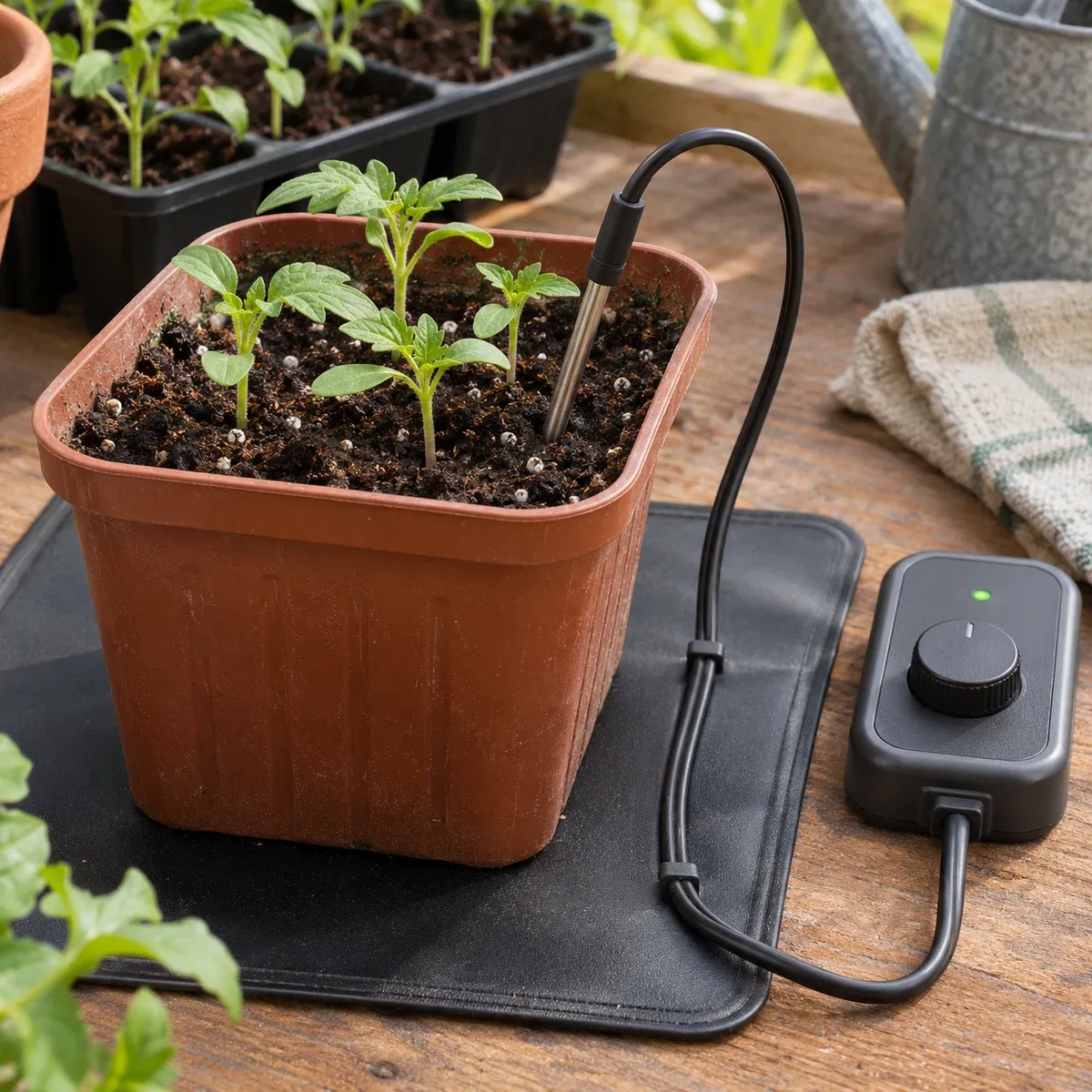
Thermostat and Probe: Follow the Device Instructions
Utah State University advises pairing the mat with a thermostat to regulate heat and prevent containers from becoming too hot. Check the instructions to see if regulation is built-in or requires a compatible controller.
If the device uses a probe, place it as specified in the instructions. To know the temperature around the sown seeds, also check the potting compost with a suitable thermometer. Do not replace the installation instructions with an assumed universal probe depth: the University of Georgia emphasises following the manufacturer’s guidelines.
The timer controlling lighting should not automatically operate the mat: Minnesota distinguishes these two uses. The need for heat is determined by the seed and its temperature, independent of lamp activation.
Monitoring Moisture and Emergence
At least once a day, check for emerging seedlings, make sure the heater is working and inspect the growing medium, as recommended by Utah. Keep the mix moist but not waterlogged. Remove excess water collected in the tray; surface watering may leave the rest of the container dry. Minnesota
Choose a heat mat intended for seed propagation and suitable for damp conditions; never use a domestic heating pad. This distinction comes from South Dakota State University. Follow the instructions for installation and use. Also avoid direct sunlight on a covered seed tray: it can overheat even if you monitor the mat. Utah
After Emergence: Reassess Heat and Ensure Light
The appearance of shoots marks a change in requirements. South Dakota recommends removing the cover at emergence and switching off heat mats that are no longer needed after germination; seedlings can continue growing in a slightly cooler location.
Revisit the growing conditions for your crop before maintaining the same heat. Above all, provide a sufficiently bright spot: seedlings that stretch and remain thin may lack light. Increasing the temperature does not address this deficiency. South Dakota
Sources and references
- Starting Vegetable Seeds Indoors: III. GerminationUtah State University Extension, in English Accessed on 16 October 2026.
- Starting Plants From Seed for the Home GardenerUniversity of Georgia Extension, bulletin 1432, in English Accessed on 16 October 2026.
- Starting seeds indoorsUniversity of Minnesota Extension, in English Accessed on 16 October 2026.
- The Basics of Seed Starting for Flowers and VegetablesSouth Dakota State University Extension, in English Accessed on 16 October 2026.