
The vegetable garden notebook / Vegetable garden calendar
The vegetable garden in July: what to sow and how to monitor harvests?
In July, a space that becomes available can accommodate a new crop. Before sowing, check its growing period and the care you can provide through the summer: not all varieties take the same time to reach harvest.
Adapt this guidance to your garden’s climate and conditions.
This guide uses French examples and seasonal references. Adjust them to your garden’s climate and local conditions.
Three priorities this month
- Choose the next sowings
Compare the variety, the desired harvest and the available period in your garden.
- Monitor soil moisture
Adjust watering to the heat, soil and crop requirements.
- Organise the harvests
Identify ready vegetables and arrange for someone to take over if you go away.
A new crop must fit into your summer
Before resowing a bed, check the packet: does it indicate July for this variety? What harvest are you aiming for, and after what growing period? Also ensure you can monitor the watering. A long absence with no one to look after the garden may justify keeping the space for later.
Earliness is particularly important for French beans, which are sensitive to cold: a climbing variety generally matures later than a dwarf variety, and harvesting dry seeds takes longer than harvesting green pods. The SNHF describes these differences. Do not, therefore, turn a general sowing period into a deadline valid for all varieties and all gardens in metropolitan France.
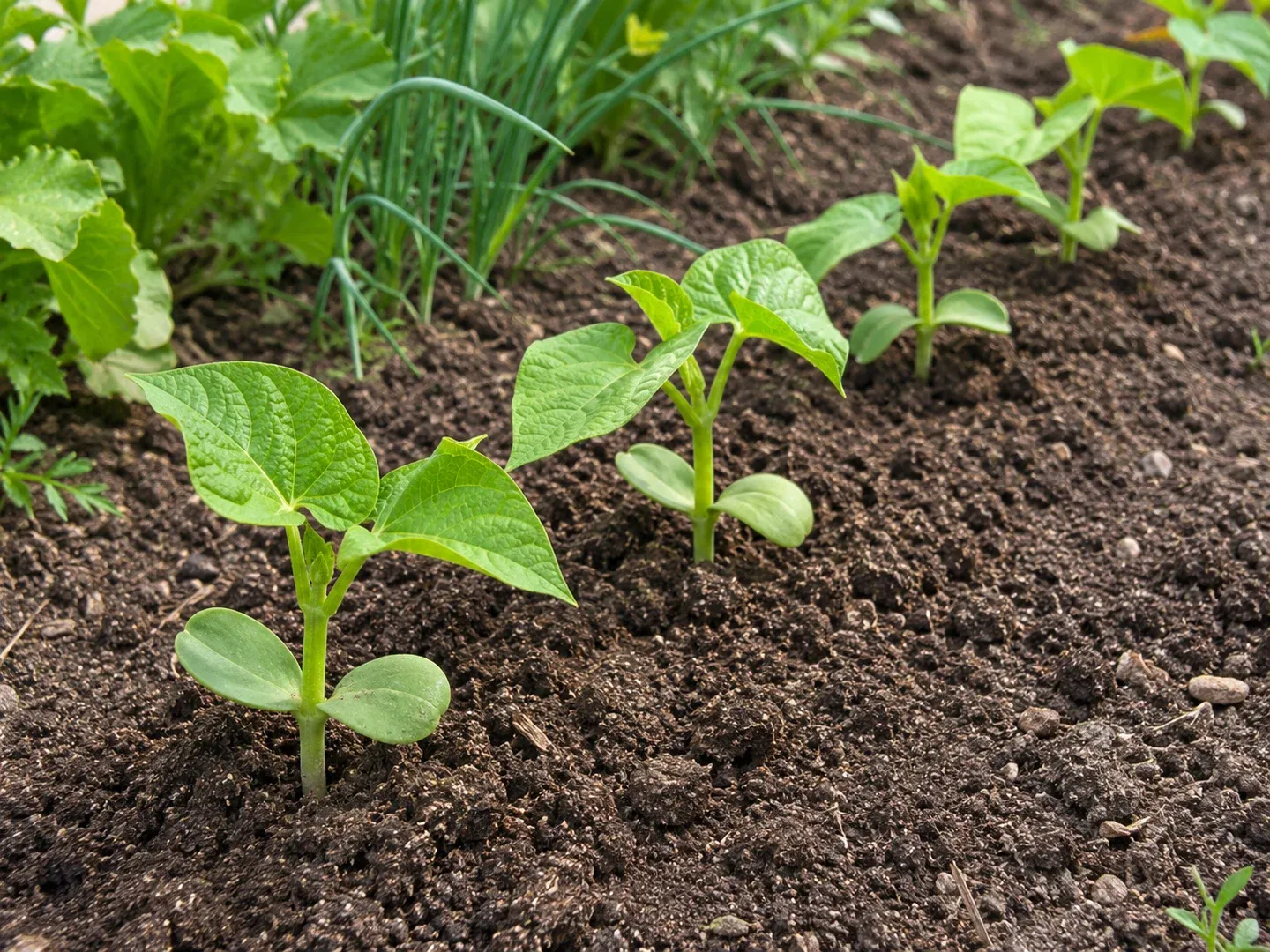
Which sowings to consider in July?
| Crop | Possibility | Decision to make |
|---|---|---|
| French bean | Sow another small batch. | Choose a variety whose earliness suits the remaining season, checking its instructions. |
| Carrot | Sow a variety suited to this period. | Allow the space and care it will need throughout its growing period. |
| Summer, autumn or winter radish | Plan for a harvest suited to the type chosen. | Distinguish large radishes intended for later from small radishes to harvest quickly. |
The French bean fact sheet includes summer sowings. The carrot fact sheet places open-ground sowings from March to July, with highly variable growing periods: July is not universally suitable for all carrots.
For radishes, the SNHF distinguishes summer, autumn and winter types, sown from June to August. Winter radishes are harvested later than small salad radishes. The vegetable name alone, therefore, does not determine the harvest. In dry, hot weather, radishes require light and frequent waterings; drought can make them hollow and pungent. If you cannot maintain moist soil, postpone this sowing.
Watering in hot weather without using one fixed amount
Check the moisture beneath the surface before watering, then verify that the water has penetrated properly after application. Dry soil on the surface is not sufficient grounds for a decision. Water at soil level, avoiding the foliage; do not saturate already damp soil. These guidelines come from Jardiner Autrement.
Also adjust watering frequency to the soil: sandy soil generally needs smaller amounts of water more often than clay soil. The number of waterings in the previous week does not constitute a rule for the following week. Our watering guide details this observation.
Where mulching is suitable for an established crop, apply it to moist, weed-free soil, keeping it clear of the base of the stems. It helps retain moisture without replacing monitoring. Keep it away from sowing rows to avoid hindering seedling emergence, as indicated by Jardiner Autrement. For material choices, consult the mulching guide.
Harvest what is ready and prepare for absences
On already productive plants, pick courgettes young as they grow, rather than routinely leaving them to grow larger: this is the guideline from the SNHF. Traditional filet French beans need picking frequently; stringless types can be left a little longer, according to the French bean fact sheet.
Prepare someone to look after the garden and make decisions on site
Take a joint tour before departure, with a simple plan and visible labels: “sowings to monitor”, “established plants”, “fruits to pick”. Show the relevant rows, water access, and courgettes or French beans at the desired stage. How you pick the beans depends on the type grown; do not use the same instructions for every French bean.
For watering, move the mulch aside at a marked point and show how to check the soil beneath the surface by touch. After an application, verify together how far the water has penetrated, following Jardiner Autrement. Write down an instruction based on what can be checked—“check here, then water if the root zone lacks moisture”—and have the person taking over try it while you are present. Specify where to record rain, checks and any actions taken; you can adjust a misunderstood instruction before your absence.
If you plan a timer or drip irrigation, use the automatic watering guide for installation and testing. A device set up on the day of departure does not replace checking the actual distribution. If no one can look after the garden, limit new sowings to crops you can reliably care for.
Sources and references
- French beansSociété nationale d’horticulture de France (SNHF), Jean-Daniel Arnaud Accessed on 16 October 2026.
- CarrotSNHF, Jean-Daniel Arnaud Accessed on 16 October 2026.
- RadishSNHF, Jean-Daniel Arnaud Accessed on 16 October 2026.
- Water-efficient irrigationJardiner Autrement, a programme run by the SNHF Accessed on 16 October 2026.
- The effects of mulching in the gardenJardiner Autrement, a programme run by the SNHF Accessed on 16 October 2026.
- CourgetteSNHF, Jean-Marc Muller Accessed on 16 October 2026.