
The vegetable garden notebook / Crops
French beans: sowing, growing, and harvesting by type
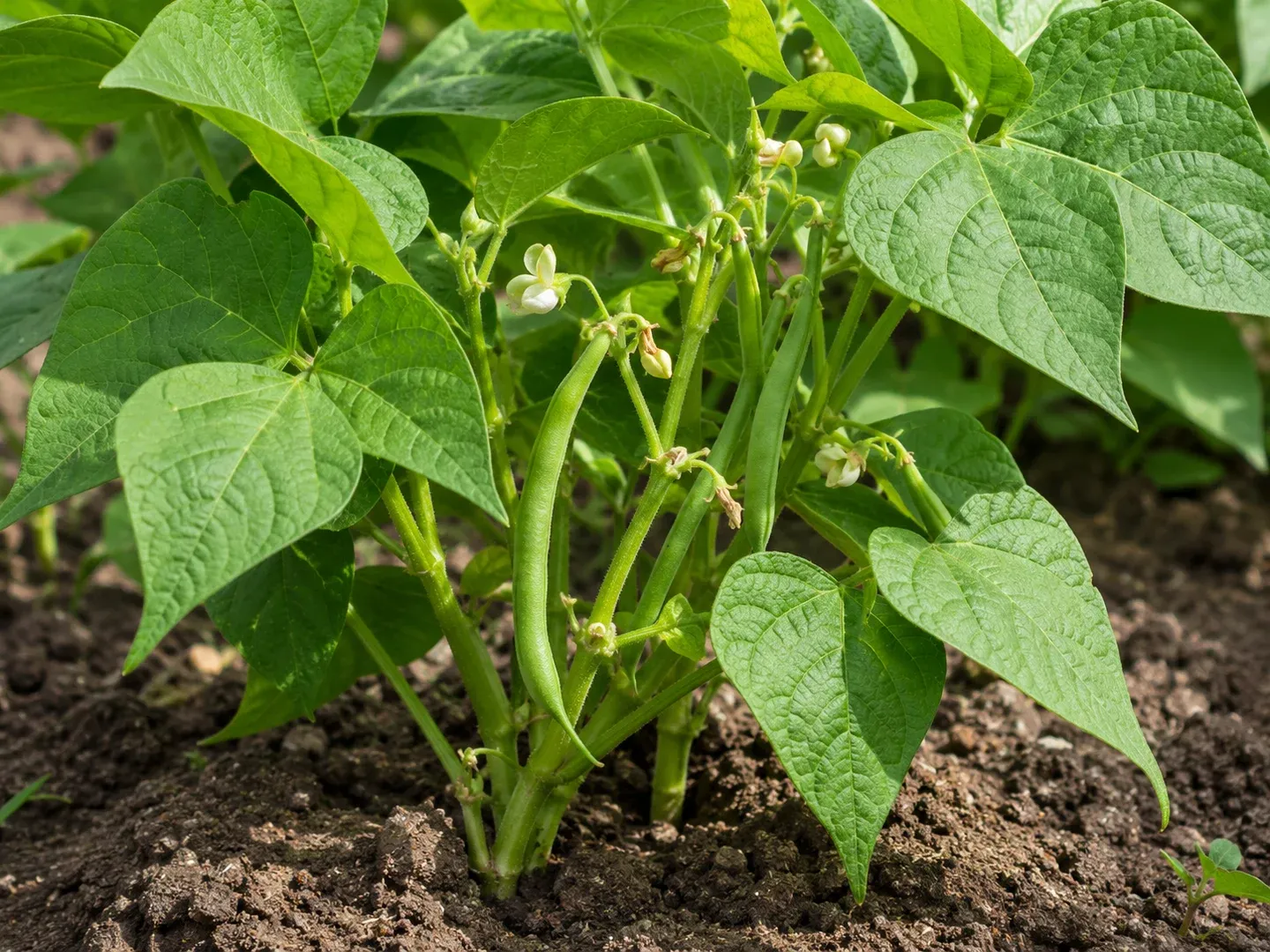
Before sowing French beans, check two details on the seed packet: the pod type and the plant’s growth habit. You can then prepare the space, wait for warm soil, and plan the harvests.
Adapt this guidance to your garden’s climate and conditions.
Choosing French beans to harvest the pods
This guide covers the common bean, Phaseolus vulgaris, grown for its young pods. This species also includes varieties cultivated for their seeds: always check the intended use on the seed packet. The broad bean, Vicia faba, is a different species; its schedule does not apply to these beans. University of Minnesota · SNHF, broad bean
There are two characteristics to consider together:
- Pod type: French filet beans are harvested thin and young; whole-pod (‘mangetout’) bean varieties stay tender for longer. ‘Filet sans fil’ (stringless filet) beans combine a thin pod with greater tolerance for delayed harvest. SNHF
- Growth habit: dwarf varieties remain compact; climbing varieties require tall supports. This choice determines planting arrangements, regardless of the name ‘French bean’. RHS
Keep the label and note these two characteristics. For a first attempt, this avoids discovering only after the seedlings emerge that a variety needs supports.
When to sow French beans?
Wait until the risk of frost has passed: French beans are sensitive to it. Check local forecasts before sowing outdoors. University of Maryland
SNHF provides a benchmark of 15 to 18 °C in the soil for sowing in sufficiently warmed ground. This refers neither to air temperature nor a universal germination threshold. SNHF
A date printed on the seed packet helps plan your season; it does not describe your plot’s current conditions. Note the intended date, then confirm it with garden conditions. The sowing guide assists in organising this step.
Preparing the space and support
Choose a sunny, well-draining area. For climbing varieties, the RHS advises setting up supports before sowing. The SNHF recommends installing them soon after the seedlings emerge: prepare them from the start, without waiting for stems to elongate.
Securely tied stakes or a trellis stretched between posts work well. For distinct rows, SNHF recommends 40 to 50 cm between dwarf rows and 70 to 80 cm between climbing rows. These distances refer to rows, not seed spacing. SNHF
Ensure access to observe plants and pass through for harvesting. Sketch the support on your plan before occupying adjacent spaces.
Sowing direct
First, follow the instructions for your variety. Here is an example layout provided by the RHS, to adapt to your seed packet:
- Dwarf: sow at 5 cm depth, with 15 cm between seeds, in blocks or double rows.
- Climbing: at the same depth, place one or two seeds at the base of each support, then keep the stronger seedling if both emerge.
- Label the sowing: record the variety, growth habit, date and location.
Keep the soil moist until the seedlings emerge, without waterlogging it. Return to observe the row rather than watering automatically each day. University of Maryland
Monitoring the crop and staggering dwarf varieties
In dry periods, monitor moisture in the root zone and water as needed; pod formation requires particular attention. Remove competing young weeds. University of Maryland If using a hoe, work only the top layer of soil to protect roots near the surface. University of Minnesota
To stagger harvests, reserve space for several small sowings of dwarf varieties. Climbing beans produce over a longer period; they do not require the same succession of sowings. University of Minnesota
Before planning another sowing, check that the variety is still suitable and that enough growing season remains. Keep separate records: “Batch 1, sown on…”, then “Batch 2, sown on…”. You can then compare results without mixing up dates.
Harvesting at the right stage
For filet beans, look for very thin pods. More generally, harvest beans intended for pods before seeds form noticeable swellings: as maturity advances, pods become more fibrous. Length alone is not a sufficient indicator for all varieties. University of Minnesota
Inspect plants regularly, including under leaves where some pods may hide. RHS SNHF suggests checking every two to three days for filet beans; mangetout bean varieties can be picked at longer intervals. SNHF
To detach a pod, hold the plant with one hand and pick with the other, as described by Oregon State University. Avoid pulling the entire stem or uprooting the plant while gathering several pods at once. OSU
If not cooking immediately, place pods in the refrigerator rather than leaving them in a warm place. For a surplus, compare freezing and other methods in the harvest preservation guide; then follow a protocol specific to French beans. Brief blanching before freezing and heat processing for bottling or canning are different methods. Minnesota
Before consumption, cook French beans. The BfR notes that fresh beans may contain lectins and recommends cooking them thoroughly in boiling water. Rinsing, the tenderness of a young pod, or the ‘mangetout’ label do not replace this preparation. Consult its full recommendation for the method; do not assume that a blanching time or a time for gentle cooking is sufficient for this purpose.
At the first harvest, note the observed stage and variety. These observations will help adjust subsequent harvests and choose the quantity to sow in future attempts.
Dwarf or climbing: which French bean for which pot?
The RHS distinguishes small starter containers from the final pot. For dwarf varieties, it provides a benchmark of 30 to 45 cm wide; for climbing varieties, at least 75 cm wide and 45 cm deep, with a container heavy enough to remain stable under supports and foliage. Install supports before growth begins. These are dimensions, not pot volumes in litres.
Use potting compost and place the pot in full sun, sheltered from wind. Respect spacing appropriate to the growth habit and variety rather than filling all spaces with seeds. Monitor moisture during flowering and pod formation. For plants in pots, the RHS recommends a potassium-rich feed once the first flowers appear; follow the product instructions.
Flowers dropping without forming pods
For Phaseolus vulgaris, the RHS specifies that flowers can self-pollinate. Advice for runner beans or broad beans does not automatically apply here.
The University of Minnesota notes that high heat during flowering can cause flower abortion or poor pod formation. Compare the weather, soil moisture around the roots and the progress of several plants before drawing a conclusion. Growth habit also matters: dwarf varieties flower over a shorter period than climbers. An unfavourable period may not affect both types equally.
Spots, mosaics, or rotting stems: observing mature plants
The University of Minnesota describes several possibilities, distinct from slug or bird damage on seedlings: brown spots with yellow halos for certain bacterial diseases, mosaic patterns and distorted growth for viral diseases, or stem rot with wilting for white mould. These similarities do not constitute a diagnosis.
Photograph leaves, stems, and pods, then note the stage and progression. Choose healthy seeds and plants, maintain air circulation between crops, and avoid handling when foliage is wet: these preventive measures limit several transmission pathways. The vegetable disease guide helps organise observations before choosing an intervention.
Key points for this crop
Practical guidance
- Exposure
- Full sun, in well-draining soil
- Outdoor sowing
- After the risk of frost, in warmed soil
- Support
- To be prepared at planting for climbing varieties
- Harvest
- Young pods, at the stage suited to the variety
Sources and references
- BeansSociété nationale d’horticulture de France (SNHF), fact sheet by Jean-Daniel Arnaud Accessed on 15 October 2026.
- How to grow French beansRoyal Horticultural Society (RHS), in English Accessed on 15 October 2026.
- Growing beans in home gardensUniversity of Minnesota Extension, in English Accessed on 15 October 2026.
- Growing Beans in a Home GardenUniversity of Maryland Extension, in English Accessed on 15 October 2026.
- Broad beanFrench National Horticultural Society (SNHF), fact sheet by Jean-Marc Muller Accessed on 15 October 2026.
- Managing plant diseases in the home gardenUniversity of Minnesota Extension, Marissa Schuh and Michelle Grabowski, in English Accessed on 18 October 2026.
- Beans (Bush and Pole) — When and How to HarvestOregon State University Extension, Food Hero, in English Accessed on 8 November 2026.
- Lectins in plant-based foods: Is there a health risk?BfR, German Federal Institute for Risk Assessment, in English Accessed on 8 November 2026.