
The vegetable garden notebook / Techniques
Vegetable gardening in shade: observe the light before choosing crops
A shady spot can allow for a trial crop, but permanent shade and protection from hot sun do not lead to the same choices. Start by observing the planned row.
Adapt this guidance to your garden’s climate and conditions.
Practical steps
- Record
Note the periods of direct sunlight where you plan to grow the plants.
- Distinguish
Identify buildings, foliage and shade limited to the hottest part of the day.
- Trial
Start with a small crop suited to the light and season.
- Compare
Observe growth and harvest before expanding or relocating the crop.
Conduct a survey in spring and summer
On a sketch, draw the walls, fences and trees, then mark the location of the planned row. On a sunny day, note when direct sunlight reaches this spot and when it disappears. A bright area without direct rays remains different from a sunny area. The Centre national de Pomologie places this observation at the start of crop selection.
Use a simple record sheet, then repeat it in another season and after the trees have come into leaf:
| Date and location | Direct sunlight observed | Source of shade | Soil condition and planned trial |
|---|---|---|---|
| Spring, planned row | Start time, interruption and end time | Wall, fence, tree… | Moist or dry; crop and variety |
| Summer, same row | Same survey | Foliage present, afternoon shade… | Soil condition and trial results |
Use this suggested record sheet to track conditions over time. It helps you avoid deciding solely on the basis of a north- or east-facing position, which tells you nothing about nearby obstructions. The balcony guide complements this survey with wind and water access.
Distinguish three shade situations
A building permanently blocks the sun. If no direct sunlight reaches the row during the intended growing period, first look for another location. The Centre national de Pomologie advises against total shade for vegetables. A small trial does not justify planting the entire vegetable garden in this spot.
A tree or large hedge shades the area. Light is then only part of the issue: their roots compete with vegetables for water and nutrients, notes the RHS. Prefer a location free from this competition; do not plan to cut through roots to make room for a row.
Sunlight is present for part of the day, with shade during the hottest hours. This may suit a trial of leafy vegetables. The Centre de Pomologie’s advice is set in a Mediterranean context: its interest in summer shade does not make partial shade an ideal growing position everywhere, all year round.
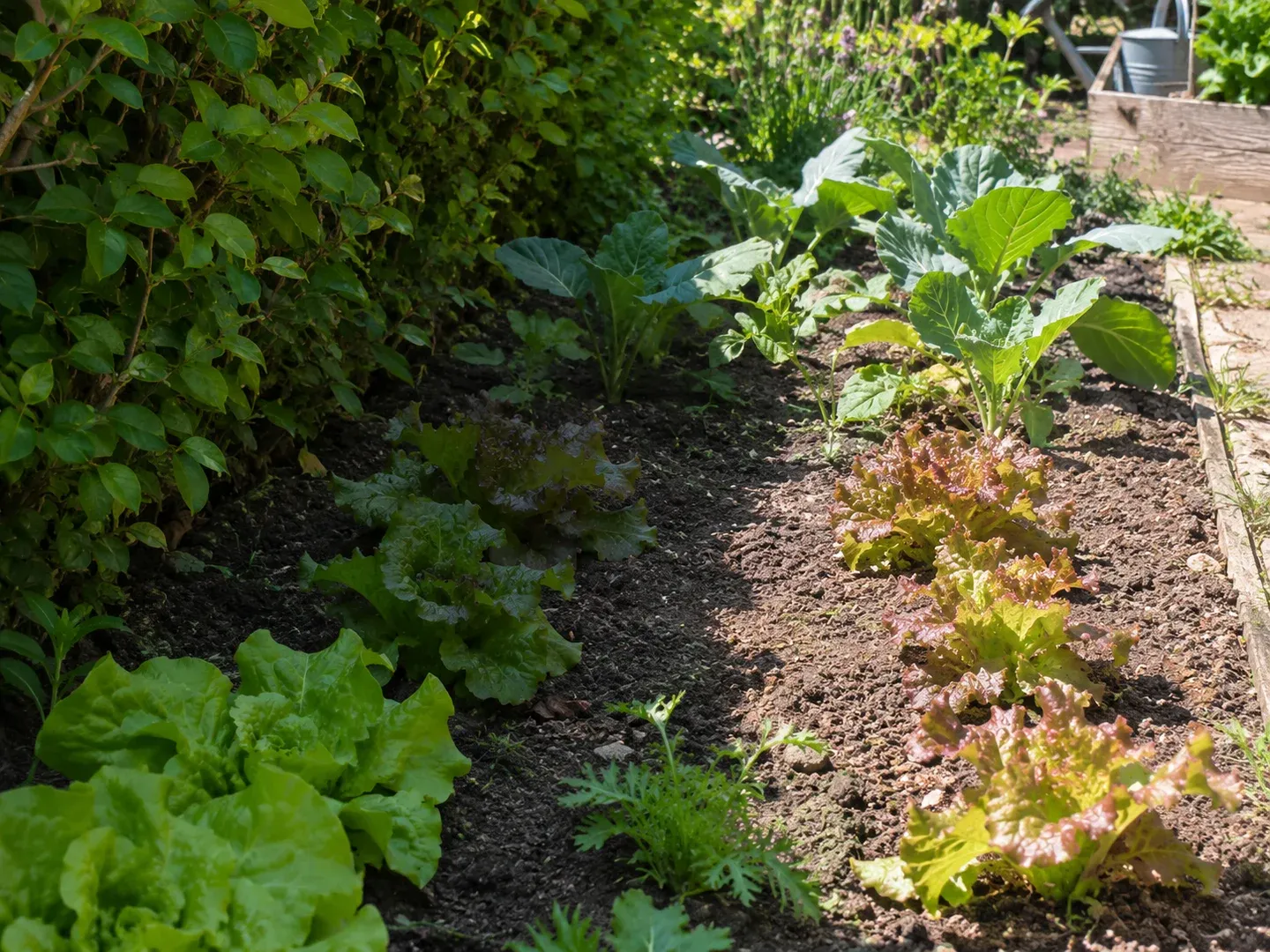
Which vegetables should you try?
The University of Maryland provides guidelines for container crops: 3 to 5 hours of direct sunlight for lettuces and spinach in the cool season, versus 6 to 8 hours for tomatoes, peppers, aubergines and squashes in the warm season. Measure direct sunlight at the location of pots to choose your crops.
| Documented crop | Trial to consider | Limit to observe |
|---|---|---|
| Lettuce | Small batch in a partially sunny area; the RHS lists it among shade-tolerant crops. | Tolerance does not mean production equal to full sun. |
| Spinach | Choose the growing position based on season and variety. | The SNHF prefers shade in summer but more sun in spring and autumn. |
| Rocket | Small row in partial shade, among the examples from the Centre de Pomologie. | Mediterranean example to adapt to your garden’s temperature. |
| Tomato, Pepper, Aubergine | Reserve the sunniest available spots. | Fruiting crops reach their potential less easily in shade, according to the RHS. |
Monitor the trial before expanding
Record the variety, date, new leaves and actual harvest. If you have a brighter spot, a small batch of the same crop serves as a practical comparison; this is not a controlled agronomic trial.
Also check the soil before each watering. Shade alone does not tell you how much water is needed: under a tree, competition may be a factor; in a pot, the substrate and microclimate alter the situation. The University of Maryland emphasises water access and surfaces that accumulate heat. The watering guide helps make decisions on site.
If the trial remains unsatisfactory, reduce the area or find a brighter location for the next batch. Additional fertiliser alone cannot compensate for insufficient light.
Sources and references
- Growing Vegetables in ContainersUniversity of Maryland Extension, in English Accessed on 18 October 2026.
- Climate change: growing under plant coverCentre national de Pomologie, Alès Agglomération Accessed on 18 October 2026.
- Positioning vegetablesRoyal Horticultural Society, in English Accessed on 18 October 2026.
- SpinachSociété nationale d’horticulture de France, Jean-Marc Muller Accessed on 18 October 2026.