
The vegetable garden notebook / Crops
Welsh onion: differences, sowing and harvesting in the vegetable garden
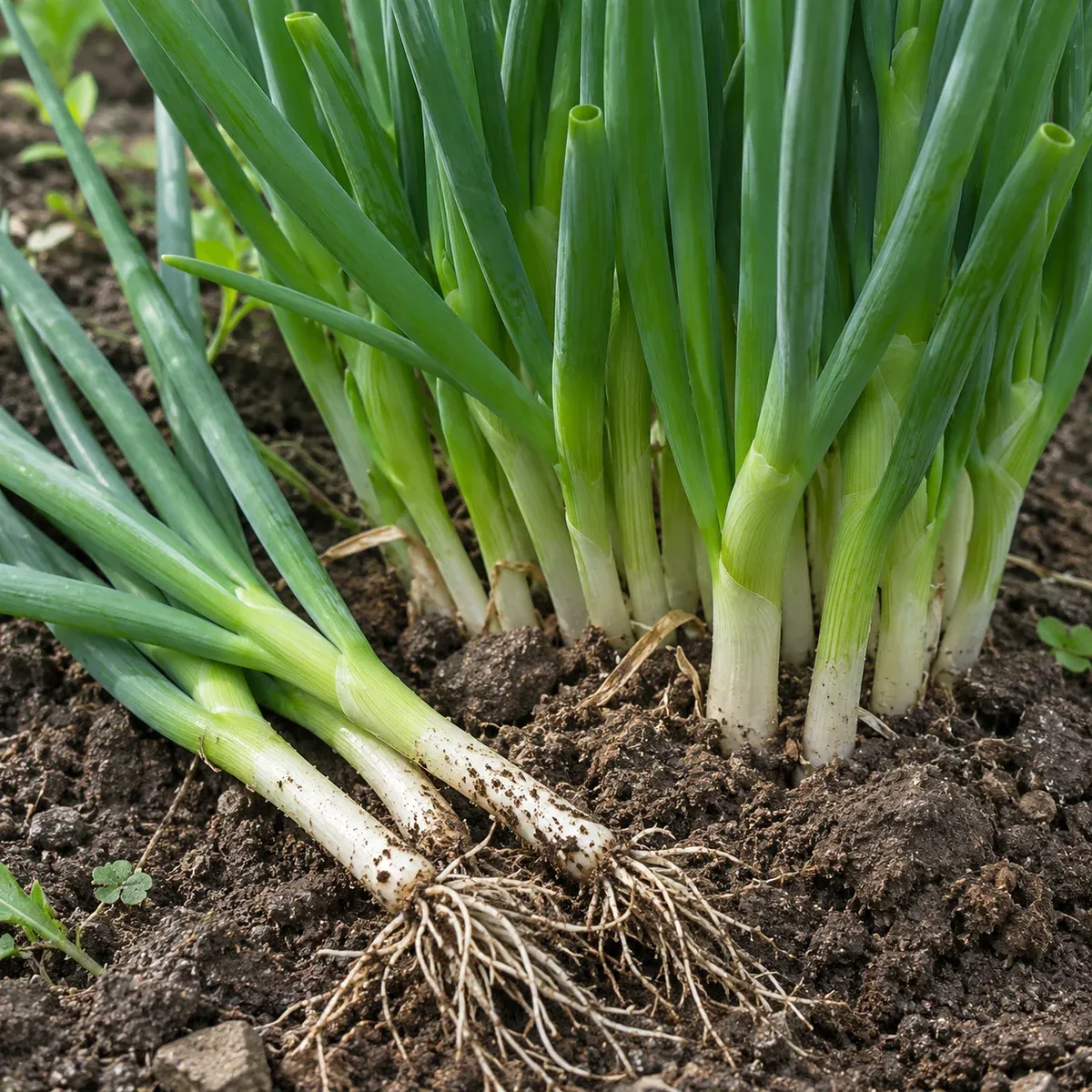
Welsh onion, Allium fistulosum, is a perennial grown for its leaves and white base. It can be left as a clump or harvested young and whole. It differs from chives; the names "cébette" or "green onion" alone are not sufficient to identify the species.
Adapt this guidance to your garden’s climate and conditions.
Which Welsh onion to plant?
The Welsh onion in this factsheet is Allium fistulosum: a clump-forming plant that typically does not develop the large bulb of a storage onion. Common names for spring onions (green onions) vary. To maintain a long-lasting clump, verify the species on the label. Iowa · UC ANR
| Common name | Species or clarification | Further information |
|---|---|---|
| Welsh onion | Allium fistulosum, grown for leaves and white base | Sowing and harvesting are described in this factsheet |
| Common chive | Allium schoenoprasum, fine tubular leaves | Chive growing guide |
| Chinese chive | Allium tuberosum, flat leaves with a garlic flavour | Chinese chive growing guide |
| Cébette or green onion | Common name that may also refer to a young Allium cepa | Verify the species rather than assuming perennial growth from the sales name |
Iowa and UC ANR explain the ambiguity of common names; the RHS distinguishes the two types of chives. To select a Welsh onion variety, Sainte Marthe lists, among others, ‘Evergreen Nebuka’ and ‘Red Toga’: compare the intended use and stated size. Sainte Marthe
When and how to sow in France?
The French seed supplier gives late February to May as the sowing window. Adapt this guideline to the seed packet, region and soil: the early part of the window may require starting seedlings in pots in a bright place, while outdoor sowing should wait until the soil is workable. The given germination temperature is 18 °C. Sainte Marthe
Sow a few seeds in clusters at a depth of 0.5 cm and keep the soil or compost moist. After the seedlings emerge, thin out; for a long-lasting crop, retain the guideline of 20 cm in all directions. Transplant pot-grown seedlings when sufficiently developed. Closely spaced rows intended to be harvested young do not reflect the final spacing of a clump. Sainte Marthe
Where to plant, and can it be kept in a pot?
Plant in full sun in fertile soil that retains moisture without becoming waterlogged. Reserve an accessible spot for cutting and maintenance; the clump may spread. RHS
For containers, choose a pot with drainage holes and a well-draining growing medium. The Oregon guide for spring onions requires at least 15 cm depth for harvesting young leaves. Allow more space to keep a large clump for several years. Increase container size when the clump outgrows it and monitor watering more closely than in open ground. Oregon
Water, fertility and dividing the clump
The shallow roots need consistent moisture. Check the soil beneath the surface, especially during establishment and dry periods; mulching helps slow drying and weed competition. The watering guide explains how to decide when to water. UC ANR · Oregon
Prepare humus-rich soil rather than repeatedly applying fertiliser without checking conditions. Pale foliage alone does not indicate a lack of nutrients. RHS
Dividing a clump: prepare for regrowth before lifting
Division applies to an established, large clump, not a fragile seedling. UC ANR describes this stage for Allium fistulosum; their autumn suggestion applies to the San Francisco Bay Area and does not set a date for France. Choose a time when the soil is workable and you can monitor moisture after replanting. UC ANR, perennials
First prepare the well-drained planting site and final spacing, using the 20 cm guideline in all directions mentioned above. Then lift the healthy clump, separate portions with their roots and replant in the prepared site. Discard any sections suspected of rot: moving them may spread the problem with the soil. UC ANR · RHS, white rot
Monitor the soil and replanted sections during regrowth: shallow roots require consistent moisture without saturation. New leaf growth and actual vigour will guide the return to harvesting. UC ANR · UC ANR, perennials
Harvesting leaves or removing the whole plant
On a well-established plant, cut leaves as needed; they may regrow several times during the growing season. The Oregon guide for spring onions suggests approximately 15 cm height as a starting point for harvesting: also check the plant’s vigour and regrowth. To use the white base, loosen the soil with a fork and remove the entire plant. Keep other plants if your goal is to maintain the crop. Oregon
Use freshly harvested Welsh onions promptly. Spring onions keep briefly in the refrigerator; for later use in cooked dishes, cut leaves can be frozen. Do not attempt to dry this harvest like a bulb onion. Oregon · Iowa
Should flowers be removed, and what remains in winter?
Cream-coloured flowers are normal for this perennial. To favour leaves, Sainte Marthe suggests cutting flowers as they appear; the RHS advises removing spent flower stems and fading foliage. Sainte Marthe · RHS
Foliage retention depends on winter mildness and light. A clump may lose leaves then regrow: do not promise year-round harvesting and do not assume it has died at the first slowdown. In pots, especially protect the plant from local adverse conditions and check drainage. Sainte Marthe
Yellowing or decline: check before acting
Start with moisture, pot drainage and the season. If white dotted lines, tunnels or brown pupae appear, Allium leaf miner is a possible cause; photograph the damage to confirm identification. For preventive netting to work, it must cover plants on a site where the insect will not emerge from the soil beneath it. The mesh installation guide explains cover selection and securing edges; installation does not replace plant inspection. RHS leaf miner
If roots or the base rot, look for white mould and small black grains. These signs suggest white rot; yellowing alone is not sufficient. Avoid moving suspect soil and divisions. Crop rotation helps organise the vegetable garden, but a few years’ wait does not guarantee elimination of this persistent pathogen. RHS white rot
Key points for this crop
Practical guidance
- Species
- Allium fistulosum, a perennial grown for its leaves and white base
- Start
- Sowing, young plant or division of a healthy clump
- Permanent spacing
- Planting guideline: 20 cm in all directions
- Winter
- Foliage varies with climate; survival and continuous harvesting are two different things
Sources and references
- Allium fistulosum — Welsh onionRoyal Horticultural Society, in English Accessed on 18 October 2026.
- Growing Welsh onions successfullyLa Ferme de Sainte Marthe, French seed supplier Accessed on 18 October 2026.
- The Other OnionsIowa State University Extension, Cynthia Haynes Accessed on 18 October 2026.
- Green Bunching OnionsUniversity of California Agriculture and Natural Resources, Santa Clara County Master Gardeners Accessed on 18 October 2026.
- Onions (Bunching)Oregon State University Extension Service, Food Hero Accessed on 18 October 2026.
- How to grow chivesRoyal Horticultural Society, in English Accessed on 18 October 2026.
- Allium leaf minerRoyal Horticultural Society, in English Accessed on 18 October 2026.
- Onion white rotRoyal Horticultural Society, in English Accessed on 18 October 2026.
- Plant Perennial Vegetables in Winter — Bunching onionsUniversity of California Agriculture and Natural Resources, Linda Carloni, in English Accessed on 8 November 2026.