
The vegetable garden notebook / Crops
Growing chives: sowing, pots, cutting, and division
Chives form a perennial clump that can be planted in the ground or in pots. Their care relies on well-drained soil, consistent moisture in containers, and cutting leaves according to how actively the clump is growing.
Adapt this guidance to your garden’s climate and conditions.
Which chives to plant?
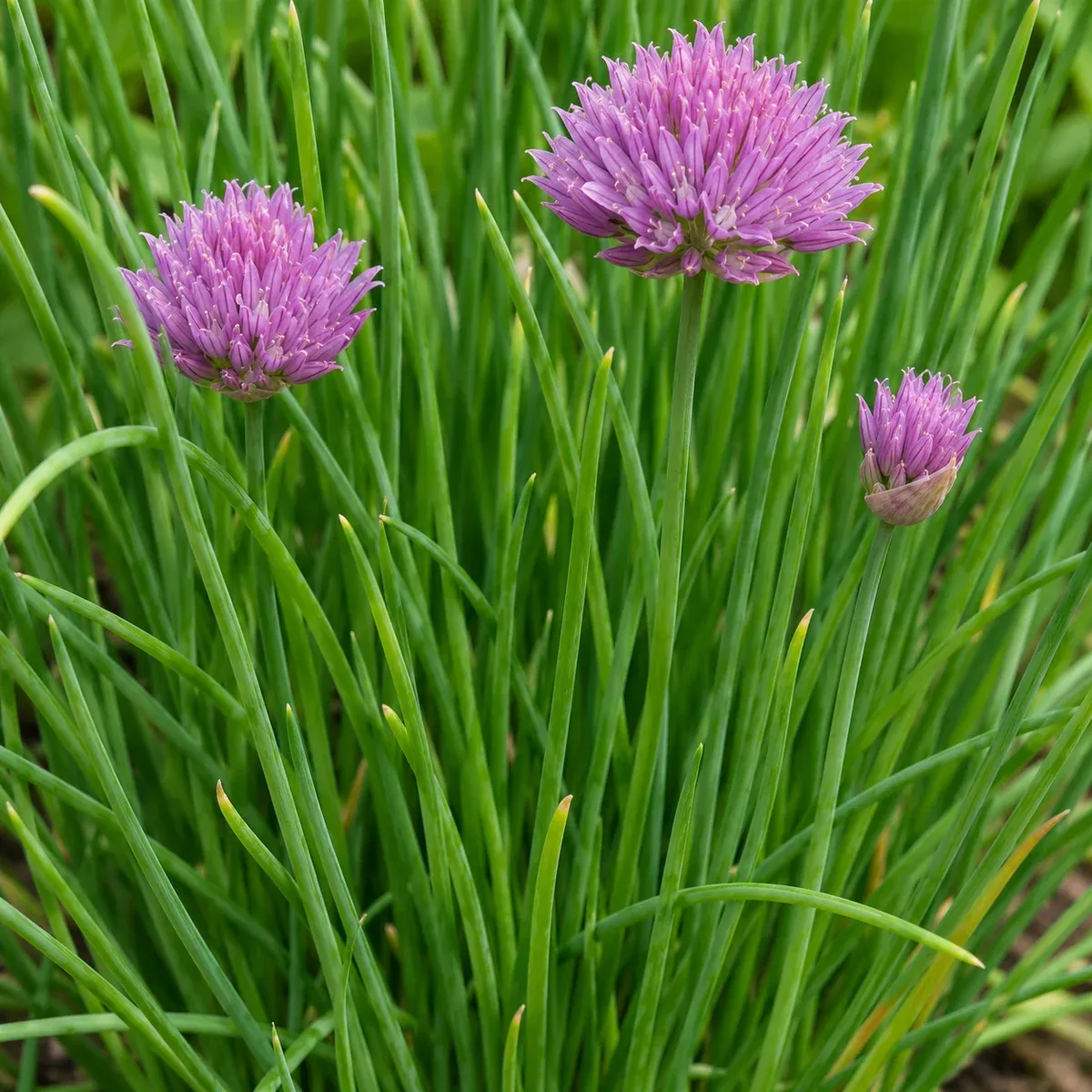
Common chives, Allium schoenoprasum, form perennial clumps with tubular leaves. They are suitable for open ground as well as pots and containers. The SNHF recommends rich, well-draining soil in full sun or partial shade. SNHF
Read the label: Chinese chives, Allium tuberosum, have flat leaves and belong to a different species. The advice in this guide primarily concerns common chives. RHS
When and how to sow?
For France, the SNHF provides a guideline of March to April for direct sowing. This guideline should be adjusted based on soil conditions and the seed packet instructions; it is not a fixed date for all gardens. They also suggest dividing clumps. SNHF
Sainte Marthe describes sowing in small groups of seeds, at a depth of 0.5 cm. Thin out if necessary, keeping the most vigorous seedlings. To prepare materials and monitor seedling emergence, consult the sowing guide. Sainte Marthe
Planting in the ground or in a pot
In the ground, the SNHF recommends 15 cm between plants. Do not crowd multiple clumps into a small space simply because their leaves are fine. SNHF
In pots, the RHS advises a container at least 20 cm wide and deep, with a substrate that retains moisture without becoming waterlogged. Plant the clump at its previous level, firm gently, and water. RHS
Watering on a balcony
Monitor a pot more closely than a clump established in open ground. During growth, keep the substrate consistently moist; in the ground, the RHS limits watering mainly to young plantings and prolonged droughts. RHS
Sainte Marthe advises against letting water stagnate in the saucer, as the bulbs may rot. Check moisture levels before adding water rather than following a fixed schedule. The watering guide details this observation. Sainte Marthe
How to cut and renew the clump?
Cut leaves with scissors close to the base. After flowering, remove hardened flower stems; you may leave a few flowers for pollinating insects. An overcrowded clump can be dug up, divided, and replanted immediately, in spring or autumn. The RHS suggests division every three to four years. RHS
Rust, aphids, or seasonal decline?
Chives may be affected by pests and diseases: the RHS mentions aphids and rust. However, a single yellow leaf is not enough to confirm their presence. Examine several leaves, their base, and young shoots, then compare the following signs. RHS
- Small raised orange pustules, sometimes powdery, with premature drying: these suggest rust. Avoid overcrowding clumps and excessive fertiliser, particularly nitrogen; remove leaf debris at the end of the growing season. Rust can weaken the clump, but yellowing alone is not proof. RHS, rust
- Insects clustered on young tissues, deformed leaves, or sticky deposits: look for aphids. Also observe ladybirds and other predators before intervening; a few insects without growth impairment may only require monitoring. RHS, aphids
- Foliage that disappears in autumn without these signs: compare observations with the seasonal dormancy described below. If the base declines in a waterlogged pot, also check drainage and the saucer, as previously discussed in the watering section.
Note the date, photograph the signs up close, and re-examine new leaves. Their progression provides better insight than an old, already damaged leaf; persistent decline without a visible cause requires advice based on these observations.
Do chives disappear in winter?
Their foliage may die back in autumn: a perennial does not guarantee year-round harvests. The RHS suggests bringing a potted clump indoors to a sunny windowsill to extend the harvest. RHS
Key points for this crop
Practical guidance
- Species
- Allium schoenoprasum, with fine tubular leaves
- Start
- Spring sowing, plant, or division of a clump
- Location
- Full sun or partial shade, rich and well-drained soil
- Harvest
- Leaves cut from a growing clump; seasonal slowdown possible
Sources and references
- ChivesFrench National Horticultural Society Accessed on 18 October 2026.
- Growing chives successfullyLa Ferme de Sainte Marthe, seed supplier Accessed on 18 October 2026.
- How to grow chivesRoyal Horticultural Society, in English Accessed on 18 October 2026.
- Leek rustRoyal Horticultural Society, in English Accessed on 18 October 2026.
- AphidsRoyal Horticultural Society, in English Accessed on 18 October 2026.