
The vegetable garden notebook / Vegetable garden calendar
The vegetable garden in February: what to sow and when to wait?
In February, a few sowings and plantings become possible, but starting early means being able to care for the young plants as they grow. Distinguish between the garden, an unheated shelter and indoor sowing space.
Adapt this guidance to your garden’s climate and conditions.
This guide uses French examples and seasonal references. Adjust them to your garden’s climate and local conditions.
Three priorities this month
- Check if the soil can be worked
Postpone work on frozen or very wet soil.
- Choose a crop suited to this sowing window
Identify the type of garlic, pea or radish and take local climate into account.
- Plan ahead before sowing indoors
Ensure adequate light and space until the appropriate planting period.
Decide first where the plants will grow
A seed packet mentioning February is not enough to decide on sowing. Check the intended cultivation method, the variety, and the garden conditions. An outdoor row, an unheated tunnel and pots indoors each offer different conditions for starting crops.
In the garden, postpone working on frozen or very wet soil, in accordance with the RHS soil preparation advice. Also check local forecasts before starting work. If the bed is not workable, prepare labels and the location for future crops: there is no need to fill pots to make progress.
Choose your starting point: sowing and planting outdoors, radishes under cover, or indoor sowing. Each section explains the conditions to check before describing what to do.
What to sow or plant outdoors in February?
The table offers three possibilities on workable soil. The periods indicated by the SNHF are French benchmarks to compare with your situation and the variety’s instructions, not a directive to sow despite frost.
| Crop | February benchmark | Decisive condition |
|---|---|---|
| Broad bean | The SNHF indicates February–March outside the warm regions of the Midi and South-West, where it advises autumn sowing. | Ensure sun and moist, deep soil. Postpone if the ground is still frozen or waterlogged. |
| Round-seeded peas | The SNHF places them from November to February in Mediterranean climates and at the start of the February–June sowing period elsewhere. | Identify the seed type: do not apply this early start indiscriminately to wrinkled-seeded peas. The soil must be well-aerated and loosened. |
| Pink garlic | The SNHF distinguishes between pink garlic that produces a flower stalk (December to February) and pink garlic without a flower stalk (January to March). | Verify the purchased type and drainage. Soil that retains water in winter is not suitable for this planting. |
Choose a small area you can monitor and keep the variety label. For planting steps, consult the garlic guide or the broad bean guide. A favourable date on paper does not correct poor soil condition.
Under cover: start with the right radishes
Forcing radishes are a possibility under cover from mid-February, according to the SNHF. This sowing window applies to a specific type of radish grown under cover. It does not automatically apply to salad radishes, for which the same fact sheet places outdoor sowing from mid-March.
Choose a suitable variety and sow it in light, moist soil, without sowing too densely. The radish guide details differences in depth and spacing according to their shape and type.
The shelter also requires monitoring. The RHS reminds us of the limits of tunnels for keeping tender plants in winter and the significant temperature fluctuations possible in small greenhouses. In a cold frame, adjust the opening based on the temperature.
Before the first protected sowing, ensure you can monitor the temperatures and adjust the openings. If this is not possible, waiting for the outdoor sowing window avoids relying on a shelter you cannot manage.
Indoors: allow for the full period before planting out
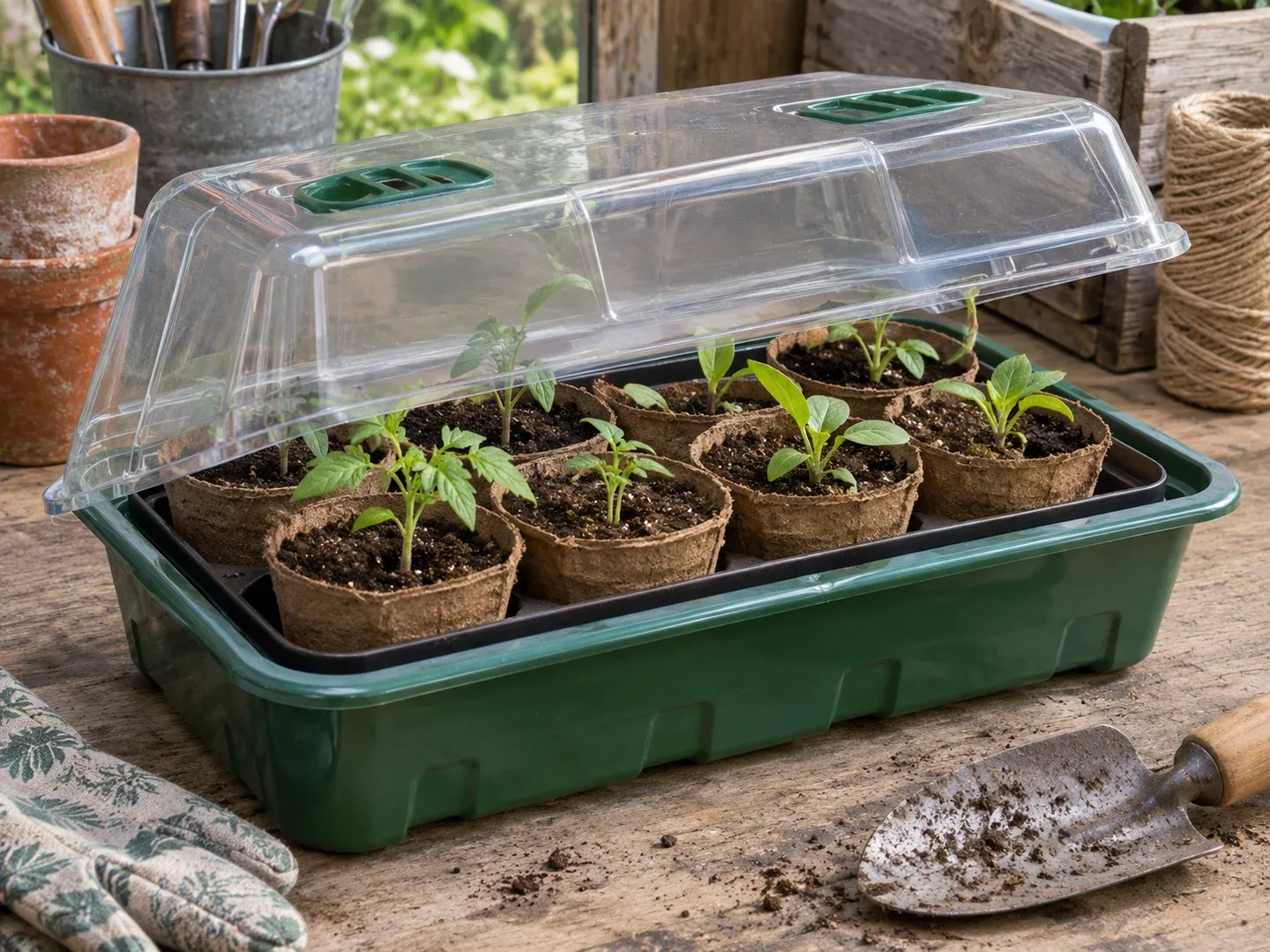
Warmth may get seeds started, but it does not meet the young plants’ needs for light or space. The University of Minnesota links lack of light to long, thin stems and notes that a windowsill can experience significant temperature fluctuations. Therefore, assess your actual space; a heated room is not necessarily a good growing space.
Before sowing, note three elements: the final location, the period when it can accommodate the crop, and the indoor space available until then. Also allow for the space needed once the plants have been moved into larger pots, a point emphasised by the University of Minnesota.
To compare crops and organise their starts, the general sowing guide builds on this calendar by explaining how to plan back from planting out and then choose suitable lighting.
Should tomatoes be sown already?
February is not a mandatory start. The SNHF describes sowing in pots kept at 20°C and advises waiting until frosts are no longer a risk before planting. These are two distinct conditions: germinating in warmth does not make a young tomato plant ready to live outdoors.
To choose your date, start from the intended planting and the growing conditions you can maintain. Our tomato sowing guide helps organise this preparation. If you do not have enough space in good light, delay sowing or plan to buy plants at the appropriate time.
How should you monitor pots after sowing?
Observe the substrate and the shoots. Keep the mix moist during germination and allow excess water to drain, as recommended by the University of Minnesota. Use containers with drainage holes; a full saucer does not replace monitoring the moisture. The sowing guide complements these steps.
Prepare for March without starting lots of extra sowings
Keep a short list: one possible crop now, one sowing to reconsider, and one preparation to finish. For example, “pink garlic identified, planting once the soil has drained” or “tomatoes: check the available space before choosing the date”. These are decisions to adapt, without automatic deadlines.
The March calendar extends this preparation. Return to your observations over the weeks: deciding to delay sowing until conditions are right is still a useful gardening decision.
Sources and references
- How to make a raised bedRoyal Horticultural Society (RHS) Accessed on 16 October 2026.
- Broad beanFrench National Horticultural Society (SNHF), fact sheet by Jean-Marc Muller Accessed on 16 October 2026.
- Garden peaSNHF, fact sheet by Jean-Marc Muller Accessed on 16 October 2026.
- Cultivated garlicSNHF, Vegetable and Fruit Gardens Section Accessed on 16 October 2026.
- RadishSNHF, fact sheet by Jean-Daniel Arnaud Accessed on 16 October 2026.
- Greenhouses: choosingRHS Accessed on 16 October 2026.
- Starting seeds indoorsUniversity of Minnesota Extension Accessed on 16 October 2026.
- TomatoSNHF, fact sheet by Jean-Marc Muller Accessed on 16 October 2026.