
The vegetable garden notebook / Crops
Growing squash (potimarron): selecting, sowing, and harvesting
Start by selecting an edible variety whose stems will have enough space. For harvest, observe each fruit: ripeness and skin condition matter more than a single date or advertised storage duration.
Adapt this guidance to your garden’s climate and conditions.
Selecting a variety and allocating space
Potimarron belongs to Cucurbita maxima, the same species as the pumpkins known in French as potiron. The SNHF distinguishes in particular ‘Uchiki Kuri’, which is a trailing variety, and ‘Amoro’ or ‘Zora’, which have a shorter trailing habit. Keep the exact name of your variety to find its dimensions and specific instructions.
For ‘Uchiki Kuri’, the RHS indicates a spread of 1.5 to 2.5 metres. A relatively small fruit does not therefore mean a compact plant. On your vegetable garden plan, also allow for the necessary access to water and reach the fruits.
Choose seeds or plants clearly intended for consumption. ANSES advises against eating ornamental squashes or fruit from self-sown plants; it recommends using new seeds rather than resowing seeds from previous harvests.
Can potimarron be grown in a container?
The Graines Baumaux instructions describe growing Red Kuri—also called Hokkaido sweet pumpkin—in a pot on a balcony. They cite a container of approximately 25 litres: this is an example provided by the seed supplier, without detailed comparative trials, not a minimum valid for all potimarrons and all gardens.
The container does not eliminate the space required for the stems. Compare the growth habit of the variety, the available space, and your ability to monitor moisture during growth and fruit enlargement. The general squash guide explains how managing the plant’s nutrient supply in a container differs from doing so in fertile soil. Select an identified variety and prepare a well-draining container; do not assume the pot the plant is sold in is large enough for it when mature. You will need to assess yield and storage life in your own conditions.
Sowing in warmth, then planting after frosts
The SNHF recommends using moist seed compost, light, and 18 to 25 °C to start potimarron. The RHS ‘Uchiki Kuri’ factsheet describes sowing in individual pots, with seeds placed on their side about 1.5 cm deep. Also follow the instructions on the seed packet.
Prepare a sunny spot in fertile, well-draining soil, according to the same variety factsheet. For planting, the RHS squash advice is general: wait until the risk of frost has passed, gradually acclimatise plants to outdoor conditions, protect the roots, then water. They suggest 1.5 m between trailing plants as a guideline; adjust according to the chosen variety.
You can start with a young plant if you do not have a suitable place for sowing. In both cases, local conditions take precedence over a national date. Our sowing guide details container preparation.
Supporting stems and fruits
Water at the base, especially during dry periods, without wetting the leaves: this is the advice from the SNHF. To decide on watering, check soil moisture and received rainfall; the watering guide explains this observation. The mulching suggested by the RHS helps retain moisture, while keeping the base of the stem clear.
At the end of the growing season, if the ground is damp, the SNHF advises placing a tile or flat stone under the fruits. Pruning is not a mandatory step for ‘Uchiki Kuri’, according to its RHS factsheet. Therefore, first ensure sufficient space for its stems.
Identifying fruits ready for harvest
For winter squashes, the University of Minnesota notes a hard skin that resists pressure from a fingernail and a hard, woody stem. Observe these signs together without breaking the skin. These are general indicators to compare with the expected appearance of your variety.
Harvest before frost, even if not all fruits have reached the same stage, following Iowa State University. Cut with secateurs, keeping the stem attached to the fruit: removing it reduces storage life, as specified by Minnesota.
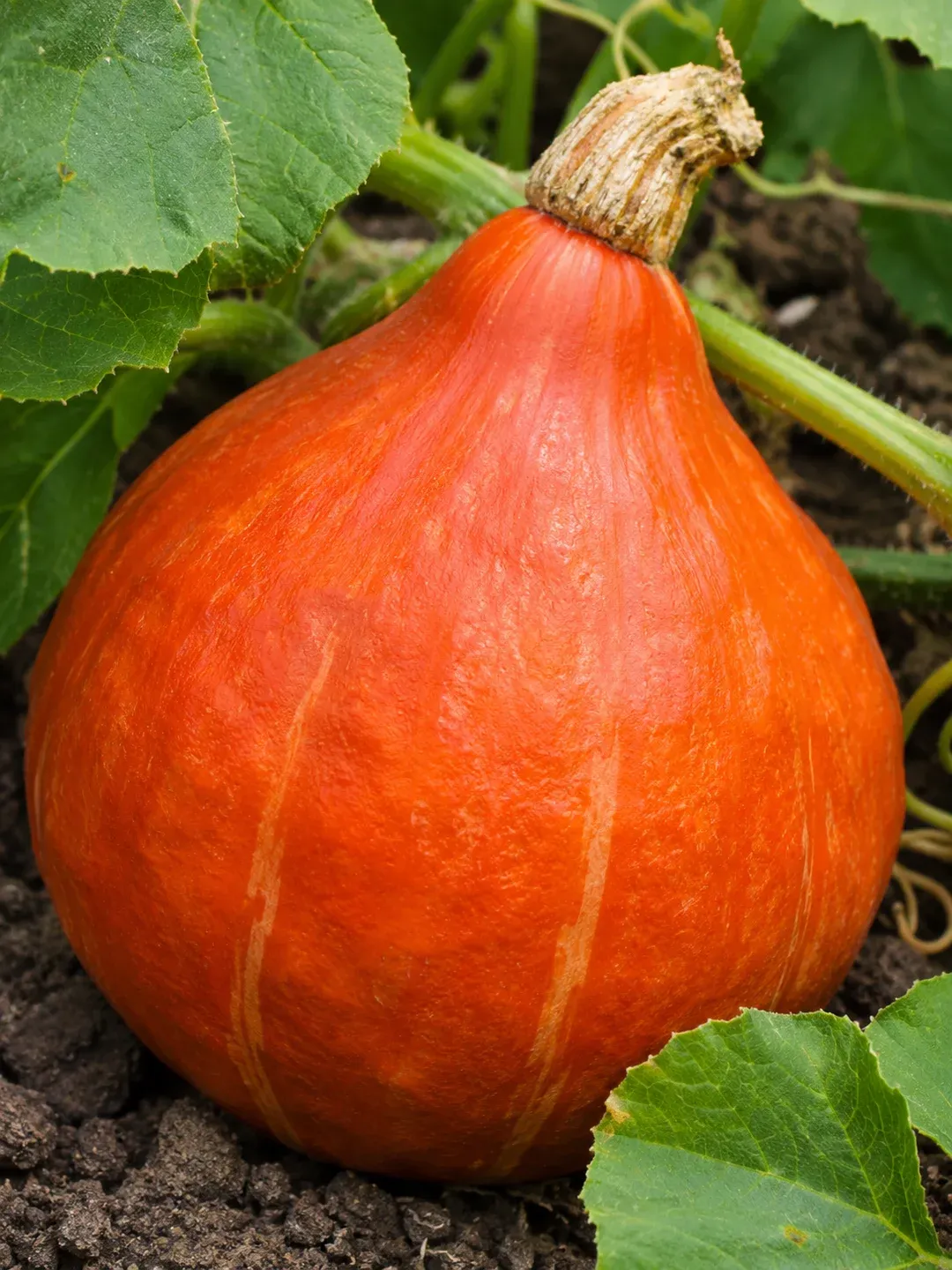
Sorting before storage
Separate fruits immediately after harvest:
- Ripe and intact: these are candidates for storage. Minnesota recommends storing only undamaged harvests.
- Still immature but healthy: use these first, as advised by Iowa, rather than relying on long-term storage.
- Damaged, soft, or showing rot: remove them from the batch to be stored, in accordance with the sorting principle described by Minnesota. A fruit affected by rot does not become healthy through drying.
Minnesota describes curing the squash after harvest in a warm place with good air circulation to harden the skin; outdoors, this requires warm, dry weather. If these conditions are lacking, use a ventilated shelter. Curing cannot be relied on to make up for harvesting too soon.
Then store the fruits in a frost-free, ventilated place, without them touching, and inspect them regularly: these are the general recommendations from the RHS. No advertised duration replaces this condition check.
What to do if the potimarron is bitter?
For an edible squash, the ANSES recommends tasting a small raw piece before preparation. If you detect bitterness, spit it out and discard the squash; do not consume it, even cooked. This check does not make an ornamental or unknown squash edible. In case of poisoning symptoms, contact a poison control centre; for a medical emergency, call 15 or 112.
Managing growth, flowers, and leaves: ongoing monitoring
The common squash guide explains how to manage stems and supports for different growth habits and fruit types, then examine flowers without fruit. For damaged leaves, a rotting stem base, or shrivelling young fruits, follow the checks to make before diagnosing a disease. These common guidelines specify observations and their limits.
Organising neighbours and keeping records
To compare space, light, water, and access for crops, use the layout method on the same bed. Also keep a record of locations before preparing the next season. These two methods do not promise a protective effect from a plant pairing.
For a maize–French bean–squash combination, read the conditions and limits of the ‘Three Sisters’ before allocating space.
Key points for this crop
Practical guidance
- Identity
- A type of Cucurbita maxima, like the pumpkins known in French as potiron
- Space
- To be chosen according to the variety’s growth habit
- Planting
- In full sun, after risk of frost
- Storage
- Sort fruits according to their ripeness and condition
Sources and references
- Red kuri squash (potimarron)French National Horticultural Society (SNHF), Michel d’Argentré Accessed on 16 October 2026.
- Cucurbita maxima ‘Red Kuri’ — synonym ‘Uchiki Kuri’Royal Horticultural Society (RHS), in English Accessed on 16 October 2026.
- How to grow squashesRoyal Horticultural Society (RHS), in English Accessed on 16 October 2026.
- Harvesting and storing melons, squash and pumpkinsUniversity of Minnesota Extension, Natalie Hoidal, in English Accessed on 16 October 2026.
- Late Season Harvest in the Vegetable GardenIowa State University Extension and Outreach, in English Accessed on 16 October 2026.
- Postharvest handling of fruit and vegetable crops in MinnesotaUniversity of Minnesota Extension, in English Accessed on 16 October 2026.
- Bitter squashes: beware of poisoningFrench Agency for Food, Environmental and Occupational Health & Safety (ANSES), 2021 infographic Accessed on 16 October 2026.
- Growing red kuri squashGraines Baumaux, seed supplier’s instructions, undated PDF Accessed on 18 October 2026.