
The vegetable garden notebook / Crops
Growing Pumpkin: Selecting, Training Vines, and Harvesting
To grow pumpkin, start with the variety name, its culinary use, and the space required for its vines. Harvesting for storage then requires ripe fruit and careful handling to avoid damage.
Adapt this guidance to your garden’s climate and conditions.
Choosing a Pumpkin for Cooking and Your Garden
The pumpkins known in French as potiron belong to Cucurbita maxima, according to the SNHF, which cites ‘Rouge vif d’Étampes’ and ‘Galeux d’Eysines’ among its varieties. Keep the exact name printed on the seed packet.
The French term citrouille, in its botanical sense, refers to Cucurbita pepo, a different species, as noted by Sorbonne Université. Common names can be misleading, and varieties are numerous: a round or flattened shape alone is not enough to identify a squash or determine its edibility.
Select seeds explicitly intended for consumption. ANSES advises against eating ornamental squashes or fruit from self-sown plants and recommends using new seeds rather than those saved from previous harvests.
Compare fruit size, plant growth, and stated earliness. The University of Minnesota highlights that long-season varieties may not have enough time to mature in a short warm season. A giant fruit is therefore not the best goal for every garden.
Planning Space and Sowing at the Right Time
The SNHF recommends full sun and loose, humus-rich soil. Also plan for vine growth: for trailing types, the RHS suggests 1.5 metres between plants, with space around them. Adjust this guideline according to the variety.
The SNHF places sowing in pots in April and direct sowing in May. These French benchmarks remain subject to local climate: pumpkins are frost-sensitive, and Minnesota notes that squashes require warm soil to germinate.
In pots, the RHS advises placing a seed on its edge, at 1 cm depth, at 18–21 °C. Keep seedlings in light. Gradually acclimatise them outdoors before planting after the last frosts, preserving the root ball. The sowing guide provides further details.
Training Vines and Managing Water
To contain a trailing plant, the RHS suggests guiding its vines in a wide circle, secured with small stakes. Keep large-fruited varieties on the ground. Small-fruited varieties can be trained up a sturdy support, and the fruits may also need individual supports. Place a tile or board under fruits to protect them from damp soil. The general squash guide details vine and support management according to growth habit and fruit size.
Water the soil without wetting the foliage, as advised by Minnesota. Adjust watering based on rainfall and soil moisture: the watering guide helps with these observations. The SNHF recommends mulching to retain moisture.
Flowers without fruit do not necessarily indicate a lack of fertiliser: Minnesota cites poor pollination, which cold and rainy weather can disrupt. For further guidance, follow the observations on flowers without fruit.
Monitoring Growth, Flowers, and Leaves
For damaged leaves, rot at the base of the stem or shrivelling young fruit, follow the checks to make before diagnosing a disease. These common guidelines clarify observations and their limitations.
Harvesting Ripe Fruit Before Storage
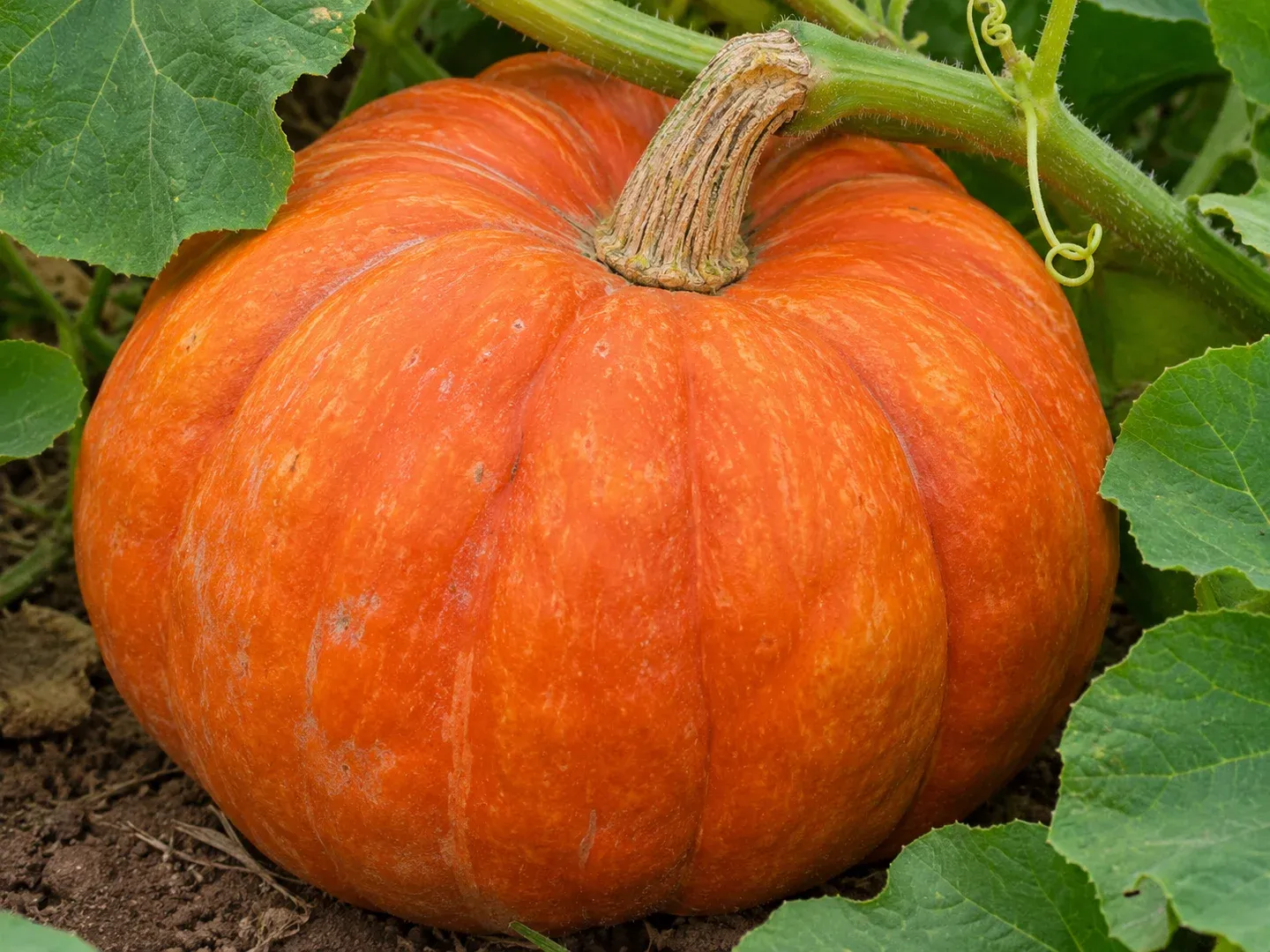
Wait until the fruit has reached the expected colour for its variety, as per the maturity principle outlined by the RHS. Hardened skin is another indicator described by the University of Massachusetts. Do not expect all pumpkins to turn orange.
Harvest before frost and retain the stem, in accordance with the SNHF. Cut cleanly and avoid knocking or bruising the fruit. For storage, Massachusetts recommends healthy fruit, free from rot or unhealed damage; the skin protects the flesh but remains easily damaged.
Minnesota advises drying after harvest in dry, sunny weather; if the weather turns cold or rainy, use a warm, ventilated place. For whole pumpkins, the SNHF then specifies a ventilated area at around 15–18 °C. Massachusetts also recommends a dry atmosphere and avoiding stacking, which can bruise fruit. Regularly check their condition; storage duration depends on variety, maturity, and storage location.
If the squash tastes bitter, discard it
For squash intended for food, the ANSES advises tasting a small raw piece before preparation. If it is bitter, spit it out and discard the entire squash; cooking will not make it edible. This check does not replace confirming that the squash is intended to be eaten and does not apply to testing an unknown ornamental squash.
Organising Neighbouring Plants and Keeping Records
Start with the planned vine path on your layout. To compare space, light, water, and access for crops, use the bed arrangement method. Also keep a record of planting locations before planning the next season. These two methods do not guarantee a protective effect from plant pairing.
For a maize–French bean–squash combination, read the conditions and limitations of the ‘Three Sisters’ before allocating space.
Key points for this crop
Practical guidance
- Species
- Cucurbita maxima
- Location
- Full sun and space for vines
- Planting
- After frosts, in warmed soil
- Harvest
- At maturity, before frost
Sources and references
- PumpkinSociété nationale d’horticulture de France (SNHF), Jean-Marc Muller Accessed on 16 October 2026.
- Pumpkin — Market fruits and vegetablesBiology and Multimedia, Sorbonne Université, UFR des Sciences de la Vie Accessed on 16 October 2026.
- How to grow pumpkinsRoyal Horticultural Society (RHS), in English Accessed on 16 October 2026.
- Growing pumpkins and winter squash in home gardensUniversity of Minnesota Extension, in English Accessed on 16 October 2026.
- Pumpkin and Winter Squash Harvest and StorageUniversity of Massachusetts Amherst, R. Hazzard, in English Accessed on 16 October 2026.
- Bitter squashes: beware of poisoningAgence nationale de sécurité sanitaire (ANSES), infographic Accessed on 16 October 2026.