
The vegetable garden notebook / Getting started
Beginner’s vegetable garden: where to start your first trial?
Start with a trial you can observe through to harvest. A small area or suitable container is enough to learn cultivation techniques before expanding the project.
Adapt this guidance to your garden’s climate and conditions.
- Define
Choose a trial compatible with your visits and absences.
- Observe
Check sunlight, water access, and soil condition.
- Select
Opt for a few crops suited to the space and season.
- Start
Follow the variety’s instructions and label each sowing or plant.
- Monitor
Inspect the soil and plants before intervening, then record your actions.
Define what you can monitor
Your first decision is the scale of your commitment. Note when you can visit the garden and your upcoming absences. The RHS advises choosing based on available time and the quantities you genuinely want. Start with a modest trial, then expand once you better understand the care required.
For this first trial, select one or two crops you enjoy eating. This number is a starting suggestion, not a horticultural limit. Set a concrete goal: track a sowing, identify the first leaves, then observe when to harvest. Also, keep a record of any difficulties encountered.
Test the location and water access
Visit the proposed spot at different times of the day and note the date, sunny areas, and shaded zones. The RHS states that most vegetables prefer sunlight; lettuces and spinach tolerate more shade than fruiting crops. Also, seek shelter from strong winds, avoiding competition from the roots of large hedges or trees.
Physically walk the route from the water source with your equipment. A location that is difficult to water makes day-to-day care harder; the University of Maryland lists this as a key selection criterion. Plan who can check the crops during your absences. If this remains unresolved, reduce the scale or postpone the start.
Choose between a small in-ground area and a container
In open ground, observe the soil condition after rain: does water drain away? Is the soil crumbly rather than muddy or hard? These are the indicators suggested by the University of Maryland. If water pools in an area, find out why before planting vegetables there.
In a container, check for excess water drainage, the depth, and volume needed for the mature crop. Use a substrate suited to container growing. A small pot chosen for convenience may become insufficient for the roots; the Maryland container guide emphasises this match between plant and container.
Containers make trials possible in limited spaces but may require daily watering in hot, dry weather, according to the same source. Ensure this level of monitoring fits your schedule before choosing this option.
Before purchasing containers or equipment, use the first vegetable garden budget sheet to account for what you already own, any growing medium needed to fill containers, and the necessary purchases for this trial.
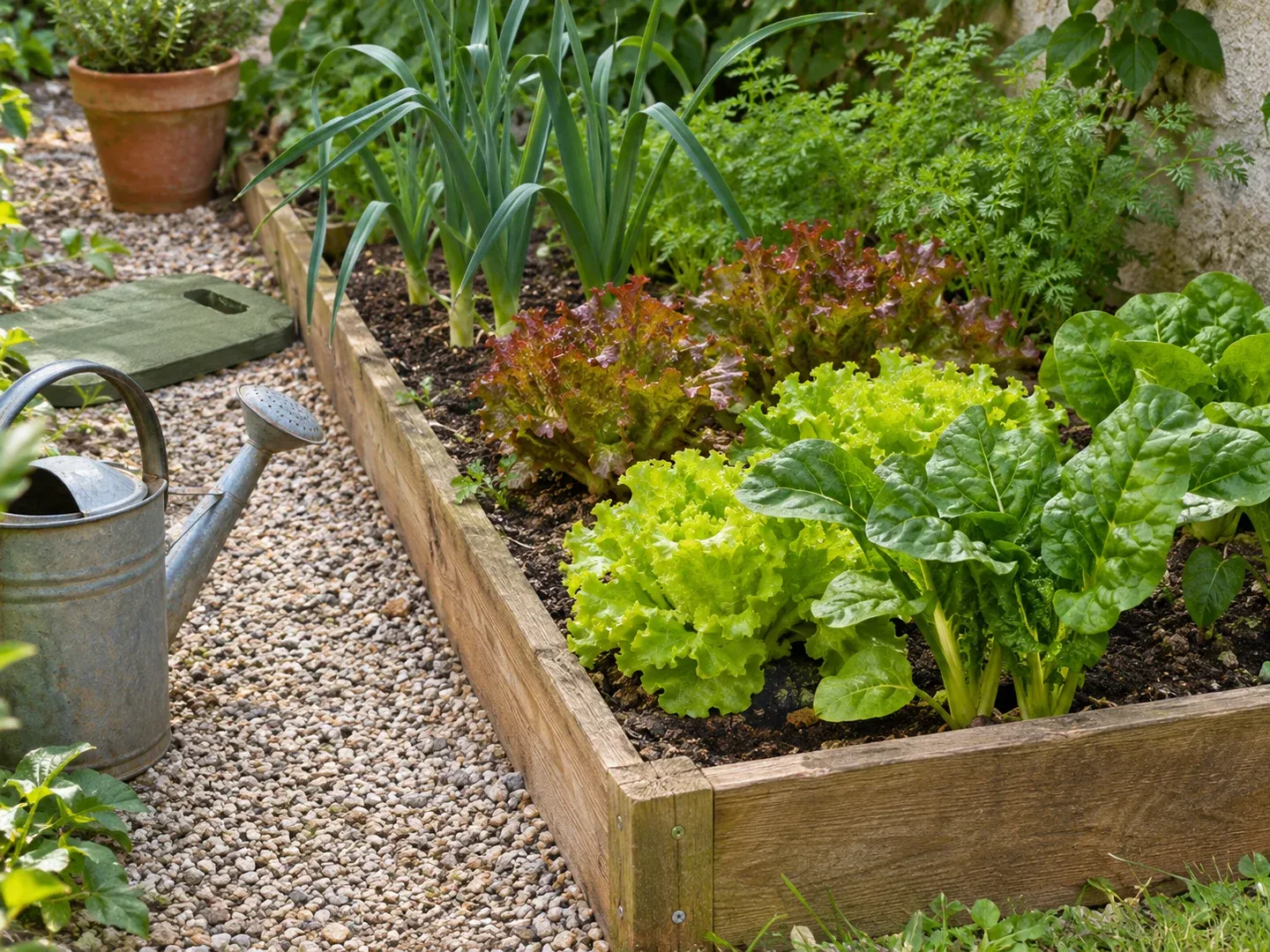
Select a crop suited to the current season
Do not simply choose a vegetable labelled as “easy”. The SNHF recommends a species and variety adapted to the region, soil, and growing period.
Before sowing or planting, note the following from the cultivation sheet and seed packet or label:
- the exact species and variety;
- the starting period and conditions;
- the space required when the plant is fully grown;
- the tasks to anticipate, from sowing to harvest.
If considering radishes, start with our guide to different types of radish. For French beans, consult the green bean guide. These links help verify your choice; they do not imply these crops are suitable for all seasons.
To organise multiple areas, proceed with the vegetable garden plan, which details pathways and space allocation.
How to prepare the soil before planting?
Prepare only the selected area, without transforming the entire garden at once. Here is a suggested workflow for a first trial:
- Wait for workable soil. Postpone work if the soil is frozen, waterlogged, or sticky. The RHS advises against working such soils to limit compaction and structural damage.
- Remove weeds from the area. The same source then suggests loosening with a fork if necessary, without requiring deep turning of each plot.
- Examine the structure and any existing amendments. Well-decomposed garden compost can improve the soil; the RHS warns that adding sand to very heavy clay may make it even harder. Do not apply this method automatically.
- Prepare the surface for the chosen crop. A small sowing requires a fine surface and precise depth; our sowing guide will assist you. For a plant, prepare the hole according to its instructions, keeping pathways accessible.
You can also manage an area without digging, using organic matter on the surface: the RHS describes this method and light forking without turning if the soil is very compact. The choice depends on the soil’s condition and available materials. It does not eliminate the need for weeding or water monitoring.
How much time should you allocate for maintenance?
There is no set number of hours per week that suits every vegetable garden. The University of Maryland requires daily attention, citing timely sowing, staking, weeding, monitoring, and harvesting. The RHS also recommends avoiding concentrating all tasks in one period.
To estimate your workload, trial the small selected area. For a few weeks, record the time spent on visits, watering, weeding, and harvesting, separating one-off setup from recurring care. Include the trip to the water source and your absences. This time log is an organisational suggestion, not a standard horticultural duration.
A spring assessment does not fully describe summer: keep the option to reduce new sowings if monitoring becomes too demanding. To prepare for an absence, the summer vegetable garden guide helps convey clear instructions to the person taking over.
Start one trial at a time
Keep your variety’s instructions to hand. For sowing, respect the indicated depth and density, then lightly firm the soil and water gently, following the SNHF’s principles. Our sowing guide assists in choosing between direct sowing and sowing in pots.
Label the trial with the name and date. Dedicate a notebook page to this crop: you can record actions taken without relying on memory. If the season is not yet suitable, your first task may simply be to prepare this record and the location.
Establish an observation routine
Plan a brief daily visit when crops begin growing: the University of Maryland highlights the value of regular attention. Observe before deciding: new leaves, wilting plants, moist or dry soil, damage since the last visit.
Observing daily does not mean watering daily. The RHS distinguishes needs based on the crop, its stage, and the soil. Freshly sown seeds and young plants require consistent moisture. For an established plant, check moisture beneath the surface in the root zone, without damaging roots, before adding water. The watering guide elaborates on this decision.
Record an observation and your intervention, for example, “soil still moist, no watering” or “first leaves visible”. At the trial’s end, review what was easy to monitor and what you lacked: access, presence, space, or information about the crop. Choose your next project based on this assessment.
Sources and references
- Planning a vegetable gardenRoyal Horticultural Society (RHS), in English Accessed on 16 October 2026.
- Planning a Vegetable GardenUniversity of Maryland Extension, Jon Traunfeld, in English Accessed on 16 October 2026.
- Positioning vegetablesRoyal Horticultural Society (RHS), in English Accessed on 16 October 2026.
- Growing Vegetables in Containers and Salad TablesUniversity of Maryland Extension, in English Accessed on 16 October 2026.
- Seed and sowing: mastering the basics of successful sowingSociété Nationale d’Horticulture de France, Dominique Daviot and Philippe Monchaux Accessed on 16 October 2026.
- Watering vegetables and fruitRoyal Horticultural Society (RHS), in English Accessed on 16 October 2026.
- Soil: cultivationRoyal Horticultural Society (RHS), in English Accessed on 17 October 2026.
- Soil preparationRoyal Horticultural Society (RHS), in English Accessed on 17 October 2026.
- No-dig gardeningRoyal Horticultural Society (RHS), in English Accessed on 17 October 2026.