
The vegetable garden notebook / Getting started
First Vegetable Garden Budget: Costing Your Project Before Purchasing
The budget for a first vegetable garden depends on what you already own, the growing location, and the chosen vegetables. Start with a small, precise project, then cost what is missing: a standard amount does not describe your garden.
Adapt this guidance to your garden’s climate and conditions.
- Inventory
List what is available, usable, and borrowable before any purchase.
- Size
Work out the number of crops and containers and the quantity of growing medium required for the project.
- Cost
Record your prices and distinguish setup expenses from seasonal expenses.
- Adjust
Reduce the project if necessary, then note actual expenses as purchases are made.
Start with the Project and What You Already Have
First, sketch the area to be cultivated and count the planned plants with their spacing. The vegetable garden plan helps define this perimeter. The University of Maryland advises starting small and adapting the garden size to the available means for planting, maintaining, and harvesting. A few hand tools may suffice to begin.
Next, make three lists: available and in good condition, to borrow with permission, to purchase. Check the equipment thoroughly: a leaking watering can, a tool with a loose handle, or a broken stake will require repair or replacement. Note any potential cost. An item you already own does not represent a new purchase, even if it cost something previously.
Also distinguish between cultivation methods. In open ground, a raised bed is not essential. In containers, the budget must include the container and the growing medium to fill it. A large repurposed container may therefore incur a growing media cost to be calculated before installation.
Complete a Budget Using Your Own Prices
Use the table as a worksheet to copy. Add one line per purchase and record a dated price, in the quantity actually sold: packet, plant, pack, bag, or item. Note “to cost” when an expense remains unknown; do not replace it with zero.
| Item | Already available | Quantity to purchase | Price per unit sold | Total planned | When to plan the expense? |
|---|---|---|---|---|---|
| Hand tools and repairs | Record here | … items | … € | … € | Setup, then as needed due to wear |
| Watering can, hose, or necessary fittings | Record here | … items | … € | … € | Setup, then as needed due to wear |
| Pots or containers, if chosen | Record here | … items | … € | … € | Setup, then possible replacement |
| Growing media for pots or seed sowing | … usable litres | … bags of … litres | … € per bag | … € | Initial filling, then reassess requirements |
| Seeds | Record species and quantities | … packets | … € | … € | According to the sowing schedule |
| Plants | Record here | … plants or packs | … € | … € | According to the planting schedule |
| Stakes, ties, and any crop protection needed | Record here | … items | … € | … € | According to crops and equipment condition |
| Compost, mulch, or fertiliser if necessary | Record suitable materials | … bags or units | … € | … € | According to observed needs |
| Purchased water for irrigation | Record supply method | … estimated m³ | … € per m³ | … € | During the season |
| Delivery, transport, hire, or any membership fee | Record here | To specify | … € | … € | According to your situation |
For each line, multiply the quantity purchased by the price of the corresponding unit. If a bag will only be partially used, still count its full price in the money to be spent this season and note the remainder for later.
Calculate two subtotals: setup and seasonal expenses, assigning each expense to only one of the two. Their sum gives the amount to finance at the start and during this first season. A seasonal expense does not necessarily recur identically each year: remaining seeds, equipment wear, and crop choices change. Add a freely chosen reserve for contingencies, separate from already costed purchases.
Compare Seeds and Plants for the Quantities You Need
Do not compare only the price of a seed packet to that of a plant. For each crop you can sow or buy as a young plant, write out both scenarios:
- Sow: Entire packet to purchase, necessary containers and growing media, possible additional equipment, available space, and time for monitoring.
- Buy plants: Number of plants or packs needed, total price, and any surplus plants in the packaging.
Choose the scenario you can actually carry out. For a few plants, purchasing additional sowing equipment may change the comparison. Conversely, already available equipment reduces the new expense. Plan seed requirements accounting for losses during seedling emergence and cultivation. Our sowing guide helps verify growing conditions before deciding.
Cost the Growing Medium and Water Before Adding Pots
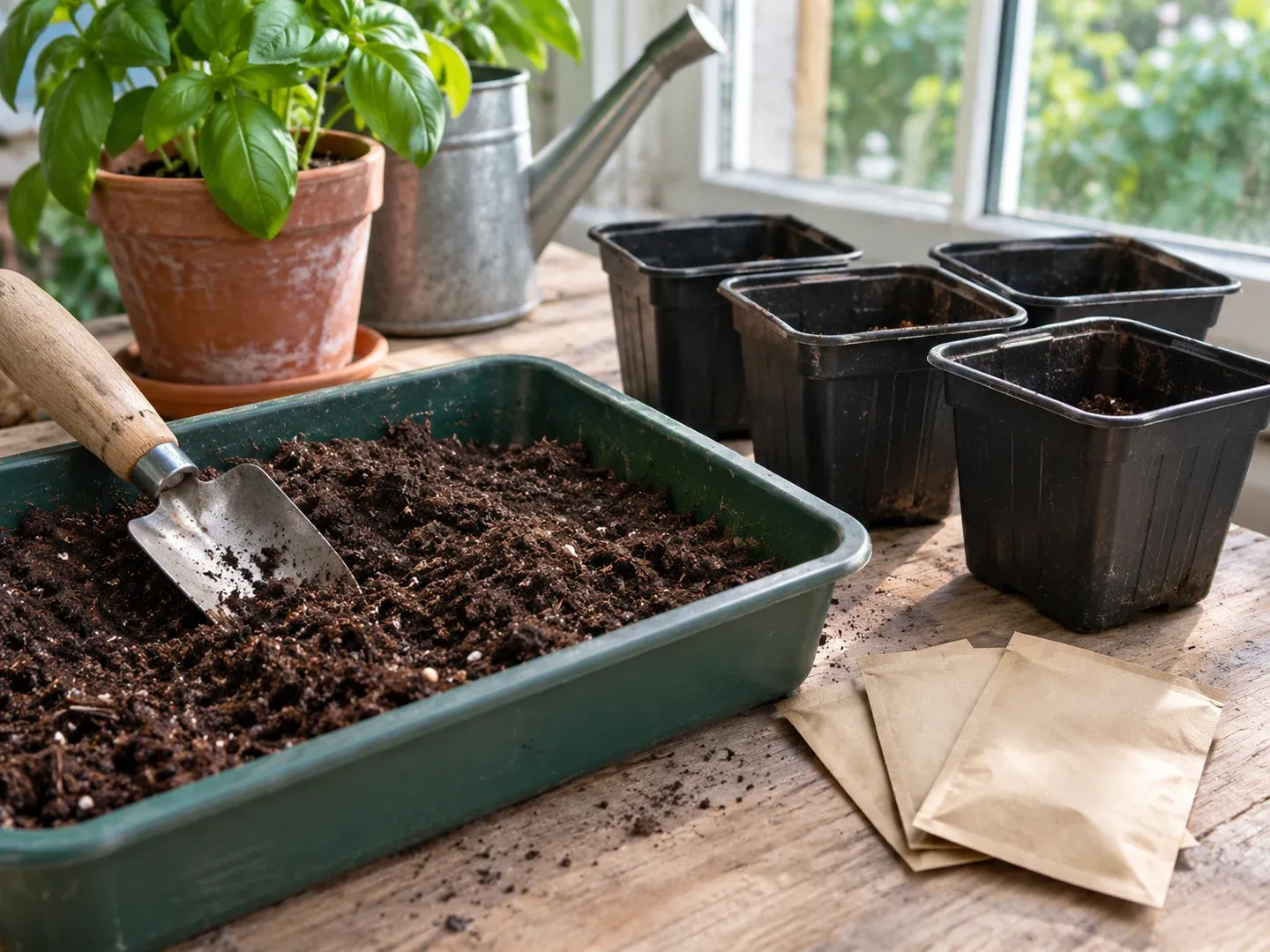
Sum the useful capacity of the chosen containers, then deduct only the suitable growing media you actually have available. Compare this need to the volumes of the bags. If the container does not indicate its capacity, measure or estimate the volume to fill and keep this estimate distinct from a verified quantity.
The RHS distinguishes garden compost, used to improve soil, from growing media intended for seed sowing or pots. Do not automatically replace the entire “growing media” line with homemade compost. Choose a medium suited to the intended use. The RHS also notes that container-grown crops must have water regularly, without becoming waterlogged.
For mains water, check the volumetric rate applicable on your bill. Estimated cost of additional water = volume in m³ × applicable rate per m³. One cubic metre equals 1,000 litres. This calculation covers additional consumption; add any new standing charge or equipment cost separately, without allocating the whole of an existing household standing charge to the vegetable garden.
Initially, the seasonal volume remains an estimate. Record the litres applied with a watering can of known capacity, or a dedicated meter if available, then adjust your estimate. A reading from the main water meter measures the vegetable garden’s consumption alone only if no other water is being used during the measurement. Consult the irrigation guide to determine watering based on soil and plants. If planning a rainwater reserve, include its installation and maintenance in the budget; do not assume it will cover all needs.
Reuse What Is Suitable, Defer the Rest
A repurposed container must suit the plant and drain excess water. For plastic containers diverted from their original use, the University of Maryland requires food-grade quality and excludes those that have contained paint, detergent, or chemicals. Also discard cracked or degraded plastic. A free but unsuitable container does not meet the cultivation need.
For mulching, first examine materials available in the garden. ADEME cites fallen leaves and grass clippings, which should be lightly dried before use. Avoid weeds that have set seed and diseased debris for mulching vegetables. Consult the mulching guide to choose and apply these materials: their availability alone does not determine proper use.
If equipment is only occasionally needed, check borrowing or hire options and their actual cost. ADEME gives the example of a shredder for bulky garden waste. This is not an invitation to plan one for every first vegetable garden.
If the total exceeds your limit, remove a crop, container, or deferrable purchase, then recalculate. Retain the necessary means for the remaining plants: reducing the number of pots is more sensible than eliminating their growing media or water access.
Review Actual Expenses
Keep receipts and note next to the planned budget the amount actually paid, deferred purchases, and still-usable equipment. This will provide a personal basis for the following season.
You may also record the harvests actually consumed and, if desired, their equivalent at the price you would have actually paid. Keep this estimate separate from expenses and time spent. The University of Maryland reminds us that production varies with location, season, and garden management, and a crop may fail even for an experienced gardener. No annual savings amount or payback period can be promised for your first vegetable garden.
Sources and references
- Planning a Vegetable GardenUniversity of Maryland Extension, in English Accessed on 16 October 2026.
- Growing Vegetables in Containers and Salad TablesUniversity of Maryland Extension, in English Accessed on 16 October 2026.
- Vegetables in containersRoyal Horticultural Society (RHS), in English Accessed on 16 October 2026.
- How to Mulch?ADEME Accessed on 16 October 2026.
- Fallen Leaves, Grass Clippings, Prunings… What to Do with Green Waste?ADEME Accessed on 16 October 2026.