
The vegetable garden notebook / Techniques
What can you plant after potatoes in the vegetable garden?
What to grow after potatoes depends first on when the space becomes available. Choose a crop that still has time to establish in your area, then check the history and health status of the bed.
Adapt this guidance to your garden’s climate and conditions.
Practical steps
- Date
Note the actual end of the harvest and the next planned use of the bed.
- Verify
Review previous crops, inputs and observed problems.
- Choose
Compare the sowing season, variety and local conditions.
- Prepare
Remove any forgotten tubers and prepare for sowing or ground cover.
What should follow the potato harvest?
Radishes, spinach or lamb’s lettuce are possibilities, at different times. An early potato harvest leaves more options than a bed freed when the cold arrives. If no suitable crop sown now would still have time to establish, you can cover the soil until the next crop.
There is therefore no vegetable to plant automatically “after potatoes”. The sowing windows and conditions below help you choose what to grow next; they do not prescribe a fixed crop sequence.
Also check what was growing before the potatoes
Review the crops from previous years and those planned next. Rotation concerns successions in the same place; companion planting concerns plants grown side by side. A companion planting tip is not enough to choose the next occupant of the bed.
Avoid immediately following with another potato or tomato crop. To replant potatoes, the University of Minnesota advises a location without potatoes, tomatoes, peppers, aubergines or tomatillos for three to four years. If a disease has been identified, adjust the return interval for that disease.
The plot’s history also matters when choosing the next crop: a radish belongs to the same group as cabbages and turnips in the rotation presented by the RHS. The presence of potatoes this year does not override previously grown Brassicaceae or any related issues. To organise the entire garden, use the crop rotation guide.
Choose based on the period and time available
The following sowing references come from the SNHF’s French factsheets. Verify the chosen variety and your local conditions before sowing.
| Situation | Option | Condition to verify |
|---|---|---|
| Bed free during the warmer months | Salad radishes; summer or autumn radishes depending on the variety. | The SNHF gives March to September for sowing salad radishes, and June to August for summer and autumn types. The soil must remain moist. Source |
| Bed free in August or September | Spinach suited to this season. | The SNHF provides this timeframe and approximately two months before harvest. This period is indicative; the plant prefers a temperate climate and moist soil. Source |
| Space available from the second half of summer to autumn | Lamb’s lettuce, with a variety suited to the expected cold. | The SNHF indicates sowings from mid-July to autumn. Heat and drying complicate establishment; some varieties resist cold better than others. Source |
| No suitable sowing window remains available | Ground cover until the next crop. | A mulch is applied to the surface. A living cover still requires conditions for germination and growth. Mulching and cover crops. |
For salad radishes, the SNHF gives four to six weeks of cultivation. Do not replace this reference with a promise of harvest in eighteen days. The radish sowing guide details row preparation.
In a cold region or at altitude, compare the stated duration with the usual onset of cold in your area. In a mild area, still verify the period intended for the variety: the RHS notes that the growing season also depends on light.
Prepare the bed and monitor regrowth
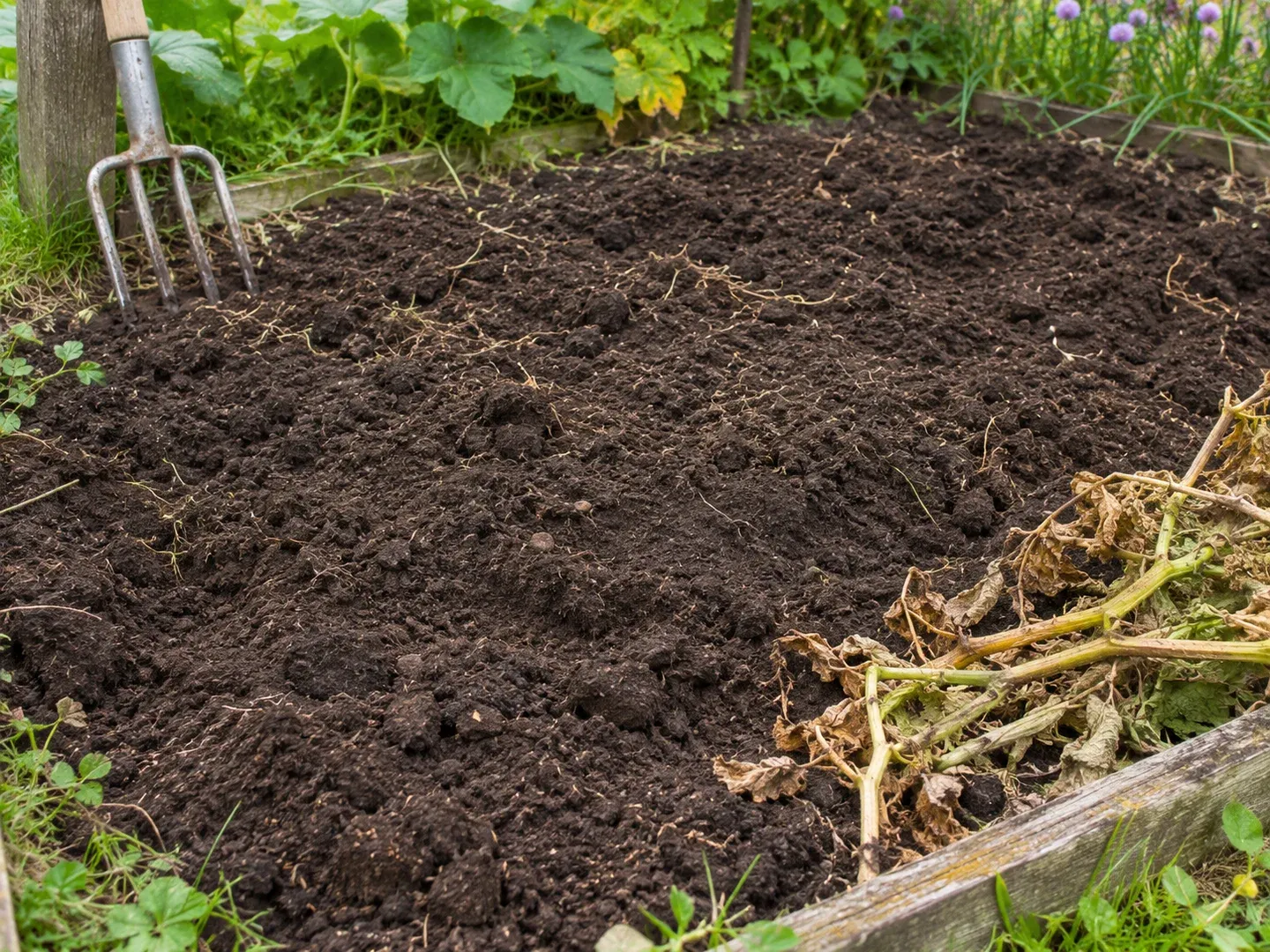
Collect any forgotten tubers, remove existing weeds and observe the harvest’s condition. If rot or unusual decline is noted, identify the problem before deciding on the return of the affected plants. The University of Minnesota highlights that foliage changes can have multiple causes.
Blight can persist in affected tubers left in the ground. The RHS recommends removing forgotten potatoes before the following spring. If regrowth appears, remove it along with the tuber feeding it. Do not reuse waste from an affected crop as mulch for this bed.
Rotation offers only limited protection against blight: its agent also affects tomatoes, and its spores can arrive via wind. Changing the crop does not disinfect the plot or automatically protect neighbouring crops. RHS
Should compost or fertiliser be added?
Harvesting potatoes alone does not indicate whether the soil is exhausted, enriched or weed-free. Review previous inputs and the needs of the crop you have chosen to grow next before adding anything.
For lamb’s lettuce, the SNHF recommends moist, firm soil, cultivated only at the surface, without fertilisation. There is therefore no need to add compost or fertiliser routinely before this sowing. This advice applies specifically to this crop.
If you prefer to protect the soil until spring
A suitable mulch can cover the free surface. For a green manure, first choose a species compatible with the local season and plan its termination before the next sowing. Account for the time needed to establish and remove it when planning how long the bed will be in use. RHS
Also include this cover in the rotation: mustard belongs to the Brassicaceae, and the RHS advises against following it with other members of this family due to the risk of clubroot. “After potatoes” does not mean all cover crops fit the next stage of your planting plan.
Finally, note the harvest date, any symptoms and the crop or cover actually put in place. This notebook entry will aid the next choice, even if you simply covered the bed.
Sources and references
- Crop rotationRoyal Horticultural Society (RHS), in English Accessed on 16 October 2026.
- Growing potatoes in home gardensUniversity of Minnesota Extension, in English Accessed on 16 October 2026.
- RadishSNHF, Jean-Daniel Arnaud Accessed on 16 October 2026.
- SpinachSNHF, Jean-Marc Muller Accessed on 16 October 2026.
- Lamb's lettuceSNHF, Jean-Daniel Arnaud Accessed on 16 October 2026.
- Potato blightRoyal Horticultural Society (RHS), in English Accessed on 16 October 2026.
- Green manuresRoyal Horticultural Society (RHS), in English Accessed on 16 October 2026.
- Mulches and mulchingRoyal Horticultural Society (RHS), in English Accessed on 16 October 2026.