
The vegetable garden notebook / Techniques
Vegetable garden on clay soil: working the soil when conditions are right
A clay soil can support a vegetable garden. The first step is to check if the soil is workable, then distinguish its texture from excess water or compaction.
Adapt this guidance to your garden’s climate and conditions.
Practical steps
- Observe
Compare texture, moisture and traffic areas.
- Wait
Postpone work when the soil remains waterlogged or sticky.
- Preserve
Keep pathways to reach vegetables without walking on the beds.
- Test
Try an organic amendment on a small area before using it more widely.
Clay, compaction and excess water: three distinct observations
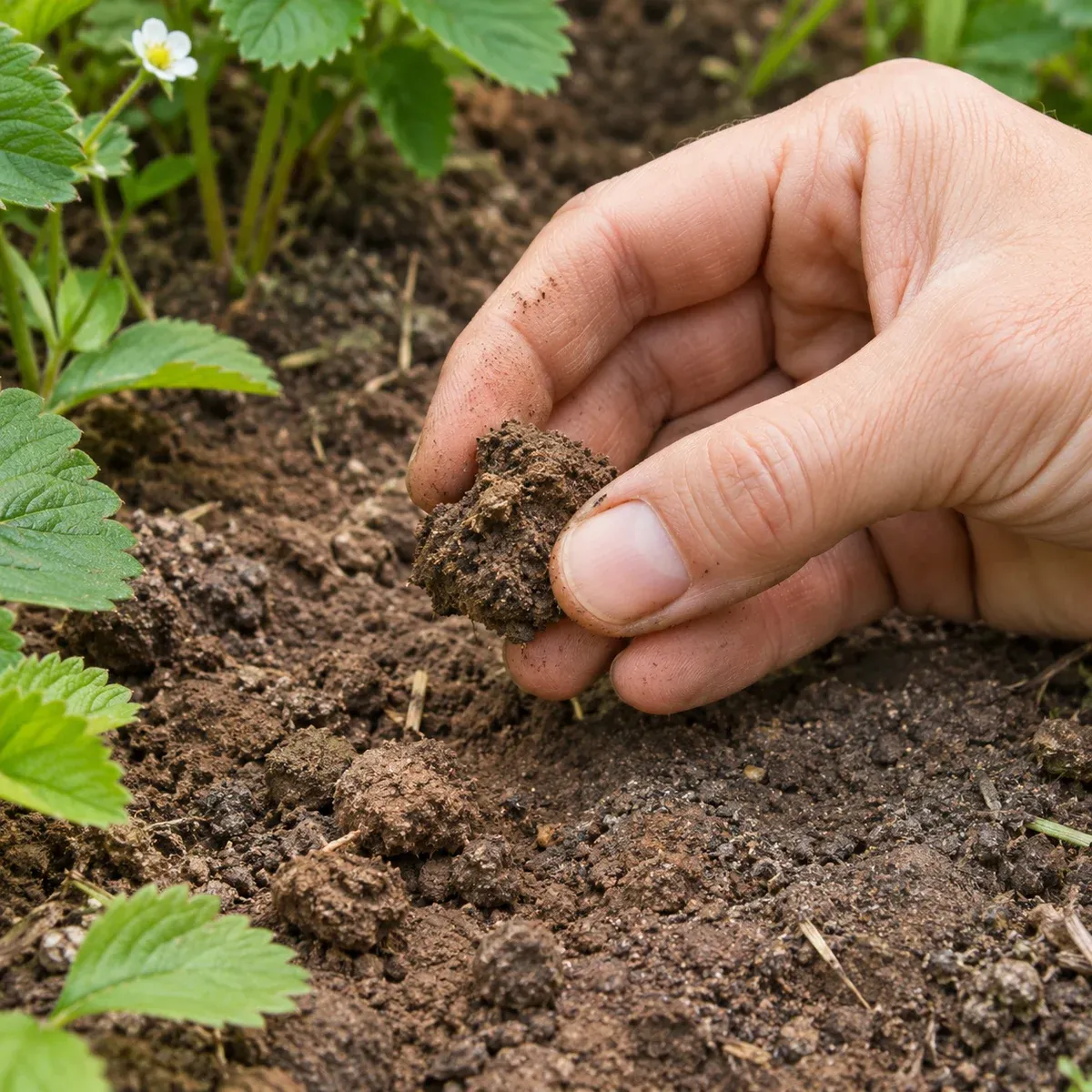
Soil that is damp, sticks to your fingers and can be rolled into a small sausage without cracking indicates a clay texture. This hands-on test, described by the RHS, does not measure the percentage of clay or diagnose its drainage.
INRAE recommends examining structure, porosity, compaction and moisture status separately. Walk around the vegetable garden after rain: a trodden path, a hollow and a bed that is seldom walked on may show different conditions. Note where water remains, where your feet sink in and where the soil becomes workable again.
A heavy soil is not necessarily poor. Materials added to feed a crop and those used to improve soil structure serve different purposes; the guide to potting compost and soil amendments helps distinguish between them.
What should you do today based on soil condition?
| Observation on the bed | Decision before sowing or planting |
|---|---|
| Waterlogged, sticky soil that deforms underfoot | Postpone work and keep traffic to the pathways. |
| Very dry, hard soil that is difficult to crumble | Delay preparation rather than trying to dig through the hard soil; check again after its moisture level changes. |
| Soil that crumbles and can be worked without smearing | Prepare only the area needed for the intended crop. |
| Persistent water or localised compaction | Identify the extent of the problem before choosing a solution. |
This practical approach applies the observations of INRAE and the caution of the RHS: working or treading on wet clay damages its structure. The right window depends on actual moisture; a calendar month is not sufficient to define it.
Organise pathways before improving the soil
Draw the beds and pathways on the vegetable garden plan. Ensure you can reach the rows for weeding and harvesting from the sides. This layout prevents renewed compaction each time you tend the crops.
The RHS advises limiting foot traffic on beds. Start with an area you can maintain this way throughout the season: preserving its structure is as important as initial preparation.
Test organic matter without a set recipe
Applying well-decomposed garden compost to the surface can reduce soil disturbance. The RHS describes this method for vegetable beds, including on heavy soils; it does not require turning the entire plot for each crop.
For a first trial, mark out a bed, record the material added and its quantity, then observe its workability through rain and dry periods. This monitoring is a suggested method, with no guaranteed timeframe for transformation. The mulching guide details precautions around sowing and on still very wet soil.
Adding sand is not an automatic correction: the RHS highlights the very large volumes required and the sometimes unfavourable results. Do not choose a lime amendment solely because the soil is sticky; texture and pH are not the same.
When should you consider a raised bed?
A raised bed can help when drainage remains difficult and facilitates access without treading on the cultivated area. This is an option described by the RHS, which you should assess in light of the location and available resources.
Before constructing, record the areas and instances where water persists. If the problem extends beyond the bed, have the site examined before undertaking drainage work: the INRAE factsheet notes that waterlogging or a compacted layer can deprive roots of oxygen. The raised bed guide details structure and filling choices.
Sources and references
- Assessing soil characteristicsINRAE, Ephytia — Vég-Di@g Accessed on 18 October 2026.
- Clay soilsRoyal Horticultural Society, in English Accessed on 18 October 2026.
- No-dig gardeningRoyal Horticultural Society, in English Accessed on 18 October 2026.