
The vegetable garden notebook / Seasons
Spring Vegetable Garden: From Workable Soil to Planting
In spring, proceed according to the conditions in your garden. Preparing a bed, starting a sowing, and planting outdoors each require different checks.
Adapt this guidance to your garden’s climate and conditions.
This guide uses French examples and seasonal references. Adjust them to your garden’s climate and local conditions.
- Wait for workable ground
Allow waterlogged soil to drain before walking on it or preparing it.
- Prepare the next steps before sowing
Choose a suitable variety and plan the location and care for young plants.
- Organise the transition outdoors
Acclimatise plants grown under cover and delay planting sensitive species while frost remains a risk.
Preparing a Bed When the Soil Allows
Start by observing the planned locations. An area that is still waterlogged must wait: avoid walking on it until the soil becomes workable. The RHS recommends this precaution to avoid increasing compaction and further degrading soil conditions.
While the soil drains, you can choose crops, identify their future locations, and prepare labels from the paths. There is no need to prepare the entire vegetable garden at once: record separately the areas that are available and those to re-examine after rain.
However, workable soil alone is not enough to decide on sowing. Germination also depends on temperature and the specific needs of the species, as the SNHF reminds us. Check these requirements before moving from preparation to planting.
Planning the Path for Each Sowing
For each selected variety, note where it starts and where it will continue to grow. The SNHF recommends adapting species and varieties to the region, soil, and desired period; seed packets provide useful information on cultivation.
To choose a crop at the right time, compare the suggestions in the March, April, and May calendars with the actual conditions in your garden.
Before opening a seed packet, prepare a brief record:
- the variety name and its sowing instructions;
- the chosen location, directly in the ground or in a container depending on the crop;
- the necessary equipment and space available for the next steps;
- the time you have to monitor seedling emergence and young plants.
If a condition is missing, leave this sowing on your preparation list. Start with an amount you can manage. The sowing guide details depth, watering, and care after emergence.
Gradually Moving from Shelter to Outdoors
Plants grown indoors or in a greenhouse, including those purchased, may need hardening off. This acclimatisation prepares them for outdoor conditions. The RHS advises a gradual exposure: start during the day in a sheltered location, protected from intense sun, then bring the plants back indoors at night. Increase the time outdoors when the weather is suitable for the crop.
The acclimatisation procedure explains time outdoors, shelter, and monitoring. Plan this step before the intended planting date and keep the option to bring the pots back indoors. Ask the seller how the purchased plants were grown. Hardening off does not make a sensitive plant frost-resistant.
Deciding on Planting with Frost Risk
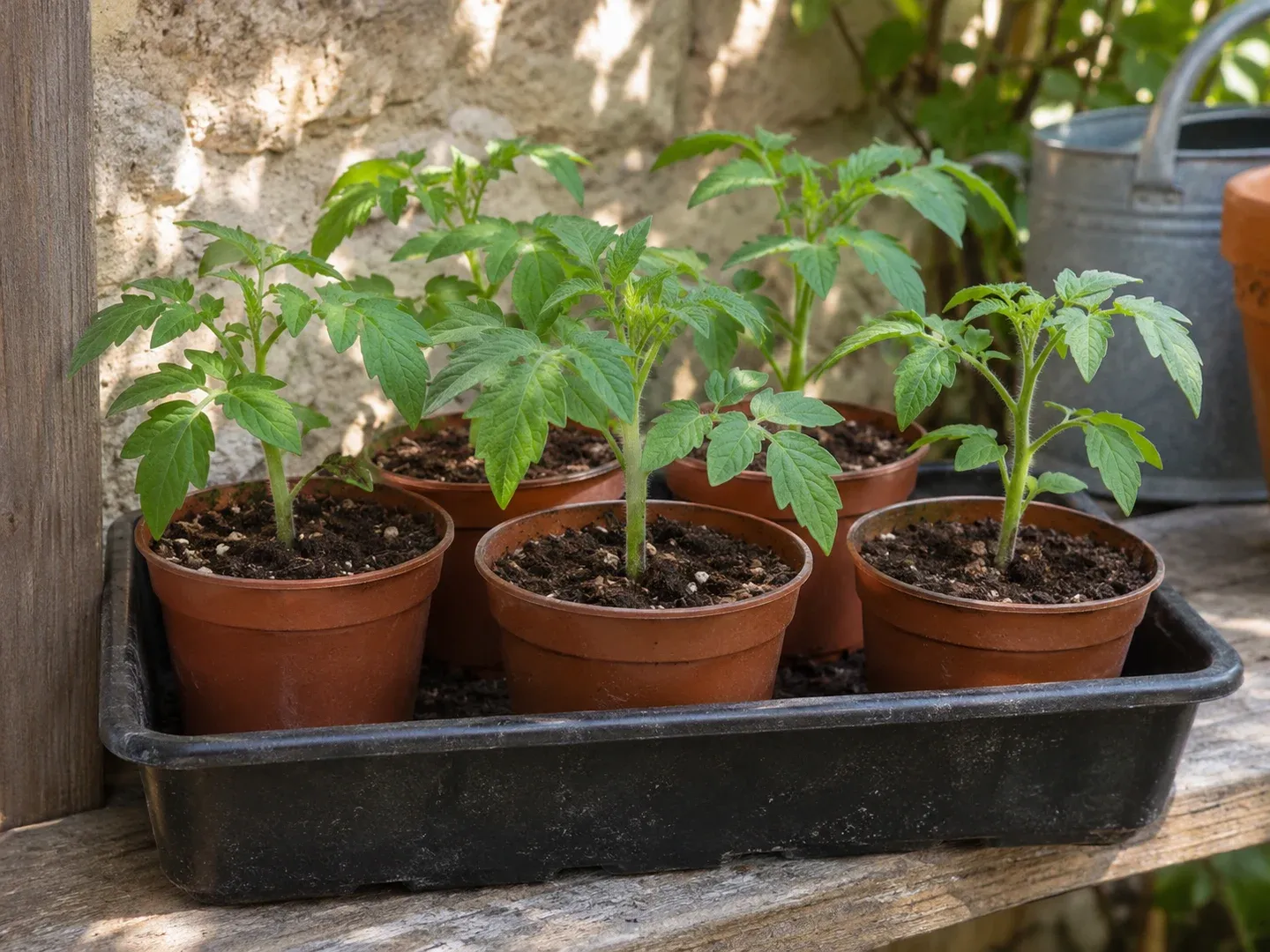
For a sensitive crop like the tomato, the SNHF advises waiting until frosts are no longer a risk. The acclimatisation of the plant and weather conditions are therefore two separate checks.
Météo-France documents frosts after the Ice Saints, including in lowland areas. Consult the forecasts for your area before final planting and take into account your local observations. If cold threatens, postpone planting sensitive species; a common date for all gardens cannot decide for you.
Two Paths to Decide on the Next Step
A row to sow directly. The ground is still waterlogged: keep the seed packet and plan from the path. When it becomes workable, check that the period, temperature, and depth required by the species are met; sow only what you can manage. After sowing, the priority shifts to monitoring moisture and seedling emergence. RHS — soil, SNHF, RHS — water
Tomatoes in pots grown under cover. They may be ready for acclimatisation while their outdoor location is not yet ready to receive them. Put them outside in a sheltered spot for short periods and bring them back into the warmth when necessary; final planting also waits until frosts are no longer a risk. Consult local forecasts and the Ice Saints guide. RHS — hardening off, SNHF — tomato, Météo-France
Making Time for Crops Already Started
During each round, first revisit what has been sown or planted. Freshly sown seeds and young vegetables need consistent moisture, according to the RHS. In pots, check the growing medium where the roots are. Adjust watering based on its condition, without watering automatically.
A three-column list may suffice: “to prepare”, “to acclimatise”, “planted and to monitor”. Note the missing condition to move to the next step. This will give you an overview of the entire spring while adjusting each intervention.
To choose crops as the season progresses, continue with the calendars for March, April, and May. They specify the possibilities and their conditions for each month.
Sources and references
- Waterlogging and floodingRoyal Horticultural Society (RHS), in English Accessed on 16 October 2026.
- Seeds and sowing: the main principlesSNHF Scientific Council, presentation by Françoise Corbineau, Dominique Daviot and Philippe Monchaux Accessed on 16 October 2026.
- Hardening off tender plantsRHS, in English Accessed on 16 October 2026.
- Cool weather around the Ice Saints: does it still occur?Météo-France Accessed on 16 October 2026.
- TomatoSociété nationale d’horticulture de France (SNHF), Jean-Marc Muller Accessed on 16 October 2026.
- Watering vegetables and fruitRHS, in English Accessed on 16 October 2026.