
The vegetable garden notebook / Crops
Growing Coriander: Sowing for Leaves or Seeds
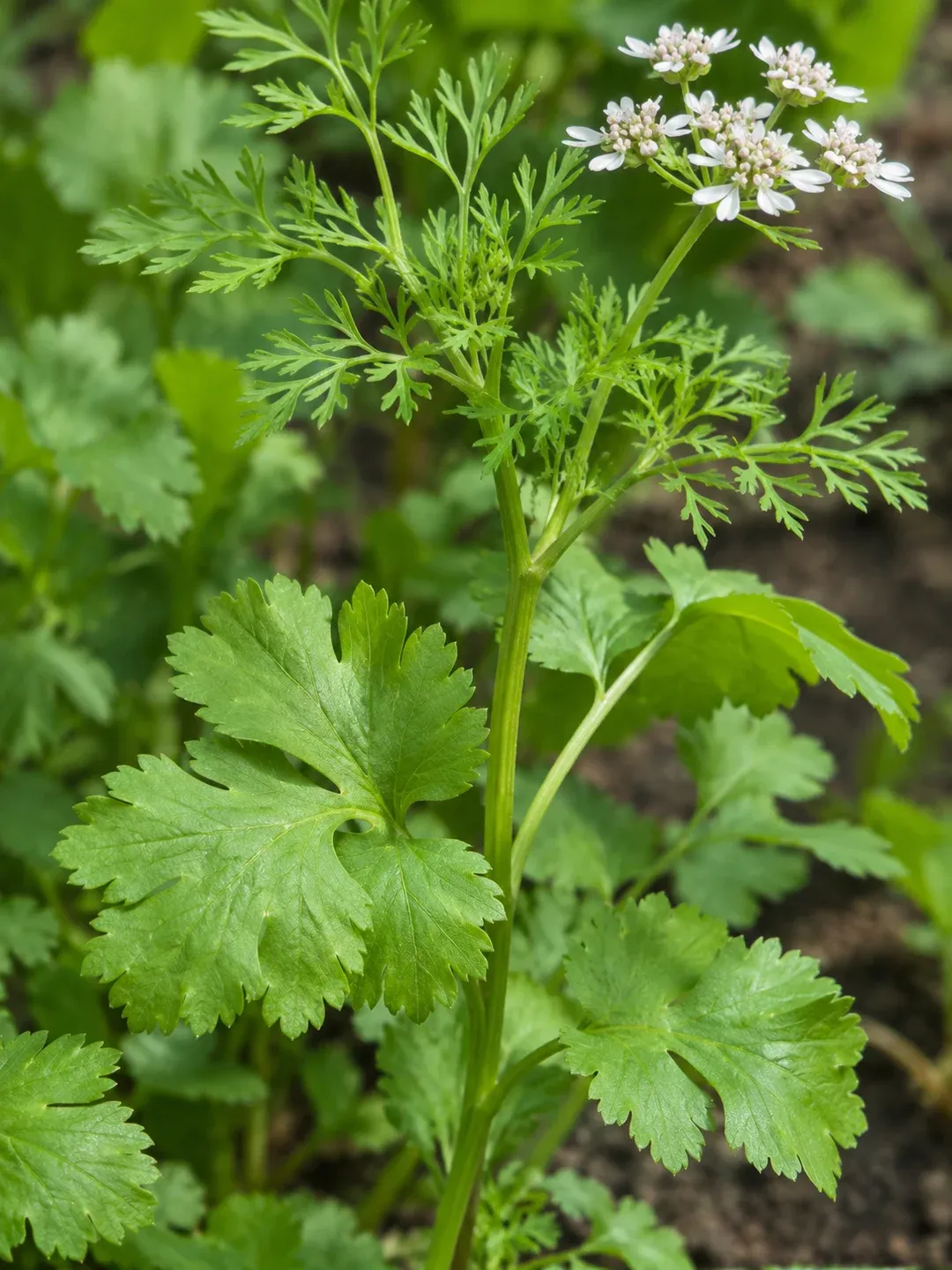
Coriander is an annual: it will eventually flower and set seed. To harvest leaves, plan several small sowings; for seeds, allow some plants to complete their cycle.
Adapt this guidance to your garden’s climate and conditions.
One Plant, Two Harvests to Plan
In American English, cilantro usually means the leaves and coriander the seeds of Coriandrum sativum; in British English, coriander can refer to both. It is not a perennial to keep indefinitely for its leaves. Decide before sowing whether you want to harvest foliage or allow some plants to set seed. Illinois
For your vegetable garden plan, note two distinct lines: “leaves for cutting” and “plants left to flower.” Keeping these two groups separate prevents cutting seed-bearing plants during herb harvests.
Which Variety for Leaves or Seeds?
For leaves, look for a variety advertised as slow to bolt: Illinois cites ‘Santo’ and ‘Marino’ in particular. This trait delays the end of the harvest without preventing flowering. For seeds, Utah indicates that all varieties may be suitable; simply reserve some plants to complete their cycle. A leaf variety can therefore also produce seeds. Illinois · Utah
How to Sow in the Ground or in Pots?
The root system does not tolerate transplanting well: Illinois recommends direct sowing, including in the final container. Choose well-drained soil and a sunny spot; follow the depth indicated for your seeds. A new sowing every three to four weeks is the succession guideline from this source, to be adjusted based on how much you use and the conditions for seedling emergence. Illinois
In pots, the RHS recommends a well-draining substrate and daily monitoring of moisture: water as needed, without letting the mix become waterlogged. To harvest leaves in summer, it suggests a cooler location, protected from midday sun. This does not justify placing the plant in a dark room. RHS
Which Timing, Depth, and Spacing to Follow?
The SNHF provides the following windows for France: March to June, then September. Adjust these guidelines based on frost and soil conditions: cold or waterlogged soil is not ready just because the month appears on the calendar. To produce ripe seeds, prioritise the earlier windows to allow the cycle to complete. SNHF · RHS
Sources do not provide a single depth recommendation: Utah suggests about 1.3 cm (½ inch) in its planting section; the RHS simply asks for a shallow furrow and light covering. First, follow the instructions on your seed packet, without interpreting the general term “furrow” as a recommended depth for coriander. Utah · RHS
For leaves to be cut young, both sources recommend about 5 cm between seedlings. For plants left to set seed, thin more generously: 20 cm for the RHS, 20 to 25 cm for Utah, which reserves at least about 38 cm between rows. These guidelines correspond to different objectives, not a universal spacing. Thin by removing excess seedlings rather than moving the entire row. RHS · Utah
Which Soil to Choose Without Waterlogging?
The SNHF accepts various soils with a preference for warm, light soils; Illinois mentions ordinary, well-drained soil, and Utah refers to moderate fertility. These descriptions do not justify either constantly dry soil or heavy fertiliser application: choose soil that allows water to drain while monitoring moisture until the seedlings emerge. Watering needs will then depend on the soil or pot. SNHF · Illinois · Utah
Why Does Coriander Bolt Quickly?
Heat and drought accelerate flowering. To prolong leaf harvest, the RHS advises removing flower stems as soon as they appear and avoiding dryness. This measure does not turn the annual into a permanent plant: keep a succession sowing ready. RHS
If seeds are your goal, leave the flower stems in place. Label these plants so that the harvester knows to leave them.
When to Harvest Leaves and Seeds?
Illinois begins cutting leaves when plants reach about 15 cm tall. For seeds, wait until the seed heads turn brown; cut and place them in a paper bag in a dry spot to catch the seeds as they fall. Do not confuse this harvest with regular leaf cutting. Illinois
If you reserve some seeds for the next sowing, the seed-saving guide explains the next steps after drying: storage and labelling.
In a small space, start with a modest batch and note the sowing date, first cut, and appearance of flowers. These observations will help you schedule succession sowings; they do not predict identical timing for all sowings.
Which Signs to Monitor on Coriander?
On seedlings showing signs of grazing, look for slugs and snails, which the RHS identifies as a risk to young plants. On distorted or sticky shoots, inspect leaves and their undersides for possible aphid colonies. Their presence is observable; isolated yellowing does not confirm it. Preserve visible predators and monitor growth before deciding on intervention. RHS · RHS, aphids
For an identified colony, the aphid management decision pathway helps choose between monitoring and local action.
Distinguish these issues from seedlings that become leggy due to lack of light, waterlogged mix, or normal bolting. The RHS describes, for example, pale growth in low indoor light and fungal risks in overcrowded pots. Note the affected part, substrate moisture, and new shoot development; if spots or decline progress without an identified cause, have the plant examined with these details. RHS
Can Coriander Be Kept Over Winter?
Reserve the September sowing suggested by the SNHF for mild conditions: coriander remains sensitive to cold. To extend leaf harvest into early winter, the RHS suggests an autumn sowing under cloches or in a greenhouse; adapt the protection to the cold forecast in your garden. SNHF · RHS
On a windowsill, ensure new shoots remain well-lit and that the pot does not dry out near heating. Protection can extend a small batch, but it does not make coriander perennial or guarantee continuous harvests throughout the cold season. Keep the goal modest and plan succession sowings when light and temperatures allow new growth. RHS
Key points for this crop
Practical guidance
- Species
- Coriandrum sativum, an annual
- Planting
- Sowing preferably in the final location
- Leaves
- Successive small sowings, consistent moisture
- Seeds
- Allow to flower and wait for browning
Sources and references
- How to grow corianderRoyal Horticultural Society, in English Accessed on 18 October 2026.
- CilantroUniversity of Illinois Extension, in English Accessed on 18 October 2026.
- Culinary herbs: a world of flavours within reach — Coriander, page 7French National Horticultural Society Accessed on 18 October 2026.
- Cilantro/Coriander in the GardenUtah State University Extension, in English, published August 2018 Accessed on 18 October 2026.
- AphidsRoyal Horticultural Society, in English Accessed on 18 October 2026.