
The vegetable garden notebook / Climate
Vegetable Gardening in a Continental Climate: Adapting to Each Season
In a garden subject to contrasting seasons, organise crops around local conditions. The risk of frost, soil condition, and the needs of each variety guide decisions.
Adapt this guidance to your garden’s climate and conditions.
This guide uses French examples and seasonal references. Adjust them to your garden’s climate and local conditions.
- Frost and Location
- Identify low-lying areas where cold air can accumulate and delay planting sensitive crops as long as frost remains a threat.
- Starting Crops
- Check the soil condition and species-specific germination requirements separately.
- Summer Watering
- Monitor soil moisture at root level, even in regions receiving summer rainfall.
Situating Your Garden in Semi-Continental Climates
In its classification of mainland France, Météo-France uses the term semi-continental. This applies notably to the north-eastern quarter and certain enclosed plains of the Massif Central and the Alps. The title “continental climate” here refers to cultivation choices in response to these seasonal contrasts.
Summers are hot, and winters are often marked by frost. Annual precipitation is generally quite high, with summer rainfall often stormy; however, Alsace benefits from the shelter of the Vosges. Altitude and position relative to the surrounding terrain also modify conditions. These benchmarks therefore require adjustment at the garden scale.
Is a Vegetable Garden in the North Always Subject to This Climate?
The term “North” alone is not sufficient to determine a schedule. Météo-France distinguishes between the oceanic influence of the coastline and the altered oceanic climate, present notably in part of the Hauts-de-France. Compare your location with the oceanic and altered oceanic benchmarks, then with the semi-continental conditions described here for the north-eastern quarter. Keep your observations of frost, soil, and exposure to make decisions in the garden.
Identifying Areas Where Cold Settles
The RHS explains that cold air descends a slope and can accumulate in low-lying areas or in front of an obstacle. Before planting sensitive crops, identify areas that regularly freeze and, where possible, choose a location less exposed to these accumulations.
Record observed frosts in spring and autumn, noting their location. Also keep the names of affected crops and their stage: a note on a young plant is more useful than a simple mention of “it was cold”. This log helps compare your trials; consult local forecasts before planting out any tender crop.
In Spring, Check the Soil Before the Calendar
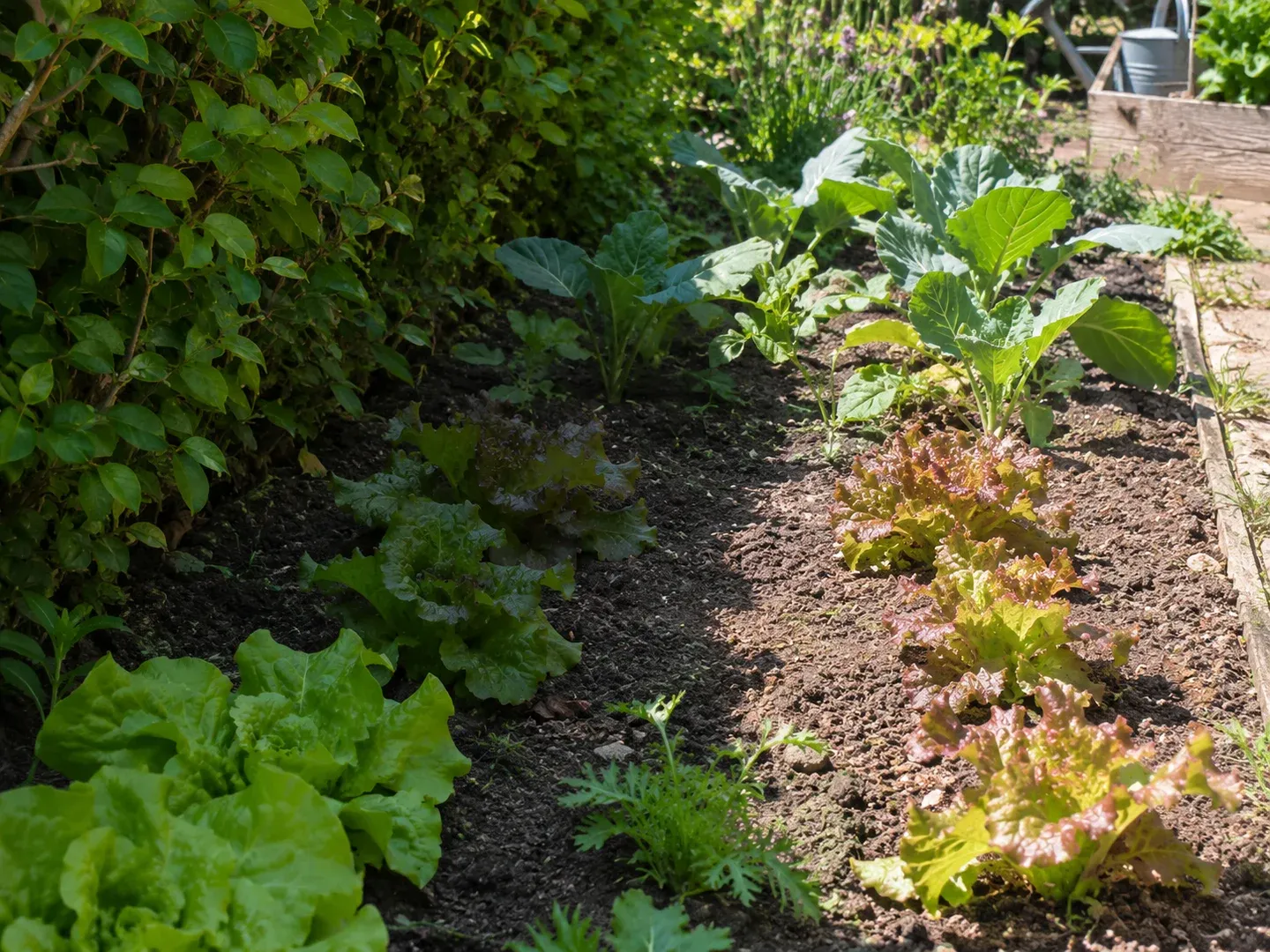
After a wet period, wait until waterlogged soil becomes workable before walking on it. The RHS recommends this precaution to avoid increasing compaction. Meanwhile, you can prepare the crop plan from the paths.
The temperature required for germination varies by species, as the SNHF reminds us. For direct sowing, check the packet instructions and the conditions of the chosen bed. Soil that is workable does not necessarily meet all the requirements for sowing.
For tomatoes, the SNHF advises waiting until frost is no longer a threat. Plants raised under cover should be gradually introduced outdoors: start by putting the plants outdoors during the day in a sheltered spot and bring them in at night. According to the RHS, this hardening-off prepares the transition but does not make a sensitive plant frost-resistant.
Choosing Varieties with the Harvest in Mind
For each planned crop, record the variety name, how you will start it and the harvest period you want. The SNHF recommends selecting species and varieties based on the region, soil, and desired production periods.
Earliness is a key criterion for tomatoes. If your crops regularly fail to mature before frost, compare earlier varieties for your next order. This is an adjustment to test in your garden, with no guarantee of harvest at a specific date.
When comparing two packets, first check the starting point of the stated duration: sowing or planting out a young plant that has already been raised. A duration from planting does not include the whole period spent raising the plants under cover. Also note whether it refers to the start or end of harvests and if the indication is for open ground or protected cultivation. If these conditions are missing, ask the seed supplier; do not compare two figures as if they had the same definition. Selection by region, starting method, and desired period follows the principles of the SNHF.
Two Crops, Two Places in the Plan
For a tomato, plan the raising or purchase of the plant, its acclimatisation, then planting out after the risk of frost has passed. Compare the variety’s time to maturity with the warm growing period you can usually make use of, based on your own trials; a late harvest interrupted by cold justifies trying an earlier variety, not planting outdoors too soon. SNHF
The pea follows a different logic: the SNHF describes it as a crop for temperate and cool climates, adversely affected by high temperatures. Check its variety and spring sowing window rather than systematically waiting for tomato planting. These two crops therefore do not share the same starting point or heat requirement. Plan a suitable sowing window for each crop, without making “continental” a planting date. SNHF, pea
For an autumn or winter crop, verify from the seed selection stage that the variety is suitable for this period and that its sowing schedule allows you to establish it in time. The winter vegetable garden guide details the points to check for crops already in place.
In Summer, Check the Soil Around Your Crops Before Watering
A regional climate description is not sufficient to set watering frequency. The RHS advises checking moisture in the root zone: needs vary with the crop, its stage, and the soil. After rain, examine the soil before deciding to water.
Monitor sowings and young plants particularly, as they require consistent moisture. For tomatoes, also pay attention to water supply during flowering and fruiting. Avoid merely wetting the soil surface; adjust watering to the root zone and observed moisture.
Keep a record of dry periods, rainfall, and watering, along with soil condition. These observations complement those of frost and allow you to gradually adjust your organisation. The watering guide explains this method, and the sowing guide helps you get crops started.
Sources and references
- The climate of mainland France and CorsicaMétéo-France Accessed on 16 October 2026.
- Frost damageRoyal Horticultural Society (RHS), in English Accessed on 16 October 2026.
- Seeds and sowingScientific Council of the Société nationale d’horticulture de France (SNHF) Accessed on 16 October 2026.
- Waterlogging and floodingRHS, in English Accessed on 16 October 2026.
- TomatoSNHF, Jean-Marc Muller Accessed on 16 October 2026.
- Hardening off tender plantsRHS, in English Accessed on 16 October 2026.
- Watering vegetables and fruitRHS, in English Accessed on 16 October 2026.
- Garden peaFrench National Horticultural Society Accessed on 8 November 2026.