
The vegetable garden notebook / Techniques
Which neighbours to choose for potatoes?
Around potatoes, first reserve space for earthing up and harvesting. A small temporary crop along the edge or an accessible neighbouring bed is then chosen based on the actual space available.
Adapt this guidance to your garden’s climate and conditions.
Practical steps
- Reserve
Keep the soil for earthing up and access for harvesting available.
- Compare
Check shade, water, space requirements and growing period for each crop.
- Distinguish
Separate practical organisation from demonstrated protection.
- Record
Maintain a history of planting locations to prepare for crop rotation.
Allow space for earthing up and harvesting
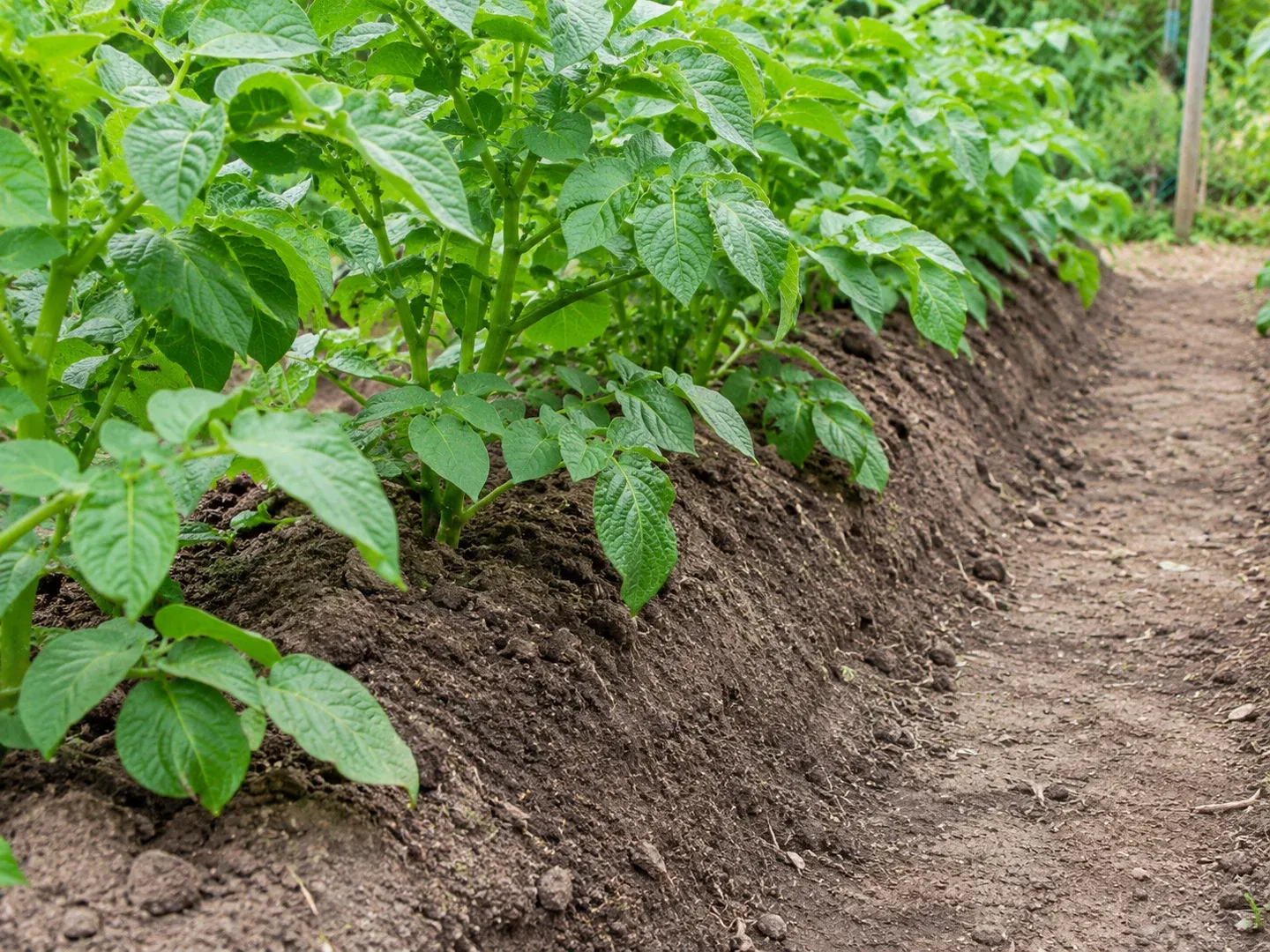
The space between two rows of potatoes is not entirely available for another crop. The SNHF recommends at least 60 cm between rows to allow for earthing up: soil is drawn from each side towards the stems. This guideline applies to potato rows, not a universal distance to maintain with every other species.
Mark out the area from which you will take this soil before sowing a neighbour there. Also keep lateral access clear for harvesting: the RHS describes harvesting with a fork, inserted at a distance from the base to avoid piercing the tubers. A plant that must remain in place at this spot would complicate the operation.
Our potato growing guide details planting, earthing up and harvesting. Here, the aim is to preserve the space required for these tasks.
Lettuces and small radishes: a temporary border to consider
The RHS describes making temporary use of space: a fast-growing crop, such as lettuce or small radish, is harvested before a larger plant casts too much shade. Their examples include Brussels sprouts and sweetcorn; this is not a trial demonstrating a benefit alongside potatoes.
To apply this principle along the edge of your bed, check three conditions:
- the border remains outside the soil needed for earthing up and the access path;
- the variety and timing chosen allow for harvest before the foliage closes: check, for example, the type and season of the radish rather than just its name;
- you will be able to remove this crop as soon as it interferes with care.
Fully grown potatoes can cast heavy shade on the soil, notes the RHS. If you cannot plan to harvest the neighbouring crop in time, choose a separate bed rather than a permanent intercropped row.
French beans and tall crops: comparing actual needs
A dwarf French bean on a neighbouring bed may be considered for its own harvest. Check its growing period, space requirements and needs, as for any other vegetable, starting with the space to reserve for French beans. The University of Maryland uses these criteria, together with light, water and nutrient needs, to select companion crops.
Do not reduce the fertilisation planned for your potatoes based solely on the presence of beans: the sources cited here do not establish an immediate nitrogen contribution in this arrangement. Nor do they demonstrate that a border of beans or aromatic plants acts as a barrier against Colorado potato beetles.
For climbing peas or beans, also plan the support and its future shade. Potatoes require a sunny location and water during dry weather, according to the RHS. Keep access to their soil for observation and watering; a neighbouring crop does not eliminate the need for this monitoring.
Tomatoes nearby: understanding the shared risk
Potatoes and tomatoes can be affected by the same late blight pathogen, Phytophthora infestans. The RHS explains that its spores can be carried by wind over long distances. Separating the two crops by a few rows therefore does not guarantee protection.
Above all, ensure you can inspect the foliage of both crops and take action without having to get through tangled plants. If you suspect blight on one, monitor the other as well and have the diagnosis confirmed. Infected tubers left in the soil can harbour the pathogen: plant health checks must also take these crop remains into account. RHS, biology of late blight
Distinguishing this year’s neighbour from the following crop
A lettuce planted next to potatoes is a neighbour. Planting a crop after the potatoes have been lifted is succession cropping, as described by Maryland. Wait to see the space freed up and check that the season still suits the following crop.
Crop rotation moves groups of crops between years. The RHS places tomatoes and potatoes in the same group: replacing one with the other does not constitute a group rotation. A full rotation plan is difficult to apply in a very small vegetable garden.
On your plan, note the species, when each crop occupies the space and any difficulties encountered: obstructed earthing up, excessive shade or complicated harvesting. This record extends the advice from Maryland’s planning guide. It will help you adjust neighbours and prepare for crop rotation, without automatically attributing a good harvest to an association.
Sources and references
- PotatoSociété nationale d’horticulture de France, section Jardins potagers et fruitiers Accessed on 16 October 2026.
- How to grow potatoesRoyal Horticultural Society, in English Accessed on 16 October 2026.
- Vegetable Succession and Companion PlantingUniversity of Maryland Extension, in English Accessed on 16 October 2026.
- Planning a Vegetable GardenUniversity of Maryland Extension, in English Accessed on 16 October 2026.
- Three ways to use companion plantingRoyal Horticultural Society, Guy Barter, in English Accessed on 16 October 2026.
- Potato blightRoyal Horticultural Society, in English Accessed on 16 October 2026.
- Crop rotationRoyal Horticultural Society, in English Accessed on 16 October 2026.