
The vegetable garden notebook / Crops
Growing thyme in pots or in the ground: drainage, watering and pruning
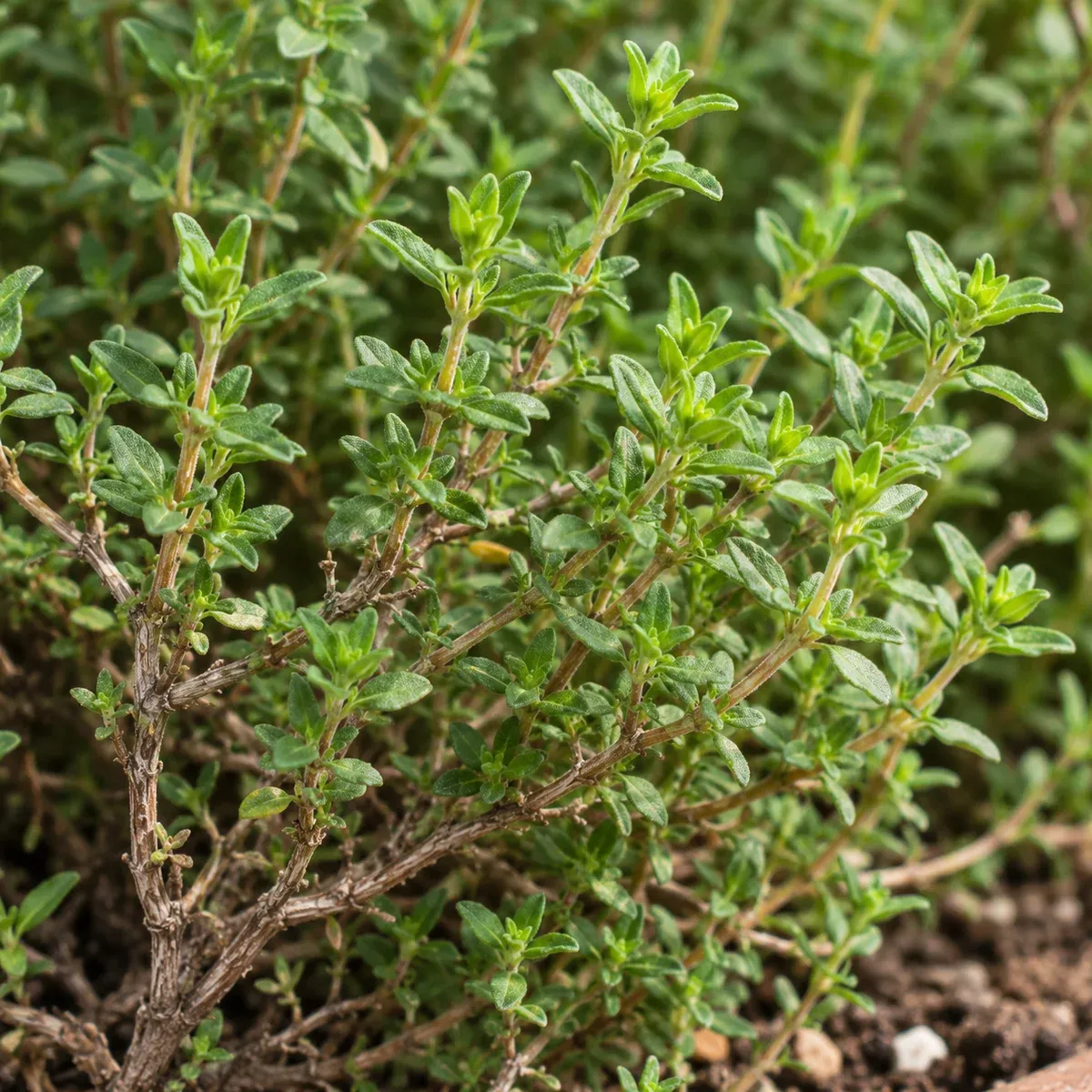
Thyme thrives in full sun and well-drained soil. A plant established in the ground and a small pot on a warm terrace, however, require different care: check the growing medium before deciding to water.
Adapt this guidance to your garden’s climate and conditions.
Which thyme and which location to choose?
The SNHF describes common thyme, Thymus vulgaris, as a small subshrub suited to dry, stony ground, to be planted in full sun. Identify the species and variety at the time of purchase: the name “thyme” covers several plants. SNHF
If the soil remains damp, particularly in winter, the RHS recommends using a container or a raised bed instead. This alternative avoids having to modify an entire plot for a single herb. It does not, however, eliminate the need to check that water drains properly from the container. RHS
Planting a young plant or sowing seeds?
For a single plant, the RHS specifies a minimum of 15 cm in width and 10 cm in depth, with drainage holes. This minimum applies to a single plant, not a grouping of herbs or the final size for all varieties. Use a well-draining growing medium and maintain the same planting depth as before. Gradually acclimatise a plant grown under cover. The RHS recommends 20 to 30 cm between plants in the ground, depending on the variety: check the stated size before filling a border. RHS
For sowing, the SNHF indicates April to May as a general timeframe. The RHS describes starting indoors in spring: space seeds on the surface of moist seed compost, without covering them, in a bright location at 15–20 °C. Once the seedlings have several leaves, transfer them individually into small pots of about 7.5 cm. Wait until they are well-rooted and growing vigorously before planting them outdoors, after hardening off. The stage of the plant and local conditions matter more than a fixed British planting date. An already established plant avoids this growing phase. SNHF, RHS
Should you water thyme that appears dry?
The SNHF emphasises the damage caused by excess moisture. Before adding water, check the soil and the drainage of any excess: damaged foliage alone does not prove a lack of watering. SNHF
The RHS distinguishes between established thyme, which is drought-tolerant, and new plantings or pots exposed to hot, dry weather, which may need watering. It also highlights the risk of rot in overly damp conditions. Adjust care for containers rather than copying the frequency used for a plant in open ground. RHS
How to prune and harvest without stripping the plant?
Regularly trim small leafy shoots. For maintenance, the RHS advises light pruning after flowering: shorten the parts that still have leaves to keep the plant compact. The SNHF advises against cutting into old stems: old wood does not provide reliable regrowth. Avoid severe pruning intended to “save” a bare plant automatically. SNHF
Before winter, check the hardiness of the species purchased. For a pot, choose a location sheltered from persistent rain, for example near a building, without blocking its drainage. The RHS reserves moving plants under cover for less hardy thymes: this is not a universal recommendation for all thymes. RHS
The leaves and flowers are used for culinary purposes. Harvest as needed from the leafy parts rather than stripping the entire plant. If you grow several herbs, note their individual requirements separately: using them together in cooking does not mean they need the same watering regime. SNHF
Key points for this crop
Practical guidance
- Plant
- Common thyme: Thymus vulgaris
- Location
- Full sun and well-drained soil
- Water
- Pay particular attention during establishment, in pots and in wet winter conditions
- Pruning
- Light pruning, retaining foliage
Sources and references
- ThymeSociété Nationale d’Horticulture de France Accessed on 18 October 2026.
- How to grow thymeRoyal Horticultural Society, in English Accessed on 18 October 2026.